|

by Umberto Pascali
April 02, 2026
from
UmbertoPascali
Website
translation from Italian by
Biblioteca Pleyades
Original Italian version
Spanish
version
Russia vs. Israel's Nuclear Samson Option - see
comments below
on the recent TASS article of April 2, 2026 - is a story of
tensions, countering nuclear threats, nuclear deterrence, and
strategic warnings:
-
Russian opposition to Israel's nuclear
monopoly
-
Push for a Middle East zone free of
weapons of mass destruction
-
Drawing attention to the catastrophic
risks of any nuclear escalation
The greatest danger, according to US analysts
such as Col. Douglas Macgregor, Col. Lawrence Wilkerson,
and Larry Johnson, is precisely that,
"if anyone uses nuclear weapons in the
current conflict, it will most likely be Israel..."
1. The Origins of the Samson
Option (1960s–1991)
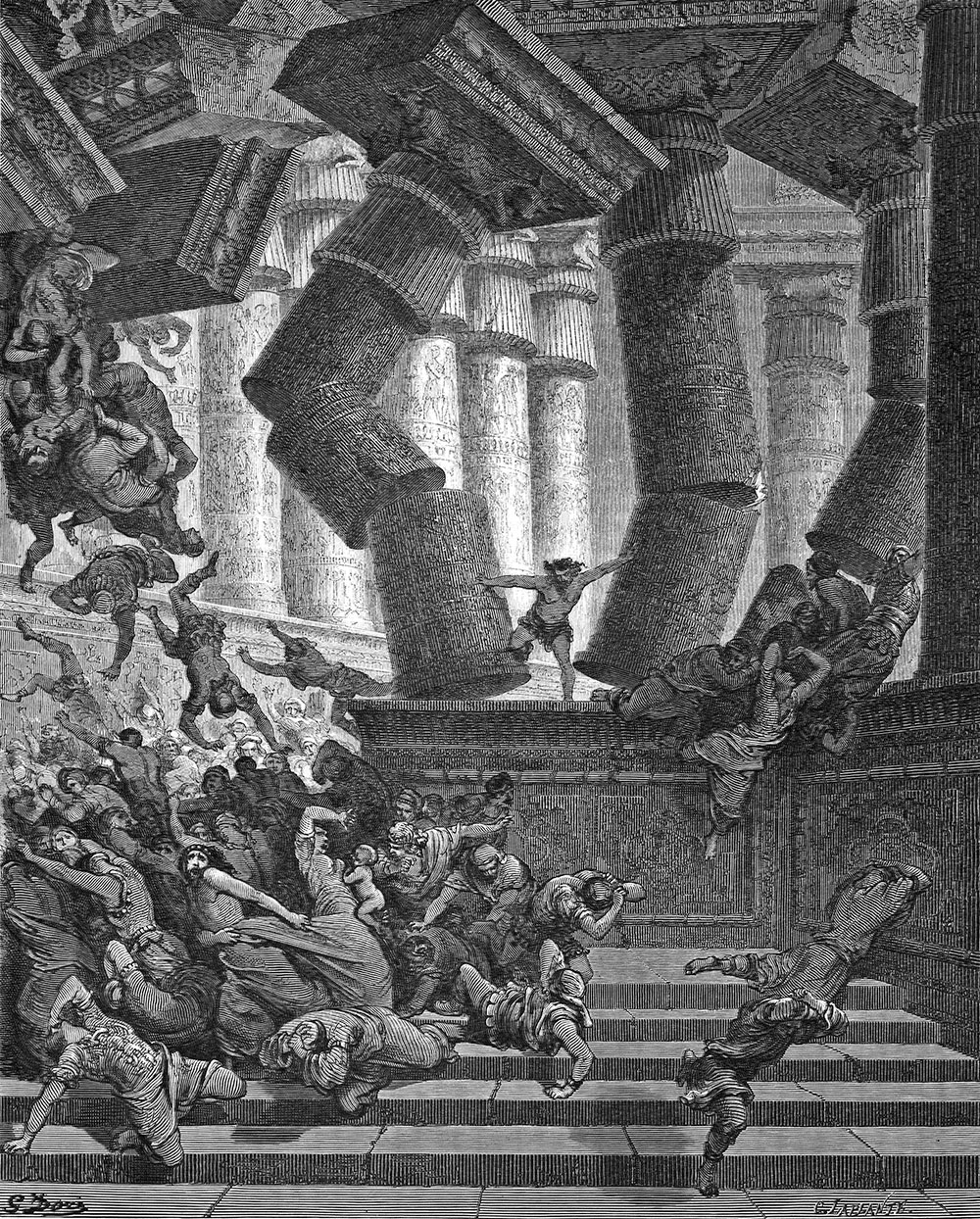
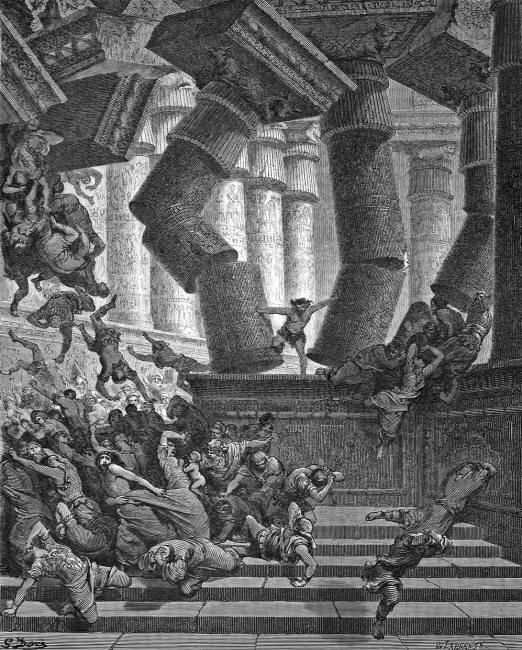
The "Samson Option" (from the biblical Samson destroying the temple
on the Philistines and himself) is Israel's unofficial "last resort"
deterrence doctrine:
If the State of Israel were to face an
existential threat (total invasion or imminent destruction), it
would launch a massive nuclear attack against its enemies, even
at the cost of apocalyptic consequences for all.
The concept was developed in the 1960s by the
founding leaders (Ben-Gurion, Peres, Dayan, Eshkol), threatened
(reportedly) by Golda Meyer, and popularized by Seymour Hersh's book
"The
Samson Option - Israel's Nuclear Arsenal and American Foreign Policy"
(1991).
Hersh documents how Israel secretly developed its nuclear arsenal
(estimated today at 200-400 or more warheads) and how this doctrine
is an extreme deterrent against non-nuclear enemies.
Israel has never officially confirmed or denied its possession of
nuclear weapons (a policy of "nuclear ambiguity"), but the Samson
Doctrine is described as "massive nuclear retaliation" in the
event of an existential threat.
Key quote from Hersh (1991):
"The Israelis have never denied the existence
of the Samson Option. Their deterrence doctrine is simple:
'You will never defeat us, because if you
push us too far, we will take everyone with us'."
2. Russia's Historical Position
and the Alliance with Iran
The USSR (and later Russia) always knew about Israel's arsenal.
Moscow has supported the creation of a "Middle East
nuclear-weapon-free zone" since the 1960s and has invited Israel to
join the Non-Proliferation Treaty (NPT)
as a non-nuclear state.
Pragmatic relations with Israel (coordination on strikes in Syria),
but firm opposition to Israel's nuclear monopoly and operational
alliance
with Iran
(supplies of defense systems).
3. The 2023-2026 Escalation and
Statements by Independent US Analysts
November 2023 (Gaza War):
Israeli Minister Amichai Eliyahu
suggested a "nuclear strike" on Gaza.
Russian spokesperson Maria Zakharova commented that the
statement "raised numerous questions" about Israel's nuclear
possession and Tel Aviv's opposition to a nuclear-free zone.
2025-2026 (Israel-Iran
war):
As US-Israeli strikes against Iran intensify,
independent US analysts warn of the real risk of the Samson
Option.
Col. Douglas Macgregor (former Pentagon
advisor, interviews on Judging Freedom with Judge Andrew
Napolitano and on MOATS with George Galloway, March
2026):
"If a nuclear weapon is used, it will be
by Netanyahu."
Putin has reportedly already delivered a
private ultimatum to Netanyahu:
"If Israel dares to use even one nuclear
weapon in the Middle East, Russia will launch a nuclear
weapon on Israel."
(Written, audio, and video quotes confirmed
in
interviews on March 22, 2026,
and
video.)
Macgregor emphasizes that Israel possesses a complete nuclear
triad (90-200 warheads) and that its use would be catastrophic.
Col. Lawrence Wilkerson (former chief of staff to Colin
Powell, interviews on Democracy Now! and other independent outlets,
March 2026):
Netanyahu,
"is ready to use a nuclear weapon" if the
war with Iran escalates.
"He will use not just one, but 15 or 16 nuclear weapons,
because one alone would be useless: Iran is the size of
Western Europe, with 93 million inhabitants."
Wilkerson warns that the Samson Option could
be activated and would lead to a global catastrophe involving
Russia and China. (video
and
artícle)
Larry Johnson (former CIA analyst, Judge Napolitano's group):
Warns that Israeli nuclear use against Iran
would push Tehran to review its nuclear doctrine and could
accelerate proliferation, with disastrous strategic consequences
for the US and Israel.
These analysts agree:
"The greatest nuclear danger today comes from
Israel's 'Samson Option'," not from other
actors...
4. Current Time - TASS Article,
April 2, 2026
In the midst of the escalation between Israel and Iran (with
discussions on US TV about Netanyahu's nuclear use), Russian
Senator Alexey Pushkov (chairman of the Federation Council's
Information Committee) stated on TASS:
"If they do it [use nuclear weapons] - I
repeat:
no one believes they will, but the mere
fact that it's being discussed raises a number of questions
- then it's only a matter of time before other countries in
the region, which can also afford it financially, proceed to
acquire nuclear capabilities.
If this threshold is crossed in the war with
Iran, we will no longer have nine nuclear states, but many
more."
Pushkov does not threaten a direct Russian
attack, but warns of systemic consequences:
Israeli nuclear use = end of the regional
taboo = uncontrolled proliferation (Saudi Arabia, Turkey, Egypt,
etc.).
Conclusion - A Terrible Danger
Although Russia has apparently not officially declared its intention
to militarily "neutralize" the Samson Option with an automatic
nuclear counter-threat, its strategy is diplomatic deterrence,
alliance with Iran, and emphasis on proliferation risks.
The statements of Macgregor, Wilkerson, Johnson, and Pushkov
converge on one clear point:
"The eventual use of nuclear weapons (even
dozens, like the 15-16 or more indicated by Wilkerson) in the
current conflict would almost certainly be by Israel," with
apocalyptic consequences for the region and the world.
This is the greatest danger:
a broken nuclear taboo that would transform the Middle East into
a multi-nuclear powder keg.
The
TASS article of April 2, 2026,
is the last public chapter in this calculated warning.
Golda Meir and the Israeli Nuclear Option during the Yom Kippur
War (1973) against Egypt and Syria is one of the most
controversial and debated episodes in Israeli nuclear history,
closely linked to the origins of the Samson Option.
There was no use of nuclear weapons against Egypt (or Syria),
but rather a
dramatic internal debate and a
threat to deploy a nuclear deterrent during a period of grave
military crisis.
Context - The Yom Kippur War
(October 6-25, 1973)
Egypt and Syria launched a coordinated surprise attack on October 6,
1973 (Yom Kippur).
Arab forces achieved spectacular initial successes:
the Egyptians crossed the Suez Canal, and the Syrians advanced on
the Golan Heights.
Israel was caught unprepared and, within the first 48 hours, risked
military collapse.
Defense Minister
Moshe Dayan
returned from the northern front visibly shaken and
spoke of the "end of the Third Temple."
The October 7, 1973 Meeting and
Dayan's Proposal
On the afternoon of the second day of the war (October 7), in a
small meeting in Golda Meir's office (also present were Israel
Galili, Yigal Allon, and aide Arnon "Sini" Azaryahu), Dayan proposed
preparing the "nuclear option" as a last resort.
According to Azaryahu's direct testimony (released in 2013 by the
Wilson Center):
Dayan said that "the situation is very
serious [...] it would be appropriate to also prepare a
demonstration of the nuclear option."
Dayan suggested calling Shalhevet Freier (director of the Israel
Atomic Energy Commission) to discuss arming or a "demonstration"
(test or visible signal).
***
Seymour Hersh, in his book "The
Samson Option" (1991), reports that Golda Meir authorized
the arming of "13 nuclear bombs" (for Jericho missiles and F-4
Phantom aircraft) to be used against Egyptian and Syrian targets, as
a form of "blackmail" against the US for an airlift of supplies.
Hersh describes a more tense meeting (dated by him on October 8) in
which the decision was made to arm the weapons in the event of a
total collapse...
|