|
by Lisa Friedman and Steven Lee Myers the climate talks in Belém, Brazil
and Steven Lee Myers from San
Francisco
are downplaying scientific consensus that the burning of fossil fuels is "dangerously" heating the planet. Credit: Andre Penner/Associated Press
Shifting politics, intensive lobbying and surging disinformation online have undermined international efforts to respond to the "threat"...
When nearly 200 nations signed the 2015 Paris Agreement, acknowledging "the threat" of rising global temperatures and vowing action, many hoped that the era of climate denial was finally over.
As delegates wrapped the annual United Nations climate talks last
Saturday, those who have campaigned to reduce the use of fossil
fuels expressed growing alarm that forces arrayed against them are
gaining ground in the information war.
While such views have long been dismissed as conspiracy theories, their influence on the global policy debates has clearly grown.
The final statement of the U.N. talks, which were held in Belém, Brazil, did not even use the words "fossil fuels."
This year's climate summit took place against a backdrop of increased drilling and mining - in Brazil, the host government recently granted a license to the state oil company to,
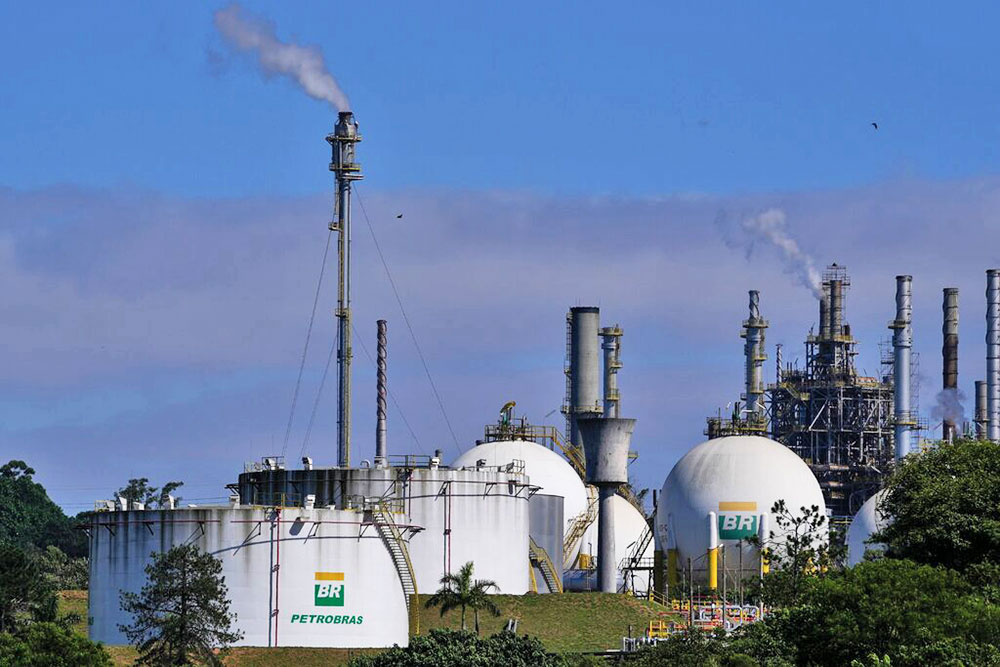
Just weeks before the summit came the news that Brazil's state-run oil company, Petrobras, will be allowed to drill near the mouth of the Amazon River for the first time. Credit: Andre Penner/Associated Press
Even so, Brazil's leader, President Luiz Inácio Lula da Silva, opened the talks by denouncing obstructionists who,
The problem has become so acute that the summit, for the first time, put the issue on the agenda.
A coalition of countries and international
agencies issued a separate "Declaration on Information Integrity on
Climate Change," calling on governments to address climate
disinformation, promote transparency and protect journalists,
scientists and environmentalists.
By Friday, only 21 of the nearly 200 countries
that signed the Paris Agreement had also signed the disinformation
declaration.
Mr. Lula said that this year's summit would,
Instead, it struggled to build consensus.
The final conference statement did endorse the call to promote "information integrity" and provided more money for vulnerable countries hit by climate catastrophes...
But it included only a voluntary agreement among nations to begin discussions on a "road map" to an eventual phaseout of fossil fuels. The modest outcome was only achieved after a bitter standoff with oil-producing countries from the Persian Gulf.
Critics blamed the oil, gas and coal interests that have been increasingly present at U.N. summits in recent years for the meager results.
One review of delegates by a group called the Kick Big Polluters Out coalition found 1,600 fossil fuel representatives participated in the Belém talks, a number that includes diplomats from countries with state-run oil companies.
1,600 fossil fuel representatives, including diplomats from countries with state-run oil companies, participated in COP30, according to a review by the Kick Big Polluters Out coalition. Credit: Jared Hamilton for The New York Times
For critics of the environmental movement, the shifting sentiment on display in Brazil was a victory after years of pressure on energy industries.
Polls consistently show that a majority of adults globally and in the United States consider climate change to be a serious 'threat'...
At the same time, a growing body of research is warning that climate 'misinformation',
...is steadily growing, amplified by social media.
The strategy is not subtle, a recent study found.
Climate skeptics present their position as,
Political campaigns deploy the same playbook.
Republicans frequently claimed the Biden administration was trying to "emasculate" American drivers by forcing them into electric vehicles.
Lee Zeldin, Mr. Trump's Environmental Protection Agency administrator, has labeled climate change a "religion" instead of what it is: a matter of physics.
Taylor Rogers, a White House spokeswoman, said that Mr. Trump was pursuing,
Still, Mr. Trump's policies threaten more than 500 solar and energy storage projects in the U.S. that were set to provide 116 gigawatts of capacity.
His administration also terminated a $4.9 billion loan guarantee for an 800-mile transmission line that would have carried mostly wind power from the Great Plains to some of the most strained parts of the nation's power grid.
Social media platforms, podcasts and other forms of media regularly amplify climate misinformation.
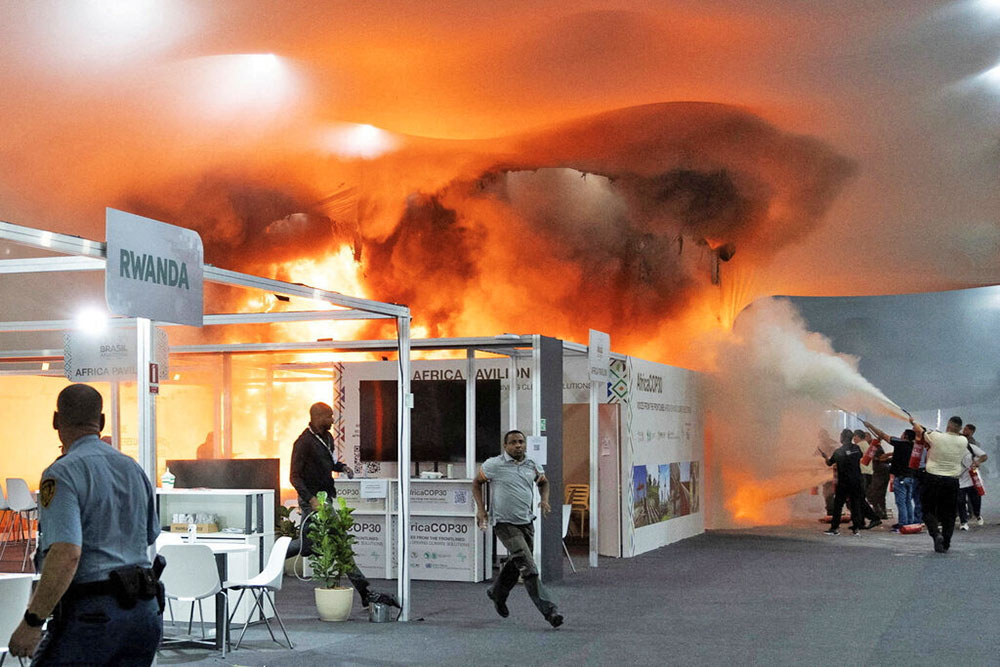
A recent example:
The item was shared dozens of times including by prominent opponents of climate science, though Brazil's tourism minister said the fire was believed to have been caused by a short circuit in electrical wiring.
A fire broke out at the Pavilion of Countries at COP30. Credit: Douglas Pingituro/Reuters
While critics have called on social media platforms to do more, they have instead retreated from efforts to fight climate disinformation.
...said Mr. Milloy, who previously served as an adviser on Mr. Trump's transition team for the Environmental Protection Agency.
On the eve of Trump's inauguration in January, Mark Zuckerberg, the chief executive of Facebook's parent company, Meta, announced fewer restrictions on political topics, ending a fact-checking program in the United States that routinely called out those who disputed climate science.
YouTube prohibits promoters of climate 'disinformation' from monetizing their accounts or buying ads, but a number of studies have argued that it does not enforce its rules vigorously.
Mr. Whitehouse said profits will always be the bottom line for the fossil fuel industry and others opposed to meaningful efforts to fight climate change.
|