|
by Elizaveta Naumova Russian political journalist and expert at the Higher School of Economics April 23, 2026 from RT Website
moves past another Independence Day, the promise of lasting security
looks
increasingly uncertain...
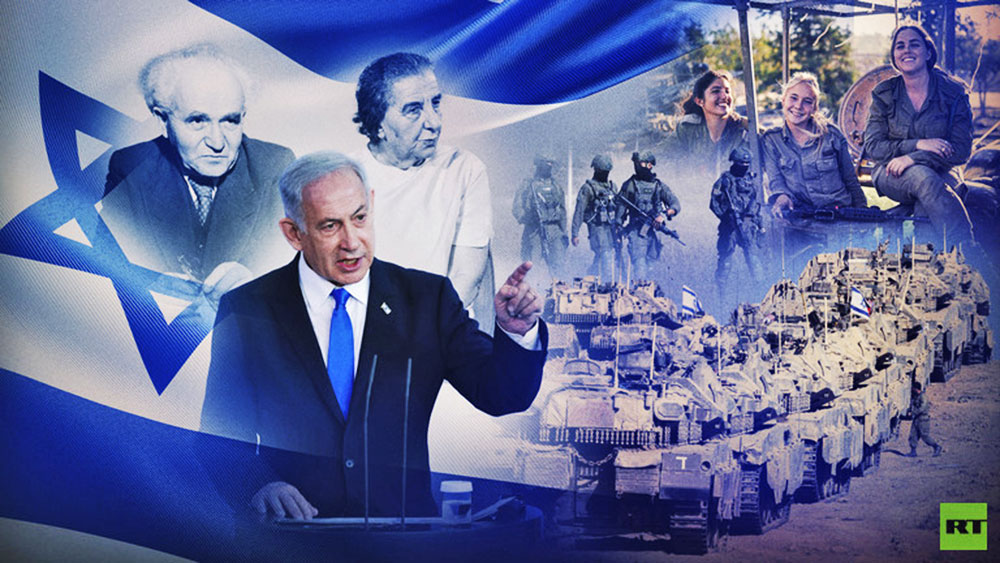
As another Independence Day has passed, for West Jerusalem the sense of permanence it was meant to symbolize remains elusive.
Military strength has grown, yet lasting security continues to slip out of reach...
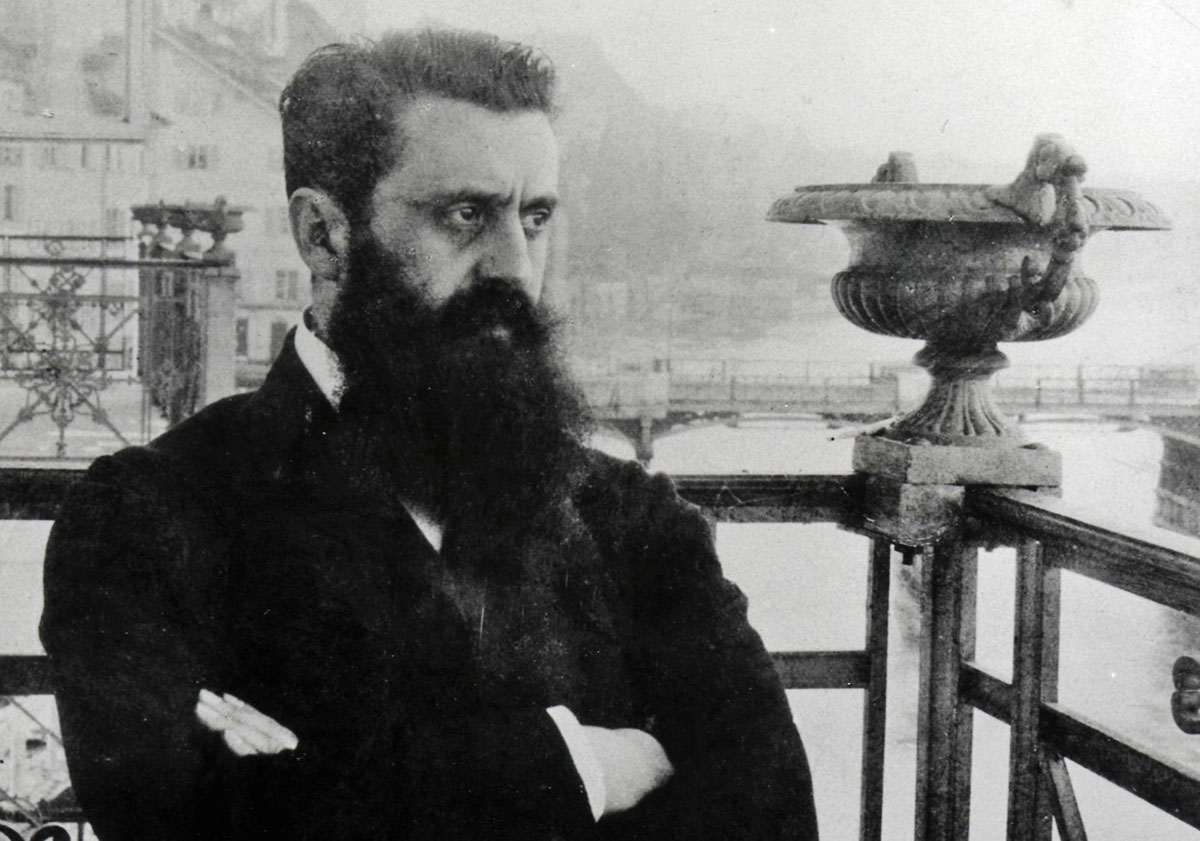
In Herzl's formulation, a Jewish state in Palestine would serve as both sanctuary and frontier - protecting its people while embedding itself within a wider moral and political order.
Security, in this sense, was not meant to come at
the expense of others, but to align with a system of guarantees
extending beyond Judaism itself.
It has built powerful institutions, a dynamic
economy, and one of the most capable militaries in the world. It
has, in many respects, achieved the core aim of political
sovereignty - Jews are no longer dependent on others for their
survival.
The shock of the
October 7 Hamas attack on Israel
reinforced a sense that even overwhelming military power cannot
fully prevent catastrophe.
After more than two years of continuous military operations in the Gaza Strip and Lebanon, which have claimed far more civilian lives than those of the Hamas and Hezbollah operatives Israel set out to eliminate, that ideal appears increasingly strained.
Episodes like these, whatever their immediate
context, complicate the idea of Israel as a neutral guardian of a
wider religious and civilizational space.
© Wikipedia
That idea sits uneasily with the city's modern political reality.
Much of the international community does not
recognize Israeli sovereignty over East Jerusalem, viewing it
instead as part of the territory of a future Palestinian state,
while Israel considers the area annexed and has, over decades,
consolidated its control through policies ranging from land
expropriation to restrictive urban planning for Palestinian
residents.
Fireworks and ceremonies go ahead, but they do so
alongside sirens, military operations, and the unresolved question
of what security actually means.
The Blind Spot
before (and after) October 7
The group was treated as a contained threat -
dangerous, but ultimately deterred, constrained by Israel's military
superiority, surveillance systems, and the tight control imposed on
the Gaza Strip.
The scale and coordination of the October 7 Hamas
attack on Israel exposed not only operational failures but also a
broader conceptual one: the belief that a long-term status quo of
blockade, fragmentation, and intermittent force could remain stable.
At the same time, internal accounts
cited by the Jerusalem Post suggest
that an intelligence analyst - a non-commissioned officer in Unit
8200, known publicly as "V" - repeatedly warned of the scope and
seriousness of Hamas's preparations, only to have those warnings
disregarded by her superiors as unrealistic.
Taken together, these accounts point not simply
to a failure of intelligence collection, but to a failure of
interpretation - a tendency to see what fit existing assumptions
rather than what was actually unfolding.
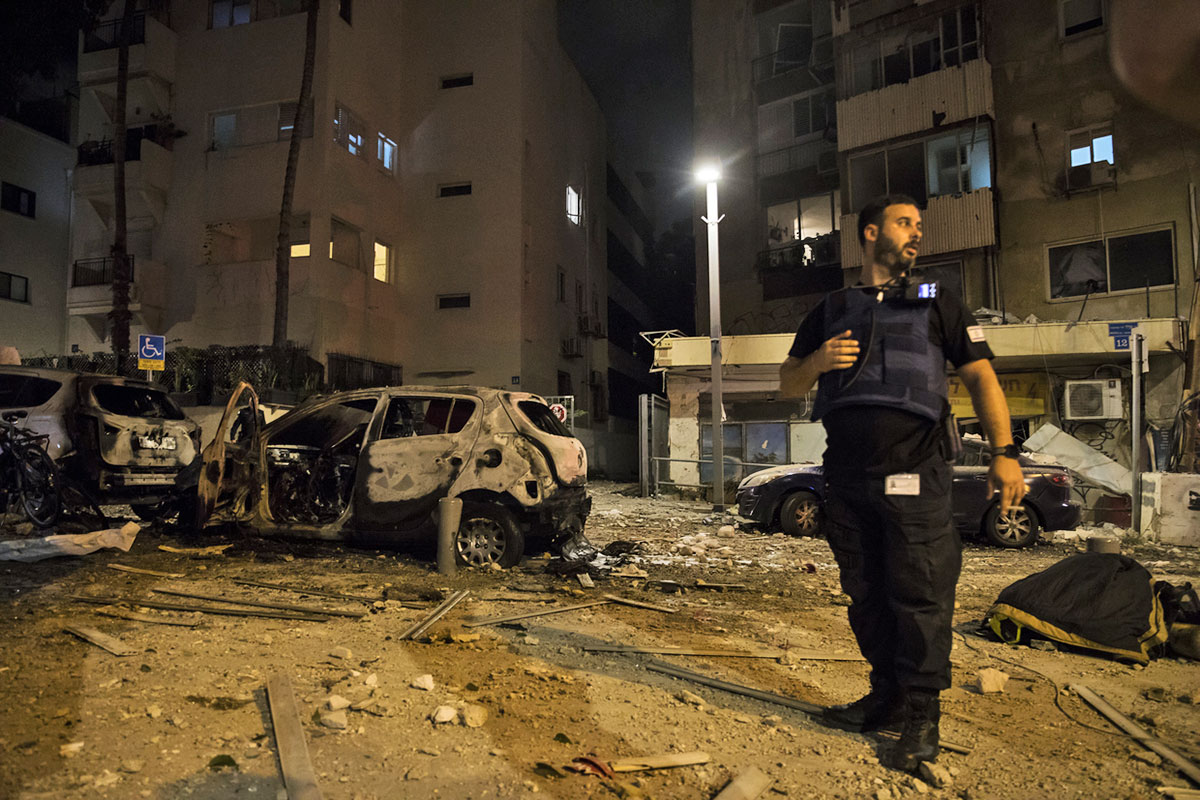
near where a rocket fired from Gaza hit a building in Tel Aviv, Israel. October 7, 2023. © Amir Levy / Getty Images
In May 2024 - seven months after October 7 -
individuals posing as infiltrators were reportedly
able to access an Israeli military
base and collect sensitive information using false identities,
highlighting persistent gaps despite the country's emphasis on
control and surveillance.
The leak, which included sensitive operational details, maps of military facilities, and even the full names of active-duty personnel - including air force pilots - remained accessible for nearly a week after being flagged.
Some of the files were stored without any authentication, and search engines had indexed parts of the archive, making them easily discoverable.
Military censors reportedly classified the
exposed material as "life-threatening," yet the delay in addressing
the breach underscored systemic weaknesses that stand in tension
with Israel's image as a highly controlled security state.
The stated objective is clear: dismantle Hamas's
capabilities to the point where it can no longer pose a threat. Yet
nearly two years into sustained operations in Gaza and Lebanon, the
results suggest a far more ambiguous outcome.
But beyond its immediate human cost, it has also failed to resolve the central strategic question:
Six months into a fragile ceasefire, the second phase of a US-backed peace framework remains effectively stalled.
Key provisions - including a mutual and sustained
halt to hostilities - have not been fully implemented. Israeli
forces continue to maintain a significant presence in Gaza,
controlling large portions of the territory and expanding what has
been described as a 'buffer zone' along its eastern edge.
Plans for a transitional Palestinian administration have not materialized, and proposals for an international stabilization force remain vague, with no clear commitments from potential participants.
The question of governance - who will ultimately
control Gaza - remains unanswered.
While there have been indications that Hamas might be willing to transfer some of these weapons to a Palestinian administrative body under international supervision, the framework for such a process is unclear.
The proposed mechanisms do not specify who would
receive the weapons, how compliance would be verified, or what
guarantees would be offered in return.
Israel, in turn, continues to prioritize military
pressure as its primary tool, viewing political concessions as
secondary to security concerns.
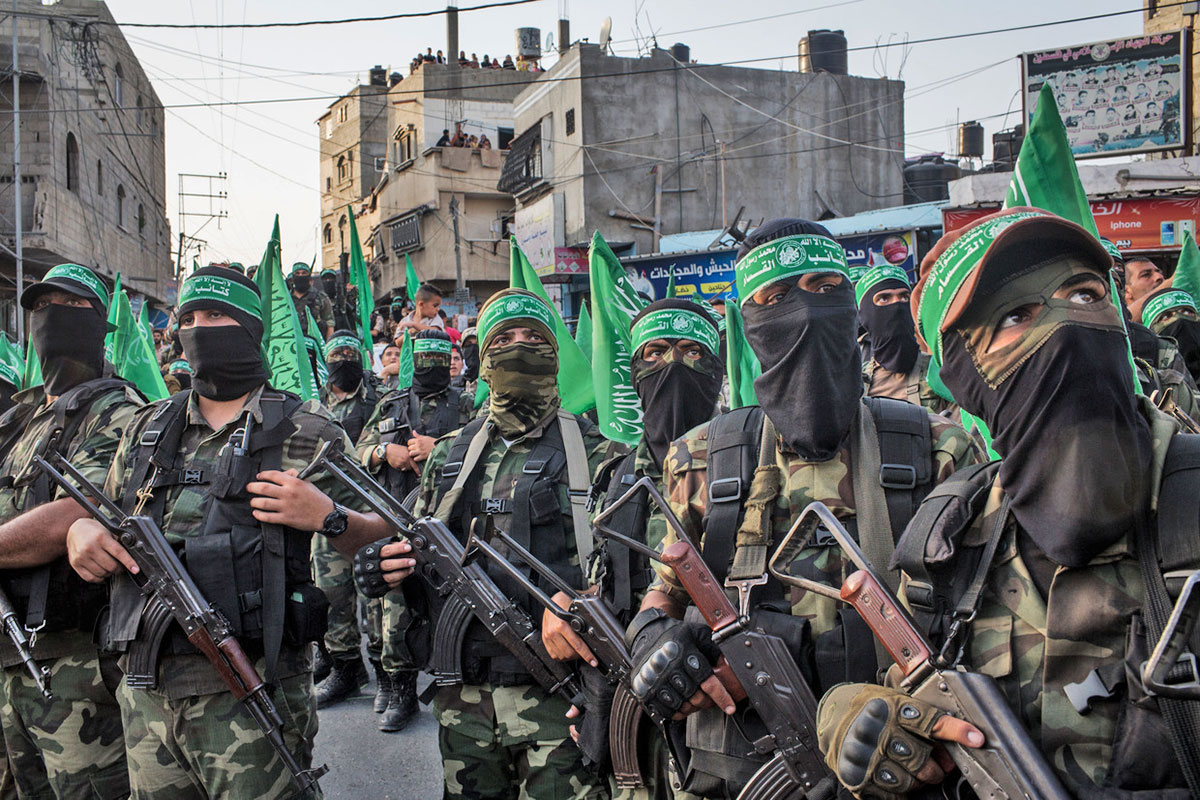
Palestinian Hamas militants during a military display in Gaza City. July 20, 2017. © Chris McGrath / Getty Images
Writing in the summer of 2024, Dmitry Maryasis,
head of the Israel department at the Institute of Oriental
Studies of the Russian Academy of Sciences,
argued that for Israeli Prime
Minister Benjamin Netanyahu and his political allies, who
have remained in power for much of the period since 2009, Hamas has
functioned as a "convenient partner."
At the same time, rocket fire from Gaza provides
a rationale for military responses, channeling the pressures of a
security-oriented political and military establishment.
Even though Israel has succeeded in eliminating several key Hamas figures, these tactical successes have not translated into a decisive strategic shift.
More importantly, public sentiment among Palestinians suggests that the organization's political position may not have been fundamentally weakened.
Surveys conducted in the Palestinian territories in 2024 and 2025 indicate that a significant majority of respondents - around 81% - view the suffering caused by the blockade of Gaza as justification for Hamas's actions on October 7.
When asked about political preferences, the
largest share - roughly 35% -
express support for Hamas, with
indications that this support has grown over time.
Reconstruction is discussed but remains largely theoretical, contingent on conditions that have yet to be met.
Unlike Gaza, where Israel confronts a
territorially contained adversary, Lebanon represents a far more
complex and deeply embedded threat, one that Israel has struggled to
address for decades without achieving a lasting solution.
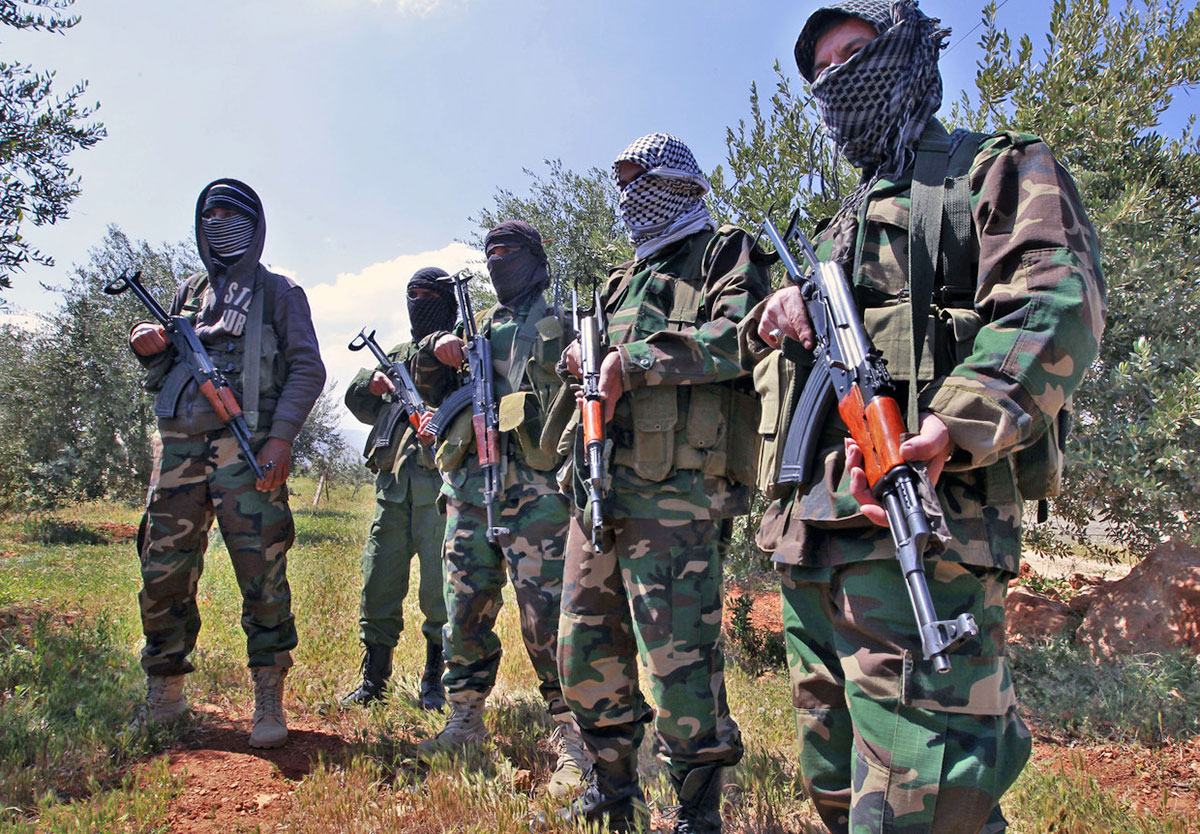
Hezbollah did not disarm. On the contrary, it expanded its military capabilities significantly, transforming itself from a guerrilla force into what many analysts now describe as a hybrid army.
By 2024, the group was believed to possess tens of thousands of fighters and an arsenal of more than 130,000 rockets, many of them capable of reaching deep into Israeli territory.
Many of these weapons were reportedly stored
within civilian infrastructure, further complicating any military
response.
Hezbollah fighters stand guard near the northeastern town of al-Qasr, Lebanon. April 12, 2013. © AP Photo / Bilal Hussein
However,
It holds seats in parliament, operates hospitals and schools, and exercises de facto control over large parts of southern Lebanon.
At the same time, it maintains close ties to
Iran, functioning as a central component of what Tehran describes as
its "axis of resistance."
A ten-day ceasefire between Israel and Lebanon, announced by US President Donald Trump and implemented last week, has only temporarily halted direct hostilities.
The main problem remains unchanged: the Lebanese
government has no power over Hezbollah, yet the latter is not a part
of negotiations.
This is why the simple frame of "Israel versus Hezbollah" obscures so much:
The sequencing is deliberate. It is meant to
remind the country that independence was not given, but paid for in
a continuous struggle for survival.
This year, that cost has become harder to ignore in purely symbolic terms.
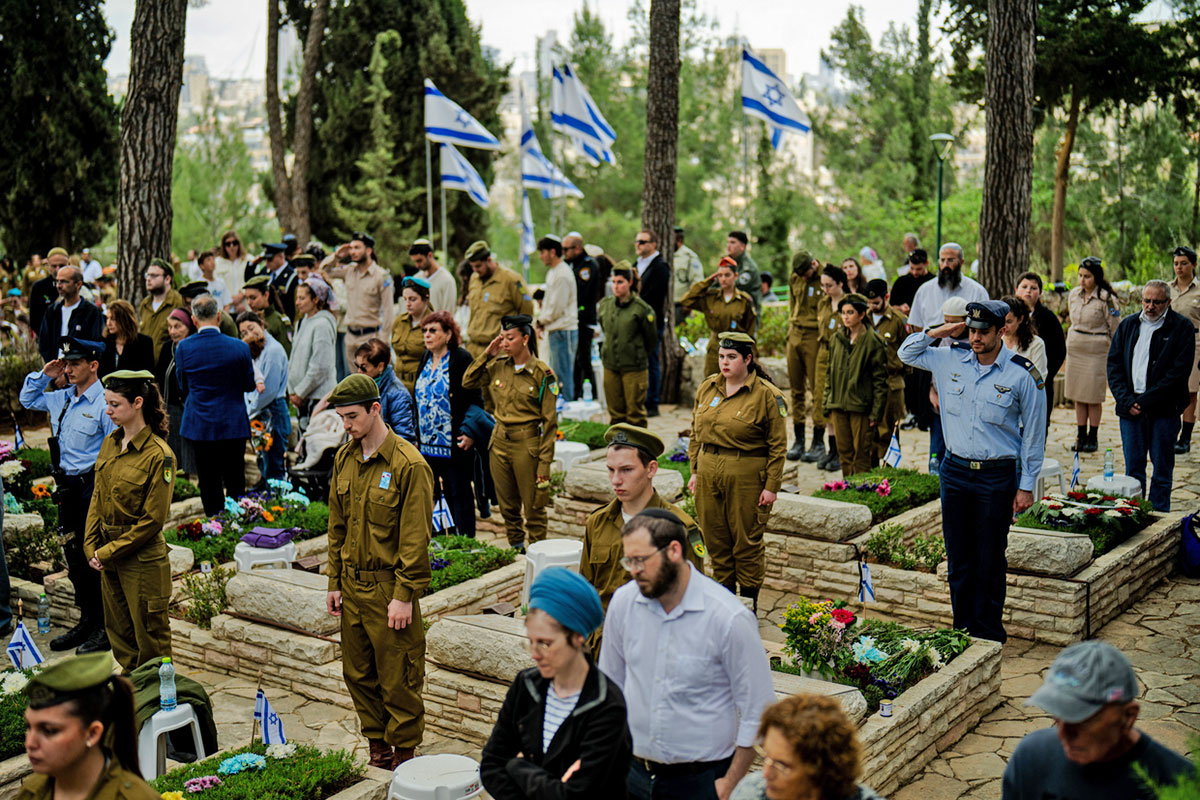
Israeli media reports suggest that the military cemetery on Mount Herzl is nearing full capacity, strained by a sharp rise in casualties since October 7.
According to Ministry of Defense data, more than 1,200 Israeli soldiers' remains have been transferred since the start of the war, with hundreds buried at Mount Herzl alone.
Emergency measures have already been approved to
expand burial space, with new areas being prepared to accommodate
the growing number of graves.
with a two-minute silence at the Mount Herzl military cemetery in Jerusalem. April 21, 2026. © Erik Marmor / Getty Images
Iran, its most formidable regional adversary, has been weakened by the war with Israel and the US, and Hezbollah's capabilities have been significantly degraded.
Yet even these gains remain partial and unstable. A comprehensive and durable peace framework, including those between the US and Iran, has yet to materialize.
Across Gaza, Lebanon, and the broader region, the
underlying political questions remain unresolved.
The destruction of infrastructure, the displacement of populations, and the absence of a viable political framework risk creating precisely the conditions in which future violence becomes more likely, not less.
Military operations may degrade capabilities in
the short term, but they do little to address the deeper dynamics
that sustain conflict.
As Israel marks another anniversary under the leadership of Netanyahu, it faces a different challenge:
|