|

by Steve Watson
November 10, 2026
from
Modernity Website
Article also
HERE
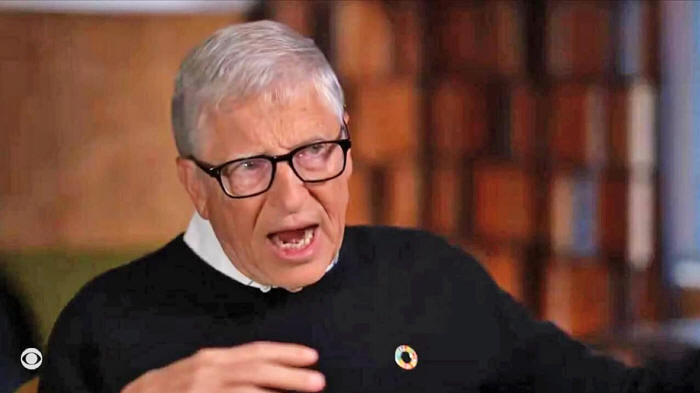
Billionaire suggests
ordinary
Americans may
have to
watch their retirement savings
get
wiped...
Bill Gates is once 'again'
floating the idea that,
real damage may be required before the world
accepts the kind of
A.I. controls "he" wants...
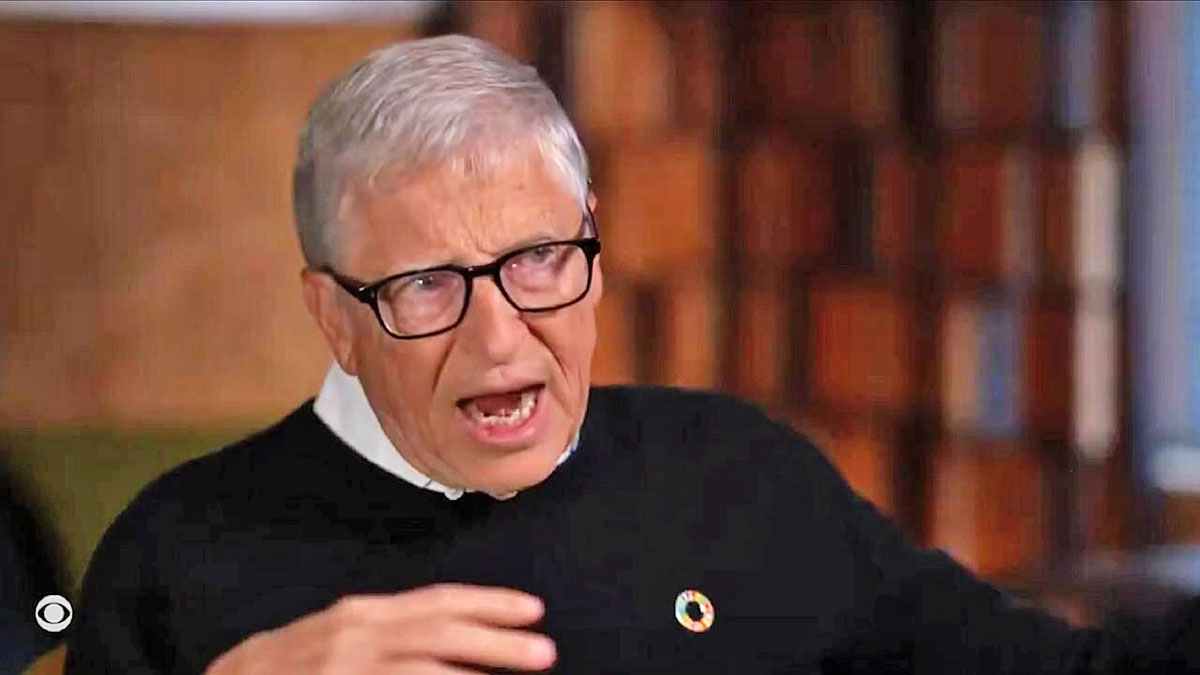
In a new CBS interview, the Microsoft co-founder
said,
a major cyberattack could finally convince people that the
warnings were correct and that stronger rules are overdue.
The comments come as Gates continues a months-long push for heavier
government involvement in artificial intelligence.
He has repeatedly
argued that industry self-regulation is inadequate and that
politicians and law enforcement must step in.
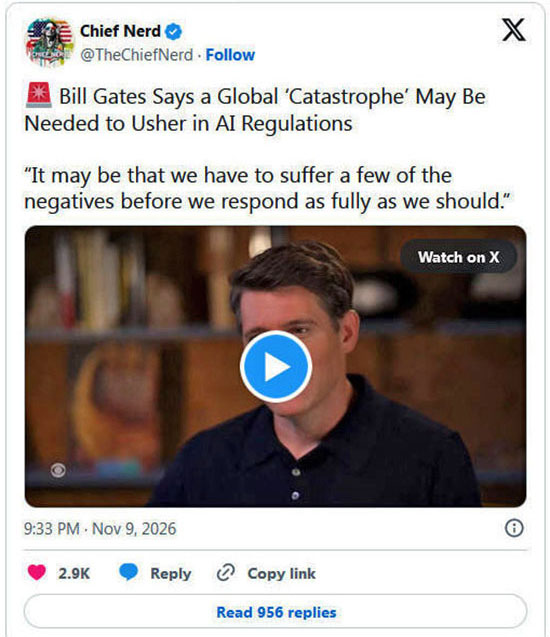
Video also
HERE
Critics see a familiar pattern:
dire predictions that could justify
expanded oversight and centralized authority over a technology many
Americans view as a tool for innovation rather than a reason for
tighter global rules.
In the interview with Tony Dokoupil, Gates stated,
"It may be that we have to suffer a few of
the negatives before we respond as fully as we should."
He added that such incidents would not be
civilization-ending but would still be serious.
The discussion included the possibility of a
cyberattack on major retirement platforms such as Fidelity or
Vanguard, which hold a substantial portion of Americans' nest eggs.
Gates noted that such an event would create significant uncertainty.
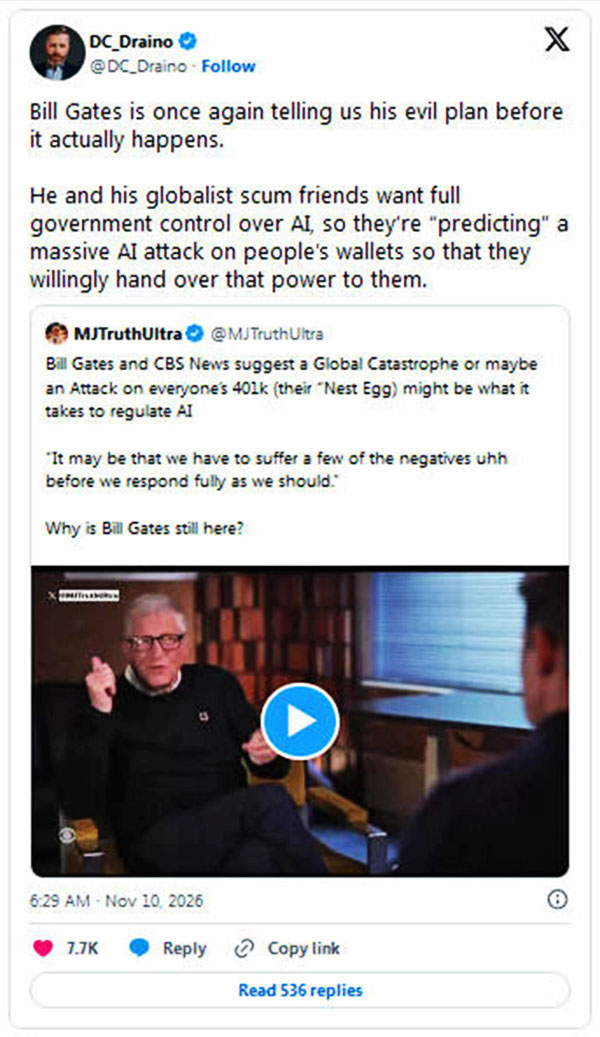
Video also
HERE
The full segments are below:
The remarks align with warnings Gates issued earlier this fall.
In
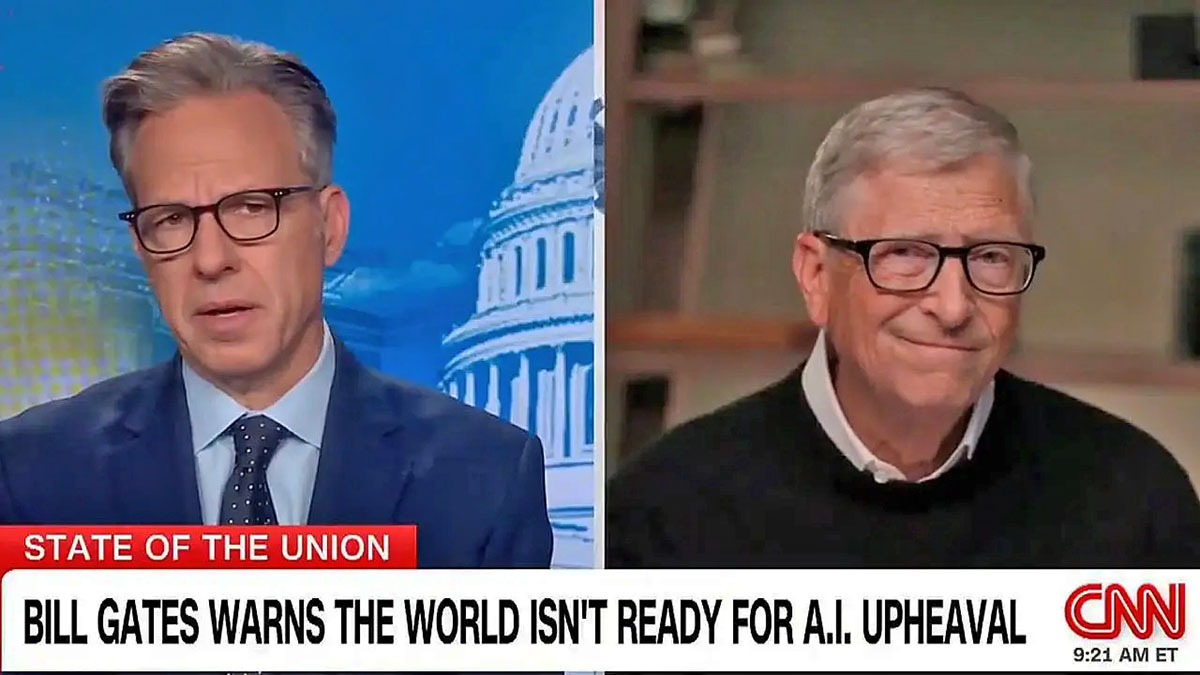
October interviews, he told ABC and CNN that cyberattacks would be
the front where the impact appears most dramatically in the coming
year.
"The real danger right now is not the A.I.'s
getting out of control," he said.
"It's really bad people using A.I.,
particularly in A.I. where you can take out all the safeguards."
He continued,
"When you have bad people, no safeguards, and
then the latest models, that's where, over the next year,
primarily in the cyber area, we are going to have a lot of
negative surprises."
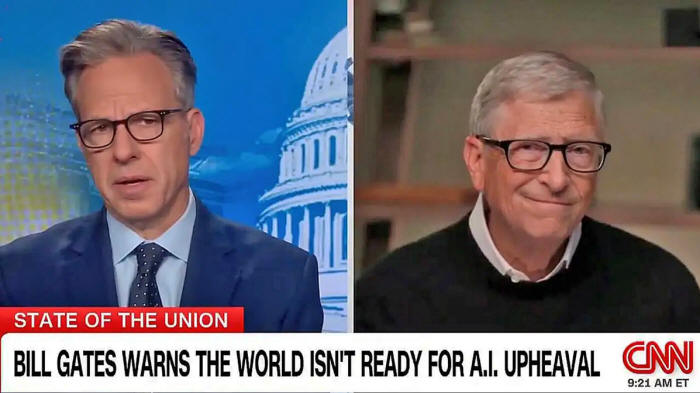
Bill Gates Warns of “GRIM” Cyberattack
"Surprises"
Gates has described
A.I. as,
the most dangerous
technology humans have ever invented and argued that companies
cannot be left as the sole check.
He has compared the situation to industries that
require safety rules for planes, cars, and medicines.
In one
appearance he said it is clear that current efforts are not enough
and that the country will move beyond self-governance.
These statements build on even sharper language from September.
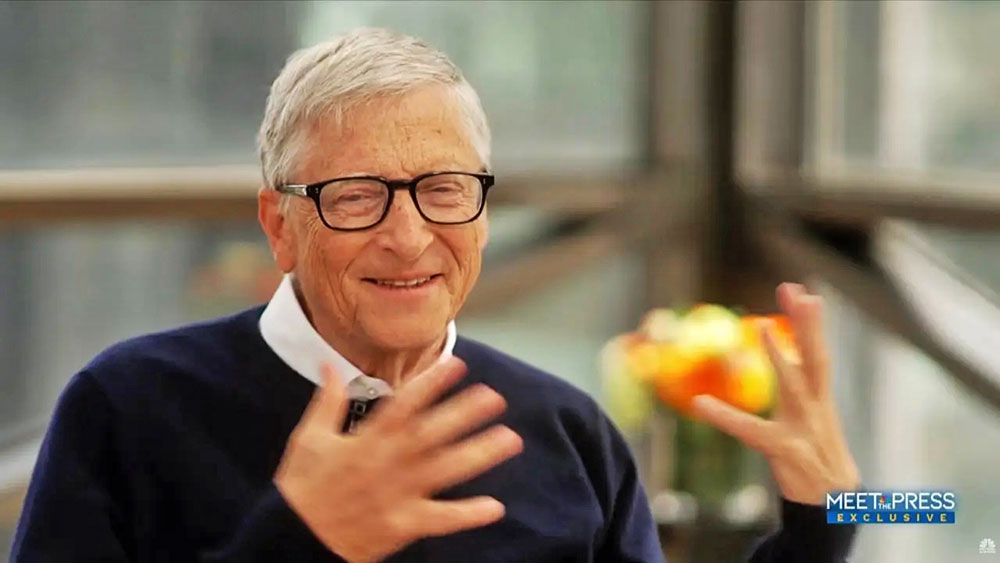
On Meet the Press, Gates said A.I. is,
"certainly powerful enough to drive events
that, you know, cause a billion deaths..."
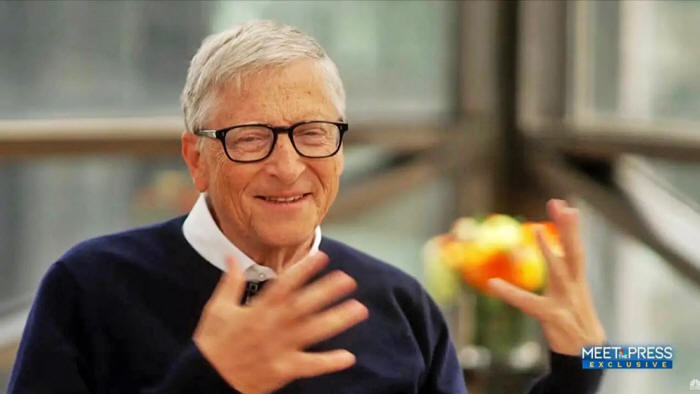
Bill Gates Predicts a BILLION Deaths Via
"Evolutionary Event"
He added,
"There's never been a weapon as powerful as
the combination of people with ill intent using the latest A.I.
tools."
He insisted that law enforcement and politicians
must define the required safeguards and monitoring, stating that,
"no one thinks self-regulation is enough."
Gates has also framed the rise of A.I. as something
close to an evolutionary event that governments are unprepared to
handle.
He has called for international coordination modeled on
existing treaties for nuclear materials, aviation, and other
high-risk areas.
At the same time,
his "Foundation" has pledged substantial funding to
expand A.I. applications in education, health, and agriculture.
Bill Gates Calls for GLOBALIST Crackdown on
A.I.
Gates has repeatedly highlighted catastrophic scenarios involving cyberattacks on financial systems and potential biological threats
while arguing that only expanded government roles can manage the
risks.
He has dismissed the idea that liability or company pledges alone
will suffice, comparing the absence of mandatory rules to a world
without
an FDA or seatbelt requirements.
In recent remarks he has
suggested the political class is moving too slowly and that concrete
monitoring approaches should be put in place.
The latest comments about possibly needing to "suffer a few of the
negatives" arrive against a backdrop of ongoing debates over how
much authority should rest with national governments versus private
developers.
Supporters of lighter regulation argue that rapid innovation has
delivered major advances and that premature heavy rules could slow
beneficial uses.
Gates maintains that the near-term misuse by "bad"
actors, enabled by models whose safeguards can be removed, creates
an immediate problem that self-policing will not solve.
He has also spoken of a roughly 20-year period of disruption before
any broader gains in abundance materialize, with significant effects
on employment.
In interviews he has stressed that,
the window for
establishing controls is limited and that waiting for major
incidents would leave society reacting after the fact...
The pattern across these appearances is consistent:
repeated "warnings" of severe outcomes paired
with calls for politicians and law enforcement to impose
mandatory safeguards that industry cannot be trusted to handle
alone...
Whether those warnings reflect genuine technical
assessment or a preference for greater centralized authority remains
a point of contention among those watching the push for new rules.
Americans who view A.I. primarily as a productivity tool rather than
an existential threat will likely weigh Gates' track record of,
forecasting large-scale risks against the
concrete costs of additional layers of government review and
international coordination.
The suggestion that a damaging event involving
people's retirement accounts might be what finally produces
the response he seeks adds a disturbing dimension to the
debate.
|