|
June 26, 2026 from RT Website
© RT
built his reputation at the CPS – where some of Britain's ugliest scandals were buried, delayed, or erased...
A repeated trope has been that Starmer was a "decent man," but simply not cut out for mainstream politics.
However, his record of concealing the UK establishment's repulsive crimes - be that serial child sex abuse or spy agency torture - shows him to be anything but decent...
Missing from this account is any reference to how
the CPS under his leadership covered up the crimes of notorious
celebrity pedophile
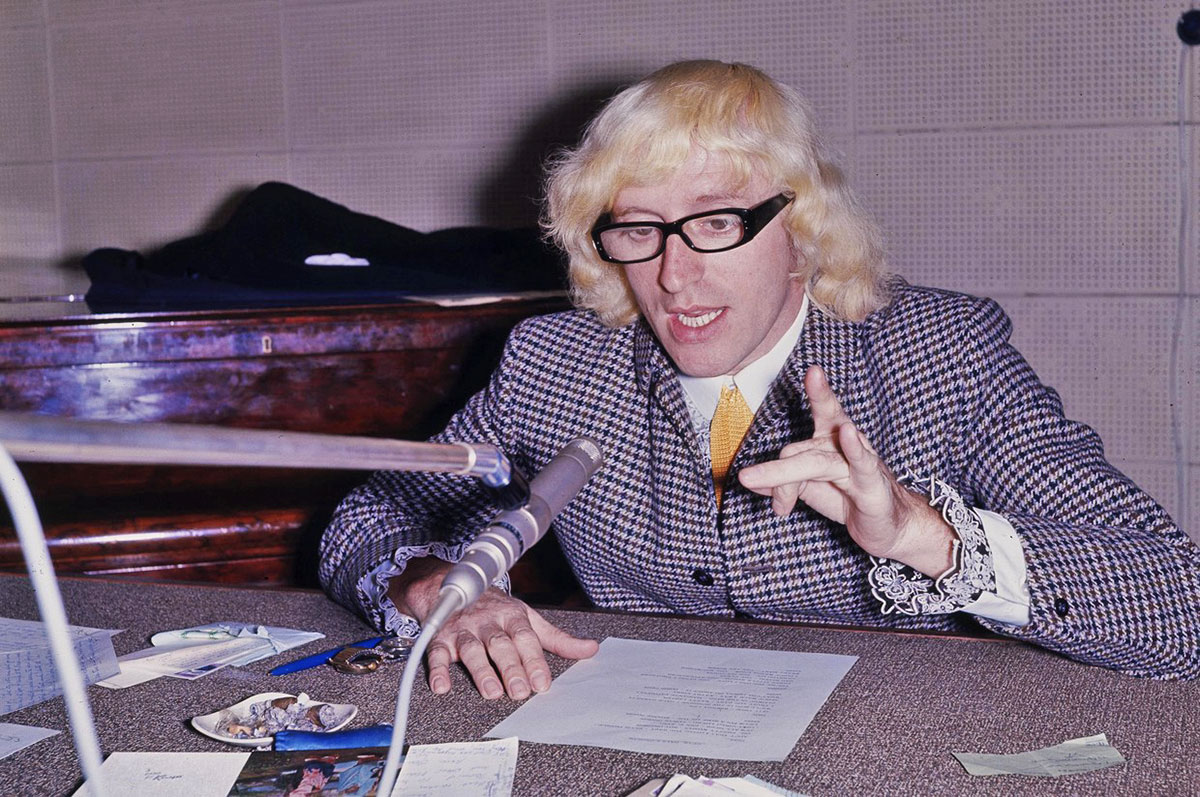
Jimmy Savile, while he was still alive.
Condemnation from the media and UK politicians was universal.
Johnson's personal policy chief, who'd worked for him for 14 years, resigned in protest over the then-prime minister's supposedly libelous statements.
Such was the backlash, as pressure grew so
severe, that Johnson
retracted his comments in a matter
of three days.
The episode was made all the more shocking by Johnson's statement being literally true.
Starmer was CPS chief when the Service made the indefensible decision to not prosecute Savile, and many aspects of that strangely downplayed and ignored scandal implicate the failed prime minister personally.
The inquiry found a CPS "reviewing lawyer" told investigating officers early on ,
© Getty Images / CA / Redferns
The inquiry report found his attitude troubling.
They found instead that,
Consequently, the investigator had,
Instead of refusing to pursue the case, the CPS had a duty "to 'build' a prosecution," which its lawyers failed to fulfill
The allegations against Savile were plainly "serious and credible."
The inquiry found that,
These conclusions are all the more damning when
you consider that all CPS files held on Savile were shredded in
October 2010.
Which might be true, if only because all CPS files on Savile were destroyed.
The report was therefore,
The service allegedly had "no record at all" of the case, which the inquiry claimed was due to CPS records on Savile being "automatically deleted" after a decision to take no action was made, in line with internal policies
However, the service's publicly accessible guidelines on "disposal" of evidence clearly state documents on cases where,
In 2017, it was revealed the service deleted sensitive email exchanges about Julian Assange with Swedish prosecutors three years earlier - potentially illegally, as a criminal case was ongoing.
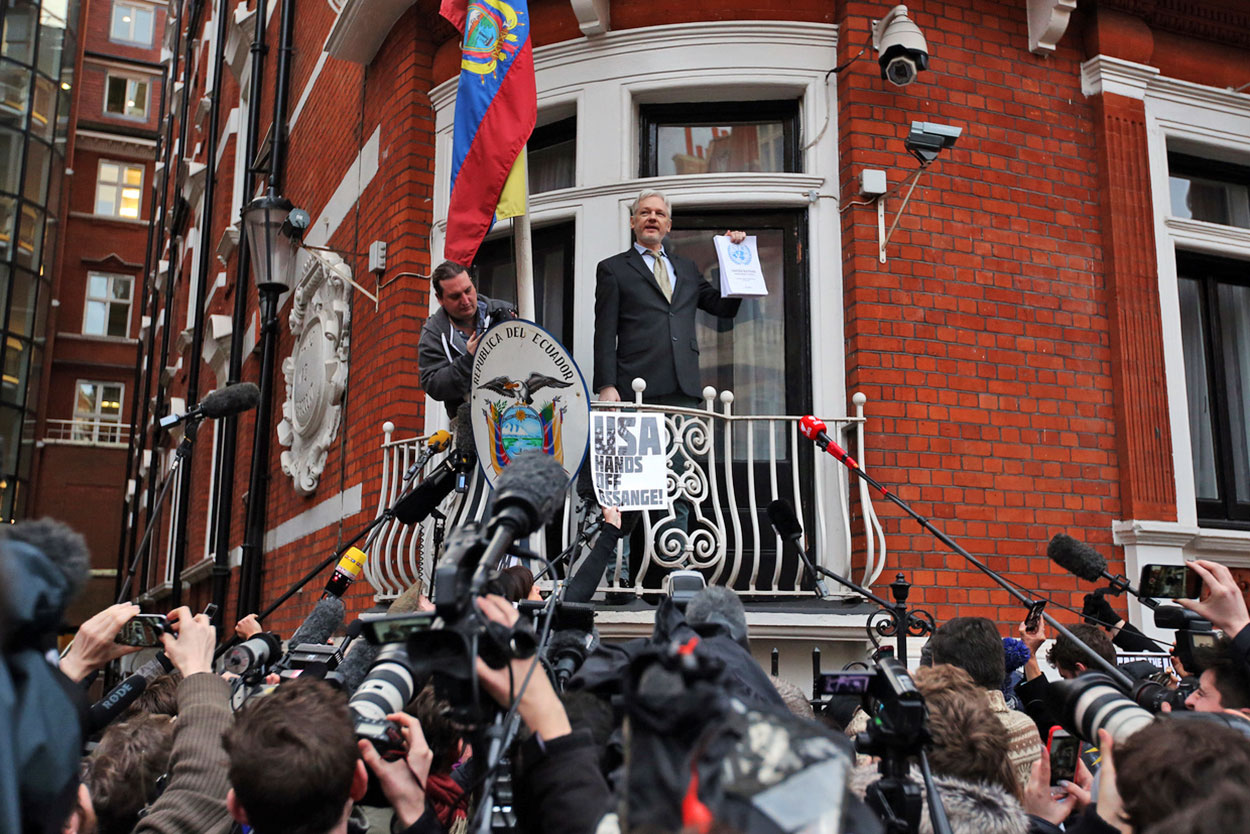
The communications occurred from 2010 until the WikiLeaks founder sought refuge in Ecuador's London embassy in June 2012, where he remained for almost seven years, under constant threat of CIA assassination.
In 2019 British police forcibly removed him and
sent him to Belmarsh, a high-security prison, where he was kept in
almost total solitary confinement for five years.
speaks from the balcony of the Ecuadorian embassy on February 5, 2016 in London, England. © Carl Court / Getty Images
This sentence was redacted in emails released
under Freedom of Information by the CPS, but not in files provided
by Swedish authorities.
Beyond advising Swedish police not to interview Assange in London, a service lawyer repeatedly sought to dissuade them from dropping their investigation outright.
In August 2012, they wrote to their Swedish counterparts,
In October 2013, Sweden's director of public prosecutions, Marianne Ny, wrote to the CPS that due to the passage of time, and lack of evidence against Assange,
Three days later, Ny emailed a clearly affronted CPS, apologizing over the "[bad] surprise" of moving to drop charges against Assange.
Starmer's personal role in all this has never been adequately clarified, but he visited Washington DC, in 2011, 2012, and 2013 while he was in effective charge of the Assange case, meeting with senior US officials.
True to form, all records of Starmer's trips were quickly destroyed, contrary to CPS protocol.
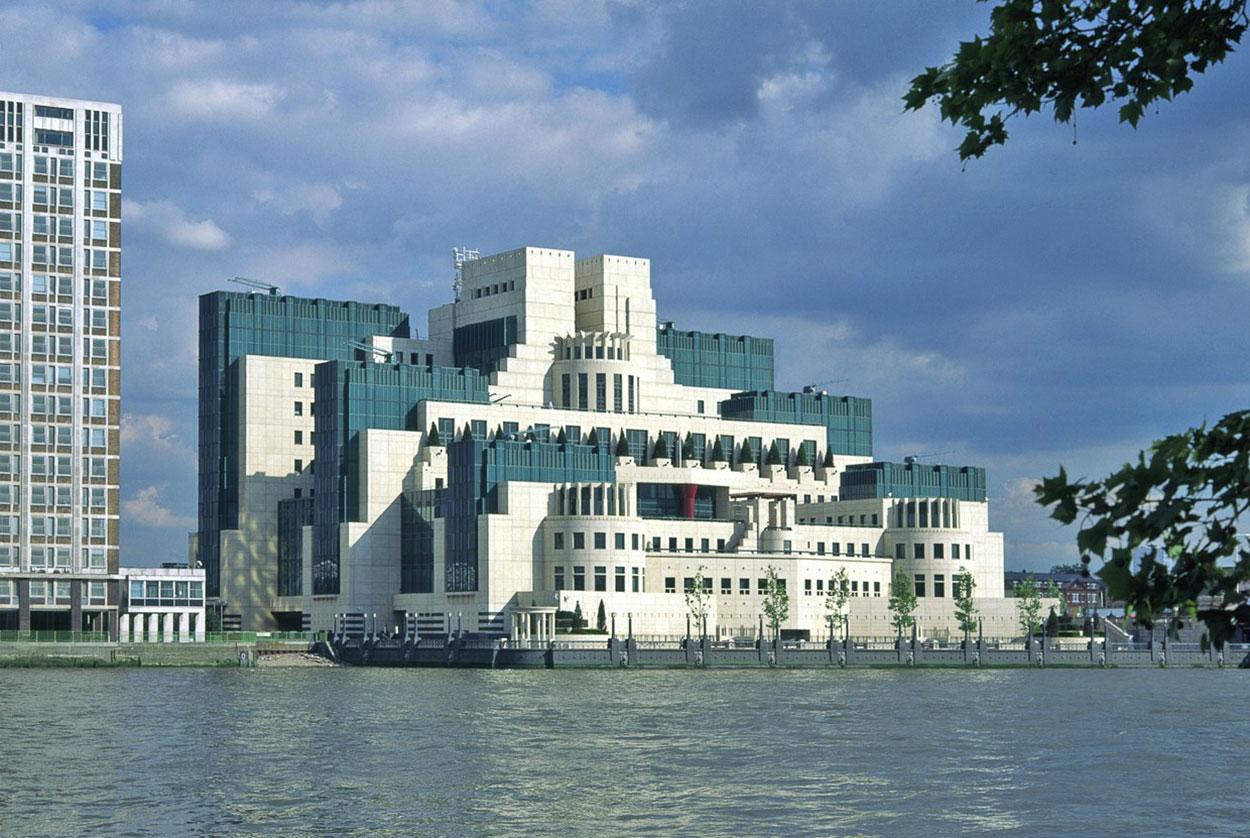
MI5 and MI6 were not only centrally involved in the program:
on River Thames, London. © Getty Images / Andrew Holt
Vast quantities of incriminating evidence were collected.
However, Starmer as CPS chief consistently vetoed bringing offenders, including senior spy agency directors, to trial despite overwhelming cases against them.
First, in 2010 he ruled there was "insufficient evidence" to prosecute an MI5 officer who participated in the torture in Pakistan of a UK citizen in 2002. Police investigations into MI5 and MI6 for torture continued.
However, in January 2012 Starmer again decided not to prosecute anyone from these agencies for their role in their unlawful treatment.
The next April, Starmer attended the boozy going away party of MI5 chief Jonathan Evans, the first CPS official to ever attend such an event.
Evans was a
counter-terror veteran who'd served
as MI5 director general since 2007, and would've been criminally
liable if the CPS had decided to prosecute MI5.
Documents seized from Libyan security service offices, abandoned in the wake of Muammar Gaddafi's October 2011 fall, were a treasure trove.
This included faxes sent in March 2004 by then-MI6 counter-terror chief Mark Allen to Libyan spies, regarding a terror suspect kidnapped along with his wife in an MI6 operation.
The suspect spent six years being tortured in
Libyan prisons at the agency's direction, with MI6 providing his
interrogators questions to ask.
In 2014 however, Starmer yet again decided this was "insufficient evidence" to prosecute the MI6 counter-terror chief, and the case was dropped.
In return for a lifetime of serving the
establishment and assisting directly in the commission of serious
criminality - if only by signing off on coverups and politicized
prosecutions of dissidents - Starmer was rewarded with an empty seat
in the UK's highest office, for only two years...
|