|
by
Raphael Machado has such an electoral result been seen in US midterm elections.
At that time, halfway through Bill Clinton's first term, Republicans achieved joint control of the Senate and the House in what became known as the "Republican Revolution."
Now in November 2026 we could speak of a "Democratic Revolution" with the capture of 9 Senate seats and 23 House seats.
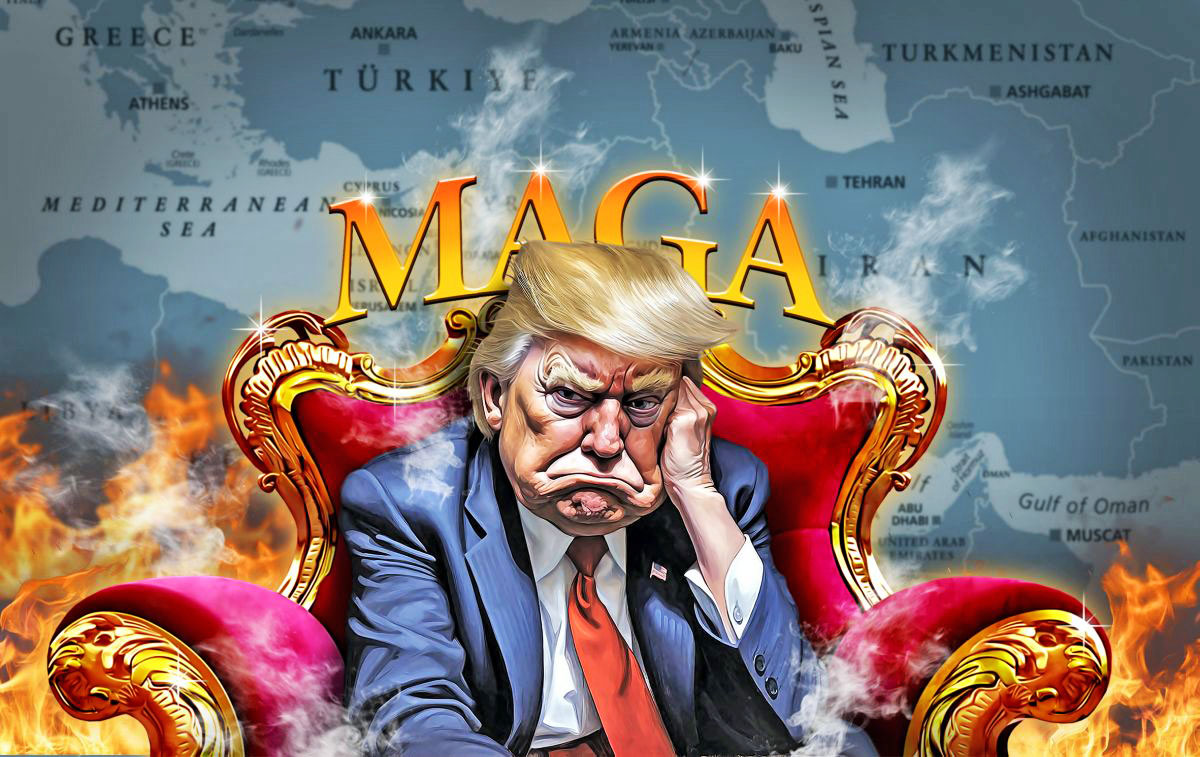
The feeling among Trumpist Republicans is that Trump has ruined everything...
Let us recall that,
Donald Trump's return, when everyone had already written off Trumpism as defeated and Trump's career as over, was a practically miraculous event.
To understand the gravity of the situation,
Texas, long traditionally Republican, saw a Democratic victory in
the state gubernatorial election for the first time since the 1990
elections.
CNN exit polls in 2024 indicated that 46% of "Hispanic" voters voted for Donald Trump in the presidential elections.
Furthermore, the reality is that there is no way the demographic constitution of the US could have changed so much from 2024 to 2026.
On the contrary, in fact the Trump government,
even with the controversies surrounding
ICE, managed to deport
approximately 1.2 million immigrants in 2 years (nor should Trump's
setback be attributed to harsh anti-immigration policies, since
deportations enjoy broad popular support, according to polls).
Among other promises, Trump was elected to provide a solution to the problem of US deindustrialization...
His electorate is composed, in part, of the "white proletariat" that was betrayed by Reagan and his neoliberal policies that led companies to seek Asia for cheap labor.
The formula chosen by Trump to provide a solution to this problem was the resumption of trade protectionism.
The results of this policy, however, have been uncertain.
The tariffs against Brazil and some other
developing countries, in turn, increased the costs of various
primary consumer goods, from meat to coffee.
As Iran closes the Strait of Hormuz and strikes US-allied Gulf countries, the impact on the oil market is immediate.
With the US military failure and the conflict stretching over months, US citizens had to deal with increases of more than 40% in fuel prices.
And that is where we approach the true cause of Trump's failure:
Because there was no other reason, beyond the defense of Israeli interests, for the US (Trump) to attack Iran.
There was no interest to be pursued or achieved through a war against Iran. Iran never represented a threat to the US, having an exclusively regionalist geopolitics.
Iran also did not threaten US commercial or economic interests, since until the February 28 attack Hormuz was open.
Even the "oil" logic falls apart, considering the
abundance of oil resources in the US itself and the fact that the
country managed to expand its access to reserves with its
"operation" in Venezuela.
Instead,
All because he was incapable of
resisting the Zionist lobby, which has long become a
parasitic and malignant element in US politics.
A Pew Research poll indicates, for example,
In 2022 it was only 35%...
The result of the midterm elections, therefore, was predictable.
What is astonishing is not properly the result,
but Trump's
inability, after this defeat,
to recognize his mistakes.
Vance's speed in accusing the errors of the
government of which he is an essential part points to an attempt to
"detach" his own image from Donald Trump's worn-out image...
Vance's problem is that, in this, he will face
Marco Rubio, current US Secretary of State, whose allies in
Florida were the only Republicans who had broad success in these
elections...
|