|

January 2026
from
NYTimes Website
Contents
At Davos a Clash
...between
'Trump's World' and the 'Old World'
by Zolan Kanno-Youngs
Reporting from the World Economic Forum
in Davos, Switzerland
January 21, 2026
from
NYTimes Website
Article also
HERE...
|
Jordyn Holman and
Peter S. Goodman contributed reporting from Davos,
Switzerland.
Zolan Kanno-Youngs is a White House correspondent for
The Times, covering President Trump and his
administration. |
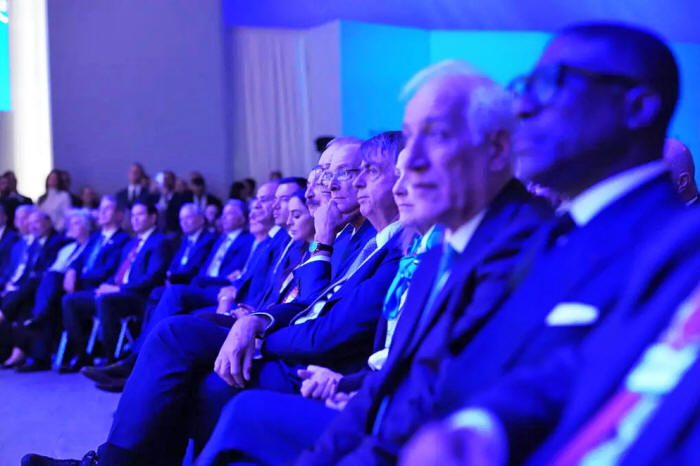
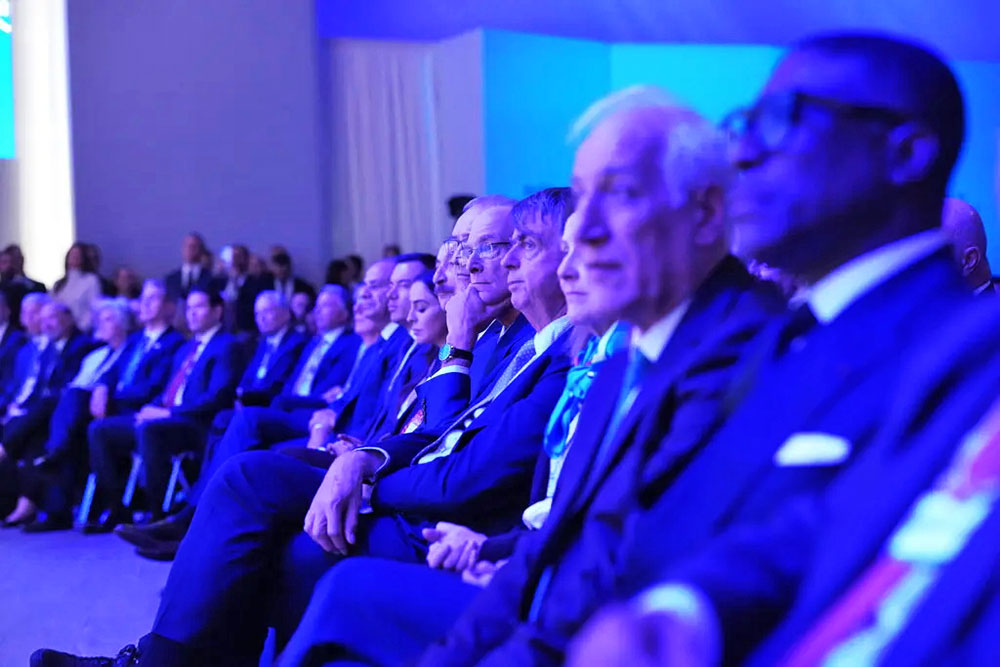
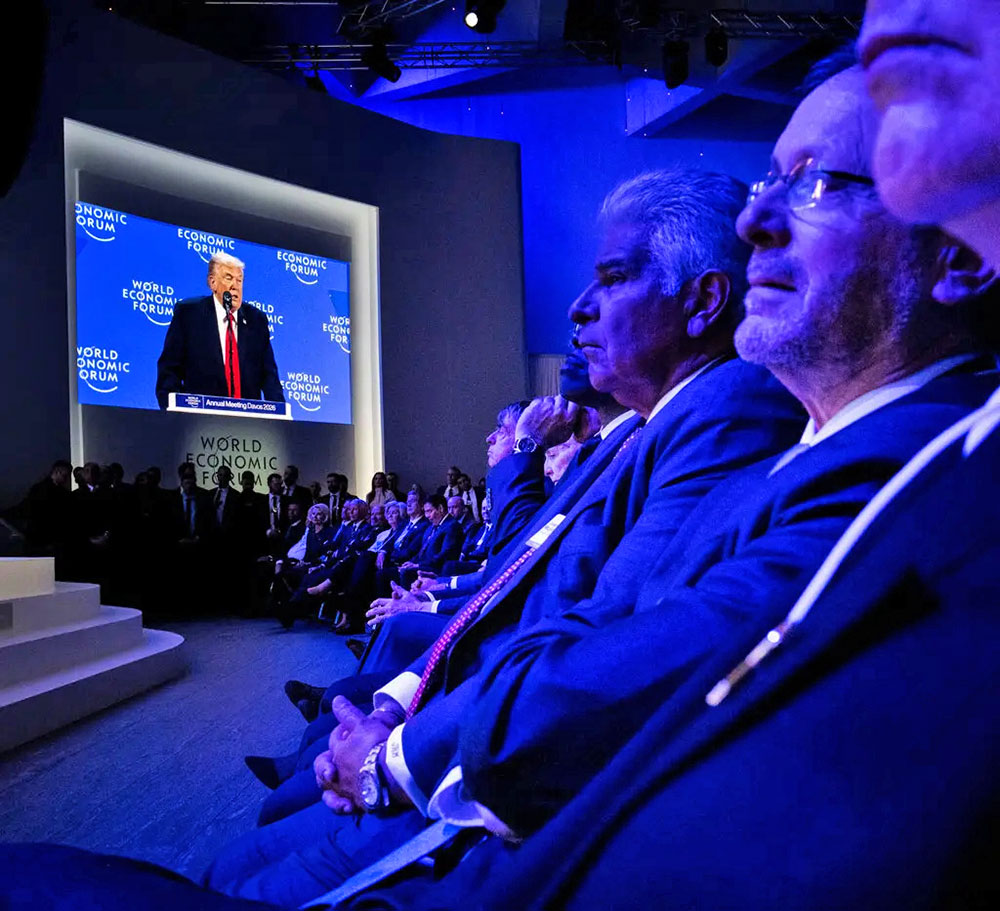
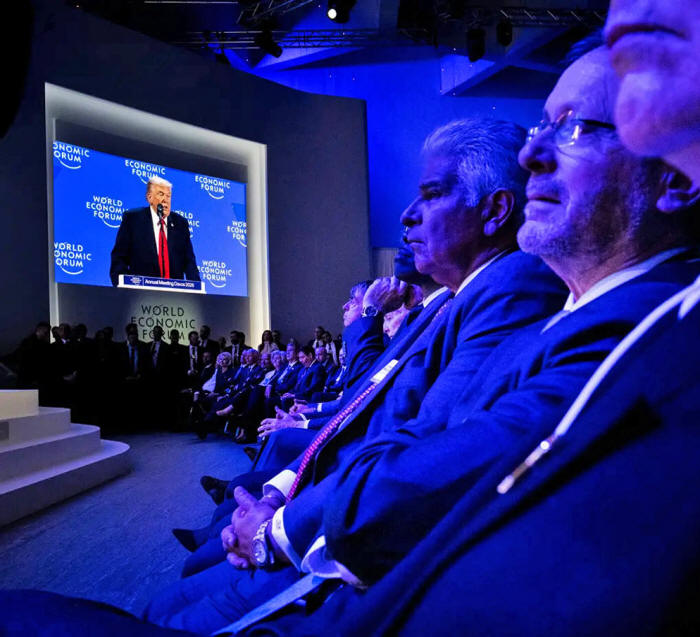
Audience members listening to
President
Trump's address at Davos on Wednesday.
Credit: Doug
Mills/The New York Times
For
decades,
leaders
have gathered in Davos
to discuss
a shared economic and political future.
On
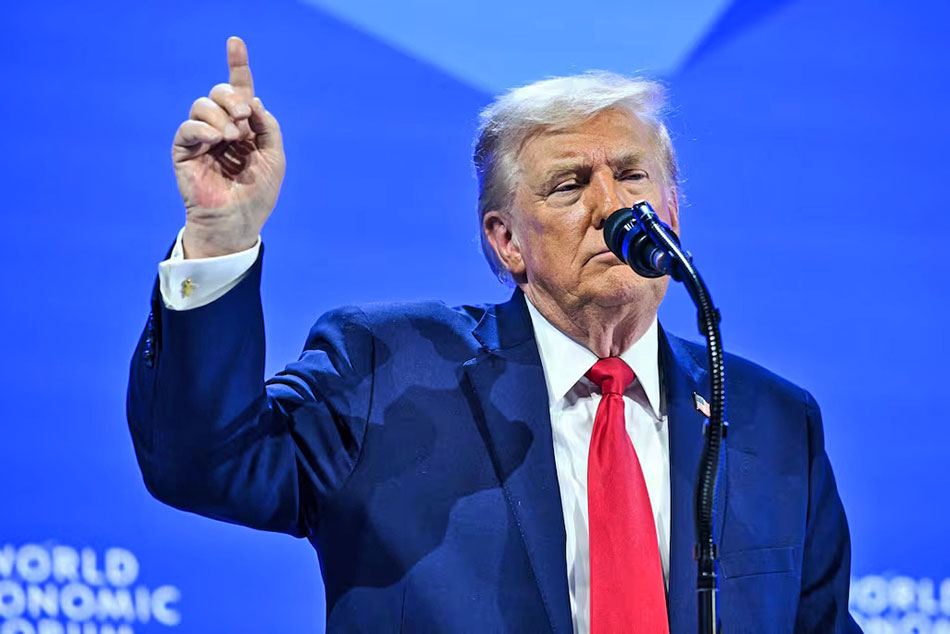
Wednesday, President Trump
turned the
forum into a bracing clash
between
his worldview and theirs...
As President
Donald J. Trump threatened to
upend some of the central pillars of the Western order on Wednesday,
during a speech at the World Economic Forum (WEF)
in Davos, Switzerland,
some in the crowd of elites sat speechless.
Others groaned.
A few gasped.
Alexander Stubb, the Finnish
president and a key power broker in Europe, stood up ashen-faced at
the end of the speech that took aim at people like him:
the leaders of the Western political and
economic elite.
As others made for the exits, Mr. Stubb
approached Senator
Lindsey Graham, Republican of
South Carolina - seeking to learn more, Mr. Graham later said, about
Mr. Trump and the United States' position.
"Everybody in Europe is concerned," Mr.
Graham, an ally of Mr. Trump, said dismissively after speaking
to Mr. Stubb.
"They're concerned when they get up and when
they go to bed."
The reaction from Mr. Stubb, who declined to
comment, embodied a broader sense of shock across the conference, a
talking shop for political and economic leaders.
For decades, like-minded politicians,
businesspeople, investors and celebrities have gathered
in Davos to discuss a shared
economic and political future.
But for more than an hour on Wednesday in one of
the main speaking halls, Mr. Trump transformed the forum into the
setting of,
a dramatic rupture between the
West's leading player and its increasingly distant allies.
After mocking European leaders for days, Mr.
Trump flew thousands of miles to this snowy mountainside to launch
into a verbal assault against the Western alliance, the values of
its leaders and societies, and the framework of world trade.
By the end of the day Mr. Trump had rescinded some of his worst
threats, saying that he had reached a tentative framework
with NATO
over the future of Greenland, which he wants to buy from Denmark,
and withdrawn threats to impose new tariffs on allies that opposed
U.S. ownership of Greenland.
While some European leaders expressed a glimmer of hope over the
moves, they did little to salve the deep fear among Davos's
browbeaten guests that the United States could no longer be relied
on as an ally.
Earlier in the day the group had weathered insult
after insult from Mr. Trump about their approach to trade, the
environment and immigration.
Scattered chuckling fell to an anxious silence before turning into
audible gasps as Mr. Trump used his speech to once again demand
ownership of Greenland, lash out against NATO and vaguely threaten
economic warfare if the European leaders did not acquiesce to his
demands.
European leaders sat stunned as Mr. Trump
insulted their governments and questioned their reliability as
allies...
Others grimaced as Mr. Trump claimed the
European nations and Canada owed the United States a debt...
Some even scrambled after the speech to find
and question current and former U.S. officials about the
president's thinking and the future of the United States as a
trustworthy partner...
Phil Gordon, a former national
security adviser for Kamala Harris who attended the speech, said
foreign officials approached him during the summit asking if Mr.
Trump's position was now "permanent."
"Is this America?" Mr. Gordon said European
officials asked him on Wednesday.
"And is the post World War II era
definitively over - or is there any hope it comes back?"
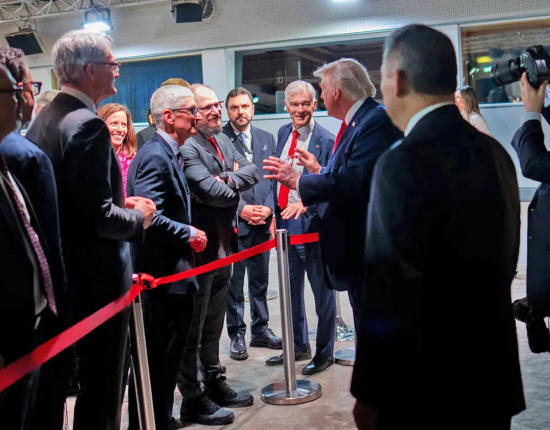
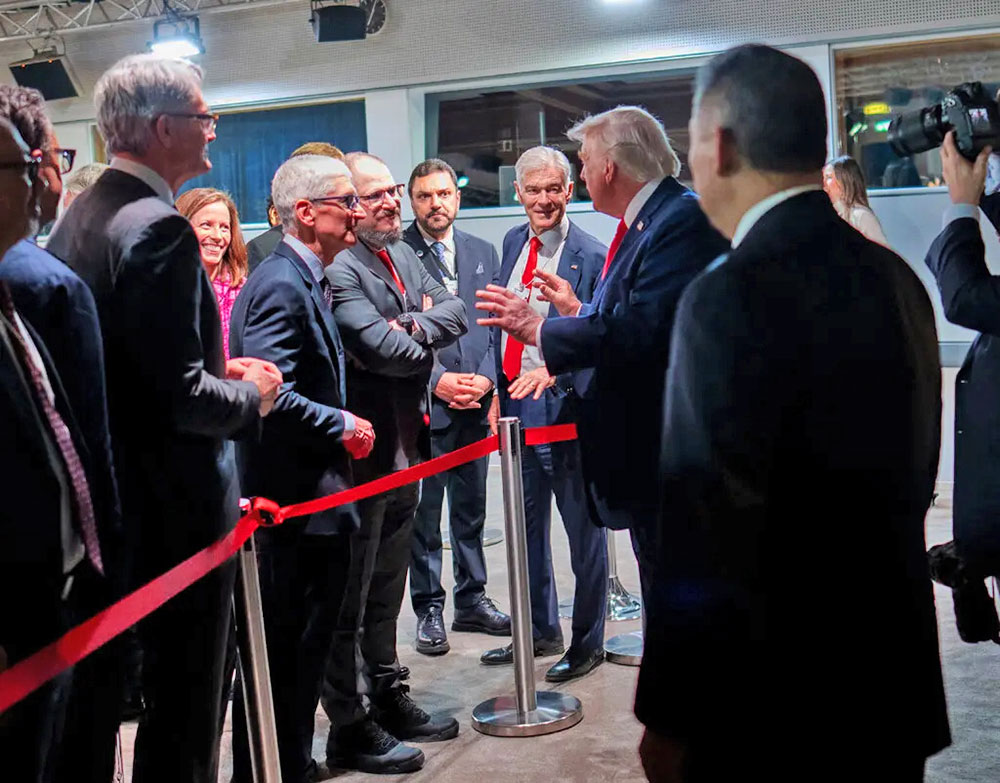
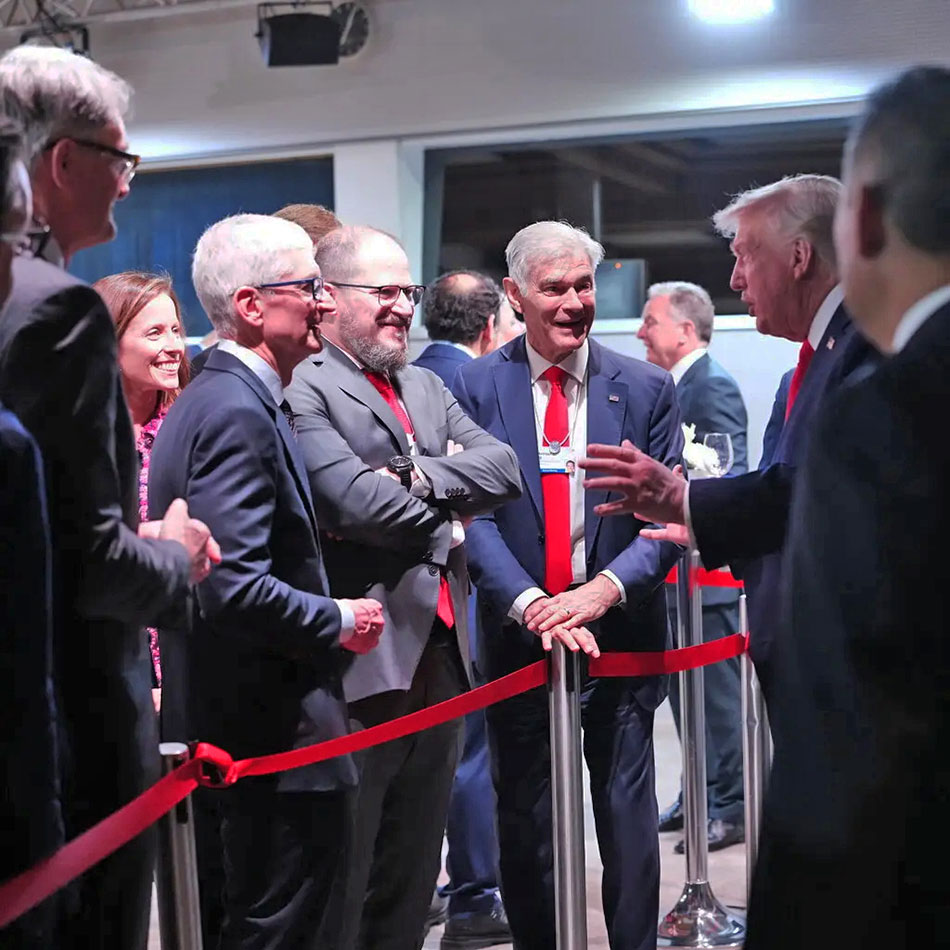
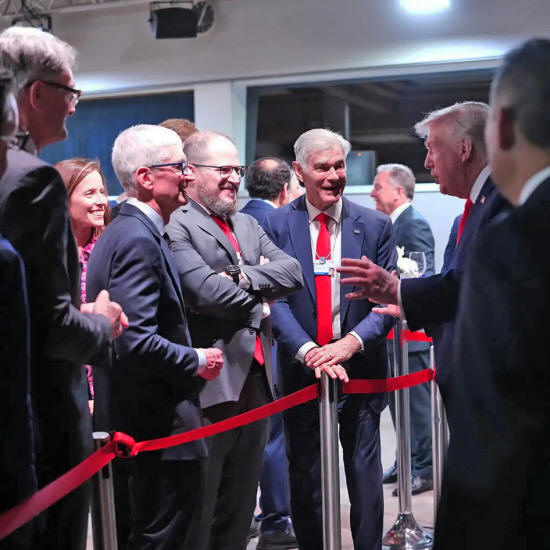
President Trump speaking
with business
leaders on Wednesday.
Credit: Doug
Mills/The New York Times
But there was also a growing acceptance that a new world order
is now emerging, right under their noses at a conference
that for years was so emblematic of the old frameworks.
"They accept that under Trump this is a new
world," said Mr. Gordon. "No one can deny that and even the
Europeans who have been in denial now accept."
In his speech, Mr. Trump crystallized an idea
central to that new world...
a searing disregard for the post World War II
world order.
Mr. Trump suggested the European allies owed him
Greenland.
He said that without the United States' efforts
in World War II,
"you'd all be speaking German and a little
Japanese perhaps," prompting moans from the crowd.
And while he said he would not use force to
obtain Greenland - prompting some to breathe a sigh of relief - he
did continued to frame Greenland as a debt that needed to be paid.
"You can say yes and we will be very
appreciative or you can say no and we will remember," Mr. Trump
said.
Mr. Trump took particular aim at Switzerland, the
country hosting the summit, stunning some Swiss officials.
"They're only good because of us," Mr. Trump
said of the Swiss as he celebrated his sweeping tariffs.
"I was really astonished," said
Elisabeth Schneider-Schneiter,
a member of the Swiss parliament.
"We are the hosts, we are the guarantee for
his security from the airport to Davos, with public tax money
spent, and I was convinced that we had resolved the trade
issue."
Whether the attendees liked his speech or not -
and many seemed to loathe it - Mr. Trump's appearance was the talk
of the conference.
Outside the hall where Mr. Trump spoke, companies held watch parties
to view his speech. Attendees tried to rearrange meetings in order
not to miss it.
On the promenade, people live streamed his
remarks while walking, before others later recounted the bombshells
in the speech.
"Are we even important?" one asked.
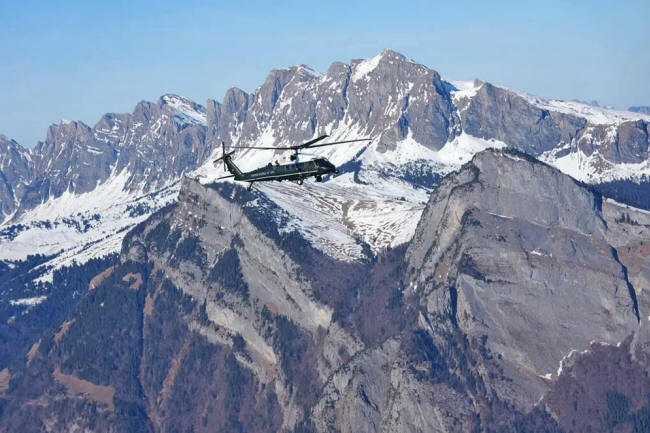
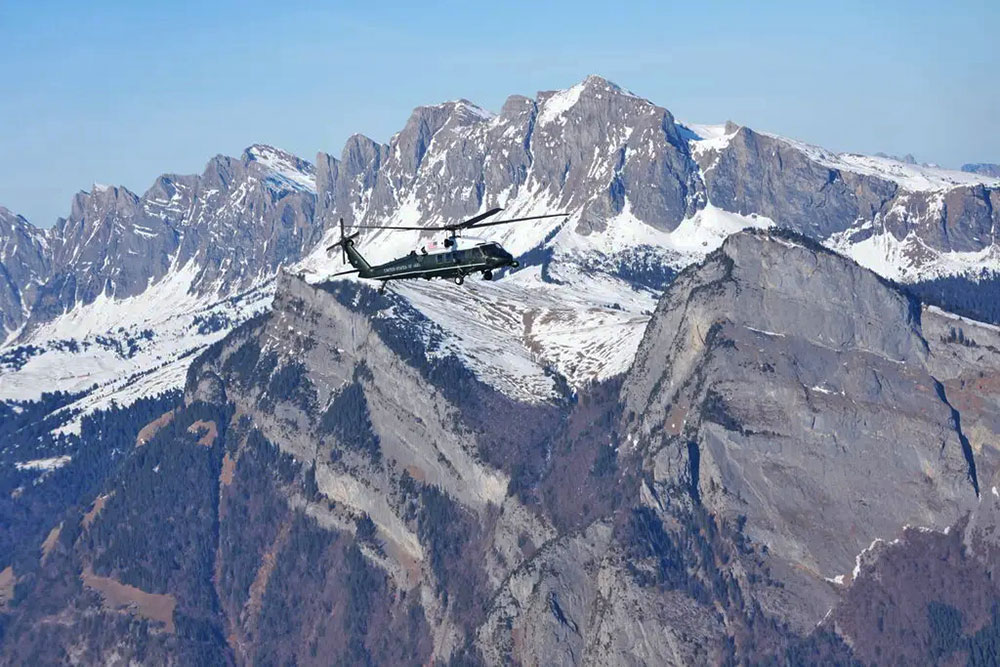
President Trump
arriving by
helicopter in Davos on Wednesday.
Credit: Doug
Mills/The New York Times
Yet others spoke of a disaster averted, particularly after Mr. Trump
said,
he was not interested in using force to
acquire Greenland.
Senator
Chris Coons, Democrat of
Delaware, said he later encountered some European officials who told
him,
"it could've been worse."
"It's remarkable when we've gotten to a place where we're saying
it could've been worse because an American president took off
the table the use of force against a NATO ally," Mr. Coons said.
Here and there, you could find warm support for
the president.
After his speech, Mr. Trump spoke at a reception for business
executives, financial chiefs and cryptocurrency leaders.
"We got great reviews," Mr. Trump told the
crowd.
"I can't believe it, but we got good reviews
of that speech. Usually they say he's a horrible dictator
type person, but sometimes you need a dictator..."
Minutes later, as Mr. Trump finished speaking, he
was met with loud applause.
And once Mr. Trump revoked some of his biggest threats on Wednesday
evening, the mood across the conference edged closer to relief.
After Mr. Trump's decision to pullback on tariffs, some attendees
texted their peers a single word:
"Taco!"
The term is short for 'Trump Always Chickens
Out', a tongue-in-cheek quip adopted by some critics to describe
Mr. Trump's tendency to threaten sweeping tariffs, only to pull them
back.
"They've lived through so many cycles of
this," Mr. Gordon said.
"You live to fight another day."
Return to Contents
Trump Takes Davos
by Sam Sifton
January 22, 2026
from
NYTimes Website
Article also
HERE...
At the World Economic
Forum.
Credit: Doug
Mills/The New York Times
We
look at the news
coming out
of the
World
Economic Forum (WEF)
in
Switzerland...
Could the United States end up in possession of Greenland?
After
Trump
gave a combative speech yesterday
in Davos, Switzerland - at a forum
that's meant to foster global collaboration - it certainly seemed
possible.
Trump told the audience of world leaders, billionaires and other
'elites' that he would not send troops to seize Greenland from
Denmark - but said he would take it all the same, threatening anyone
who stood in his way.
"You can say yes and we will be very
appreciative," Trump said, "or you can say no and we will
remember."
The threats - punishing tariffs chief among them
- had an almost immediate effect.
Just hours after the speech, Trump met with
Mark Rutte, the leader of
NATO,
and afterward said they had devised a,
"framework of a future deal with respect to
Greenland and, in fact, the entire Arctic Region."
Now he needn't impose tariffs on allies who
refused to heed to his demands for control of Greenland,
he said.
The announcement followed a NATO meeting yesterday in which top
military officers from the alliance's member states discussed a
compromise in which Denmark would give the United States sovereignty
over small pockets of Greenlandic land, The Times reported.
The United States could build military bases on
them. (Britain has a similar arrangement with its bases in Cyprus.)
Is that the framework of the deal Trump announced? NATO said in a
statement that,
"negotiations between Denmark, Greenland and
the United States will go forward aimed at ensuring that Russia
and China never gain a foothold - economically or militarily -
in Greenland."
A CNN reporter asked Trump if the deal he was
pursuing would result in U.S. ownership of Greenland.
Trump hesitated before replying.
"It's a long-term deal. It's the ultimate
long-term deal," he said.
How long?
"Infinite. There is no time limit. It's a
deal that's forever."
President Trump
at a reception
after his speech in Davos.
Credit: Doug
Mills/The New York Times
The Reviews
Trump has said that the United States needs Greenland for its
natural resources, for its national security and to contain Russia's
and China's global ambitions.
In an interview with The Times, he also cited a
"psychological" need to possess the island. Yesterday, though, he
focused on national security.
Europeans in general have been unmoved by those desires.
Reactions to Trump's speech yesterday seemed to
depend on nationality and profession, wrote
Zolan Kanno-Youngs, a White
House correspondent who
reported from Davos:
European leaders sat stunned as Mr. Trump
insulted their governments and questioned their reliability as
allies.
Others grimaced as Mr. Trump claimed the
European nations and Canada owed the United States a debt.
Some even scrambled after the speech to find
and question current and former U.S. officials about the
president's thinking and the future of the United States as a
trustworthy partner.
As my colleague Evan Gorelick said,
"It's a confusing time to be a European
leader."
The head of the Danish Parliament's defense
committee reflected that view.
"I'm glad he's ruling out military force," he
said.
"He insists he wants Greenland, but that's
not new. Of course, we still insist that we are not handing over
Greenland."
But corporate executives in the audience had a
very different reaction, Zolan found.
At a reception after the speech for financial
titans who in past years have been at the center of the conversation
in Davos, Trump received a warm welcome.
"We got great reviews," Trump told them.
"I can't believe it, but we got good reviews
of that speech. Usually they say he's a horrible dictator-type
person, but sometimes you need a dictator."
Soon after, when Trump backed down from tariff
threats, stocks surged.
Return to Contents
|