|
by Dmitry Evstafiev January 13, 2026 from RT Website
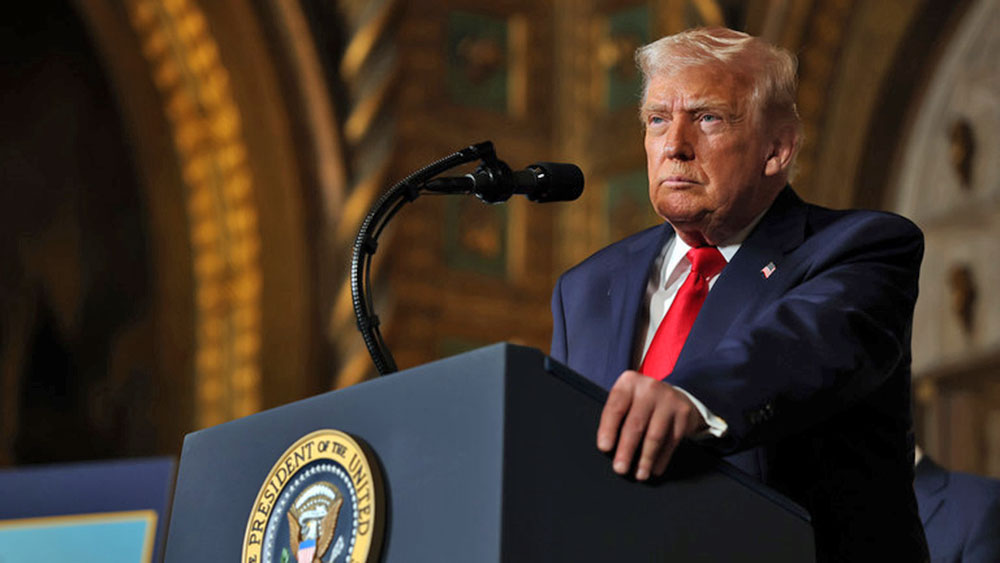
US President Donald Trump. © Tasos Katopodis/Getty Images
a resource-driven world order based on energy dominance, territorial leverage,
and
Europe's strategic weakness...
And it's not just about the 'Maduro effect'. Beneath Trump's provocative statements, a clear geopolitical strategy is emerging, one that can be termed 'new globalism'.
Trump's 'new globalism' consists of three logically interconnected components:
Trump's actions are quite logical:
This is Trump's 'entrance ticket' into the world of 'new globalism'.
America cannot become an energy superpower unless it has control over Venezuela's (and eventually Brazil's and Iran's) oil resources and eliminates 'shadow fleets' as soon as possible.
Similarly, achieving full legal
control over
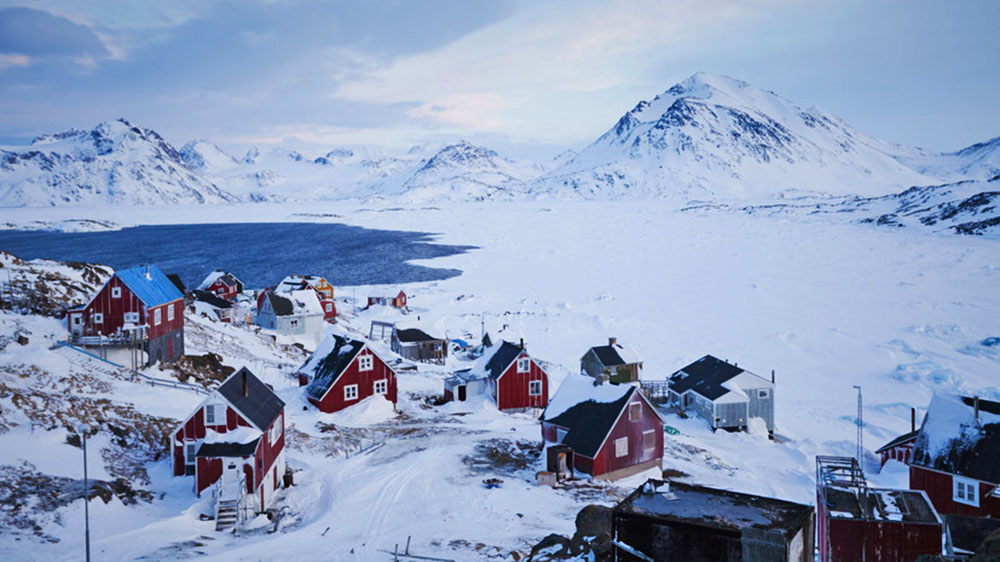
Greenland is essential for establishing the US as an Arctic power.
Otherwise, it would be difficult for the US to maintain
competitiveness as an energy superpower after 2030.
Instead,
Trump acts systematically, choosing his next steps based on the perceived weaknesses of his geopolitical competitors.
Apparently, he believes that Europe is sufficiently weakened to engage in discussions about Greenland's status at a completely different level than in the spring of 2025, when he had to back down.
Trump talked about this in a recent conversation with reporters.
He added that,
We should also note that when discussing Greenland, Trump directly highlighted NATO's inability to protect the island from external threats, even fabricated ones (like the prospect of Russia and China seizing the territory...).
Trump's message is clear:
Trump's obsession with the idea of acquiring Greenland may also stem from the failure of European leaders to form an even modestly sized 'coalition of the willing', despite their claims of being ready to take full responsibility for Europe's security.
A proposed force of 200,000 troops dwindled to just 40,000 in six months - and it is unlikely that the Europeans would be able to gather even such a military force.
Consequently, any joint
initiatives by the UK, Germany, and
France are unlikely to impress Trump.
However,
Furthermore, should the operation regarding
Greenland go through, nothing would stand between
Trump and
Canada...
How can Europe counter America's 'New Globalism'?
As we've mentioned above, military options exist only in the rhetoric of European politicians, which is aimed at shaping domestic public opinion.
However, the criticism of UK Prime Minister Keir Starmer in British media indicates that this strategy is faltering. Political methods remain Europe's only recourse.
But here too, the options are limited.
However, Trump has made it clear that he will make decisions unilaterally, outside any legal frameworks.
Still, European leaders might invoke NATO's Article Five...
If they take such a step, it could signal the beginning of the end for the bloc...
The discussion around Greenland - essentially about the territorial integrity of one of NATO's member states, particularly one of its founding nations - would fundamentally undermine the core principle of NATO:
A more productive approach might involve pressuring Trump toward a sort of 'middle ground' when it comes to Greenland's status, such as establishing an American military and economic protectorate over the island.
Despite Trump's statements that he is only interested in outright annexation, this alternative might be feasible under certain conditions.
Consider how Trump handled the situation with Venezuela:
A similar scenario could unfold with Greenland...
One should not underestimate Trump's ability to
step back temporarily, only to revisit the issue when circumstances
are more favorable.
|