|
by Navroop Singh and Himja Parekh from Nitishastra Website
Information sent by MJGdeA
What initially appeared as a straightforward Combat Search and Rescue (CSAR) mission following the loss of a United States Air Force aircraft has, upon closer inspection, revealed layers of operational depth, conflicting narratives, and strategic implications that extend far beyond the recovery of two aircrew members.
By integrating publicly available geospatial
data, imagery, timelines, and field-level observations, a far more
intricate picture emerges one that challenges the official
explanation and suggests the possibility of a much larger,
premeditated operation centred around the Isfahan region.
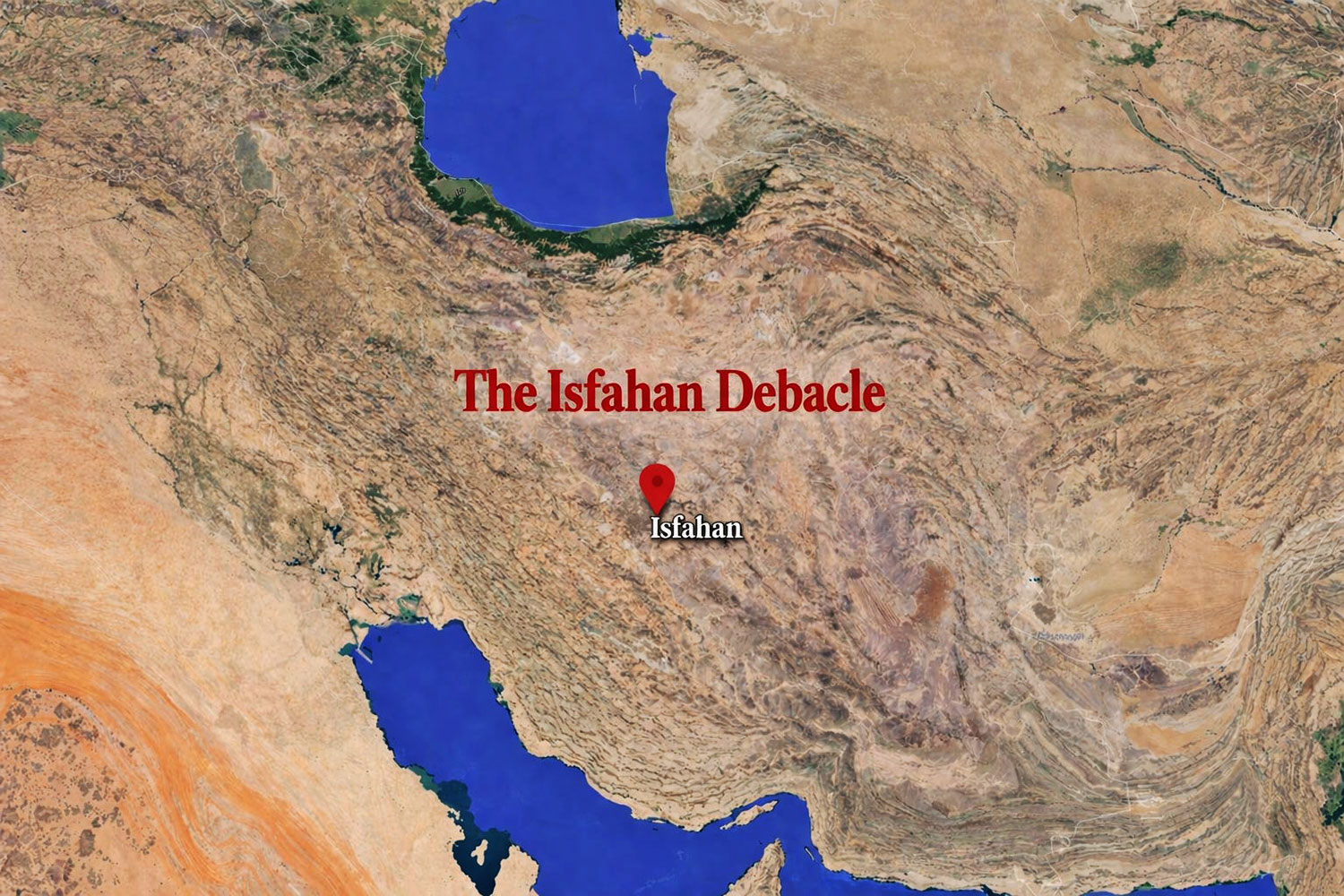
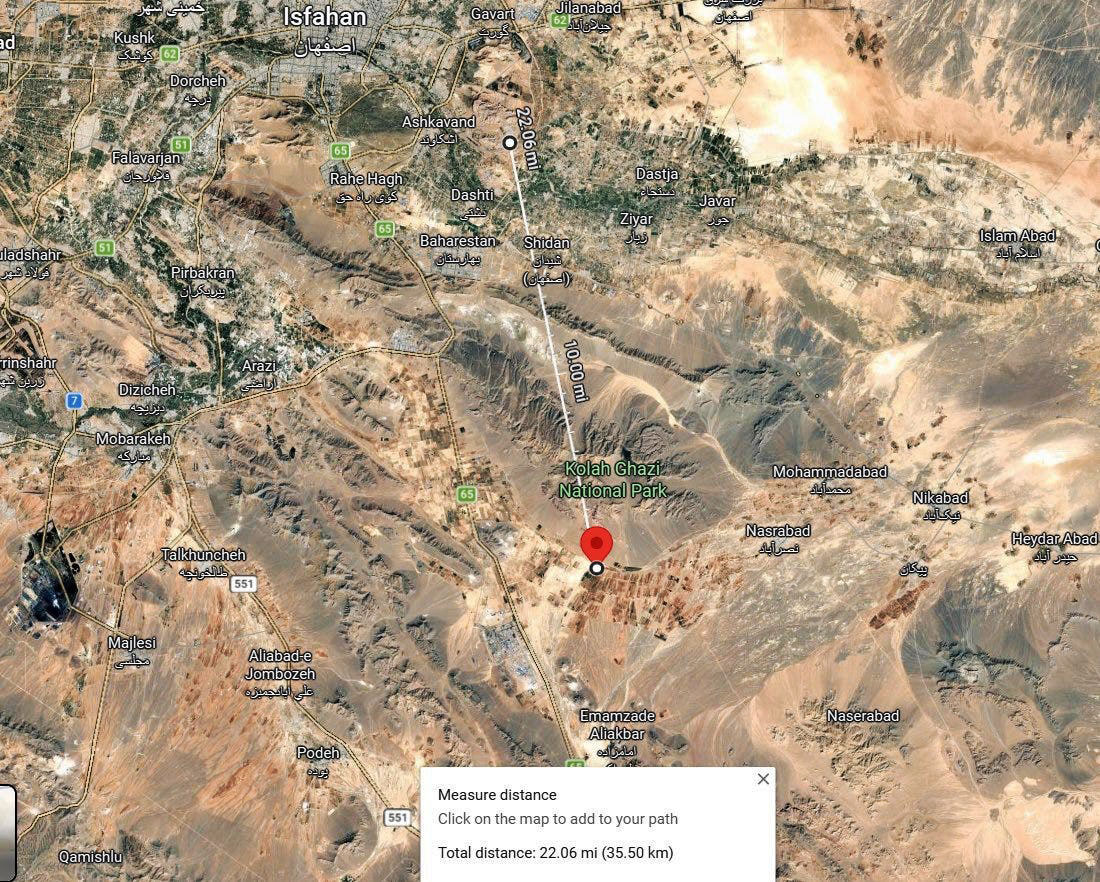
Initial reports placed the incident over the Persian Gulf, but subsequent geolocation and wreckage analysis indicated that the crash occurred near the city of Isfahan, deep within Iranian territory.
By the morning of April 3rd, debris consistent with an F-15E Strike Eagle belonging to the 494th Fighter Squadron, based out of RAF Lakenheath in the United Kingdom, had been identified south of Isfahan.
The crash site, located in a barren and
geologically sparse region, made precise geolocation difficult, but
the visual characteristics of the wreckage including panel structure
and debris spread aligned with known F-15E configurations.
In a Reuters article just last month, Rafael Grossi stated the following:
In the latest interview of 18th March 2026, IAEA Chief Rafael Grossi on Iran's new underground facility in Isfahan:
Thus it is likely that Airstrip 25 Kms south of Isfahan was being developed as FARP or Forward Operational Base by United States military for extraction of Highly Enriched Uranium (HEU) from Isfahan Facility and tunnel's.
To carry out such a complex operation it would
need C-130s to carry 200 troops with further Air Support. It is
likely that F-15E which was shot down was on such a mission to
smother and take out Iranian Air defences in Isfahan area making way
for such an operation to be carried out.
On the afternoon of April 3rd, multiple U.S. assets were observed operating within Iranian airspace, specifically over the province of Kohgiluyeh and Boyer-Ahmad.
This constellation of assets aligns with standard
CSAR doctrine, which prioritizes rapid recovery of isolated
personnel under hostile conditions, supported by close air support,
aerial refuelling, and persistent surveillance.
An intense anti-aircraft engagement developed as Iranian air defences responded to the intrusion. During this exchange, at least one A-10 was reportedly hit, forcing its pilot to eject over the Persian Gulf, while multiple HH-60 helicopters sustained damage, with visual evidence showing one trailing smoke during egress.
Simultaneously, reports began to circulate that the pilot of the downed F-15E had been successfully recovered, while the Weapon Systems Officer (WSO) remained unaccounted for, prompting Iranian provincial authorities to issue public alerts urging civilians to assist in locating the missing aviator.
Images soon surfaced of local militia units
combing the terrain in search of the individual.
However, the situation escalated dramatically later that evening.
Reports emerged of renewed helicopter activity, this time further north in Chaharmahal and Bakhtiari Province. A low-resolution image circulated online appeared to show a helicopter flying at extremely low altitude under cover of darkness, consistent with special operations infiltration profiles.
Shortly thereafter, confirmation surfaced that
the missing WSO had been recovered.
Two burned-out C-130 transport aircraft were visible at what appeared to be a makeshift landing strip near the Isfahan region, alongside the wreckage of multiple MH-6 Little Bird helicopters.
The scene bore a striking resemblance to the aftermath of Operation Eagle Claw, evoking parallels with one of the most infamous failed special operations missions in U.S. military history.
During the withdrawal, two of the C-130s were
reportedly abandoned and destroyed using scuttling charges, while
several helicopters were left behind and subsequently destroyed.
The narrative presented suggested that this large SOF force had been deployed solely to recover a single missing airman. However, the scale and composition of the force package raised immediate questions.
The use of multiple heavy transport aircraft, assault helicopters, and a sizable ground contingent appeared disproportionate to the stated objective.
Standard CSAR doctrine does not typically involve the insertion of company-sized forces via fixed-wing aircraft into contested territory for the extraction of a single individual, particularly when helicopter-based recovery remains viable. This discrepancy has led to the formulation of an a different interpretation of the operation's intent.
According to this perspective, the CSAR mission served as a cover or parallel objective within a broader operational framework.
The initial presence of the F-15E near Isfahan on April 2nd may have been linked to preparatory actions for a planned direct-action raid targeting sensitive sites within the region.
Given the known presence of enriched uranium
storage facilities and tunnel complexes near Isfahan, the
possibility that the operation aimed to seize or neutralize
high-value nuclear material has been widely discussed.
The establishment of a FARP in this location would have enabled sustained helicopter operations into the surrounding area, potentially facilitating rapid insertion and extraction of personnel tasked with securing HEU (Highly Enriched Uranium).
The involvement of multiple aircraft types and
the scale of the force suggest a mission profile extending beyond
immediate personnel recovery.
These factors, combined with the timing of the
operation and the concentration of military activity in the region,
indicates of a high-risk attempt operation to extract Highly
Enriched Uranium material from Tunnels in Isfahan on 3-4th
April 2026.
The presence of multiple large aircraft landing in a relatively confined area would have generated significant thermal and visual signatures, increasing the likelihood of detection.
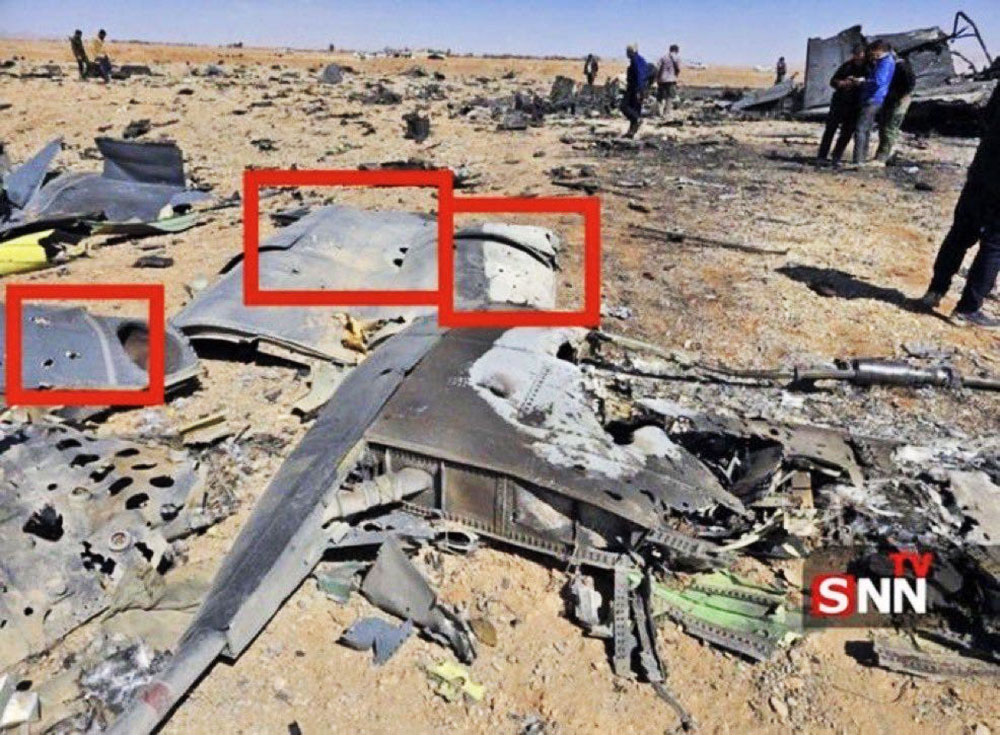
Iranian BASIJ forces reportedly mobilized rapidly, converging on the landing site and initiating indirect fire the marks of which are also visible on the debris of C-130s on the crash site.
Faced with escalating risk and compromised
operational security, the mission was likely aborted, with the US
military personnel being taken out with help of 3 Dash-8 aircrafts
there were called as fallback option.
However Iranians armed with manpads and Air Defence Systems, drones detected the air intrusion in that area and foiled the plan of US military to extract HEU from Isfahan tunnels.
There were visible marks of Air Defence system hits on the body of the C-130s as is visible from the images of the crash site, which indicates that the aircrafts came under fire while landing rendering them inoperable to fly back.
Further Iranian Basij forces tried to reach landing site but they were likely deterred by US air support in favor of its ground troops insertion.
Having its cover being blow of the covert
operation US military personnel destroyed its inoperable jets,
aborting the mission and calling upon backup C-130s to extract them
of a failed mission.
Meanwhile, TASNIM NEWS of Iran is reporting loss of 12 American aircraft including two C-130 transport planes, 4 Little Birds, 4 Black Hawks, and two MQ-9 drones in a single operation.
The political signaling in Washington following the events of April 2-5 adds another layer to understanding what transpired around Isfahan.
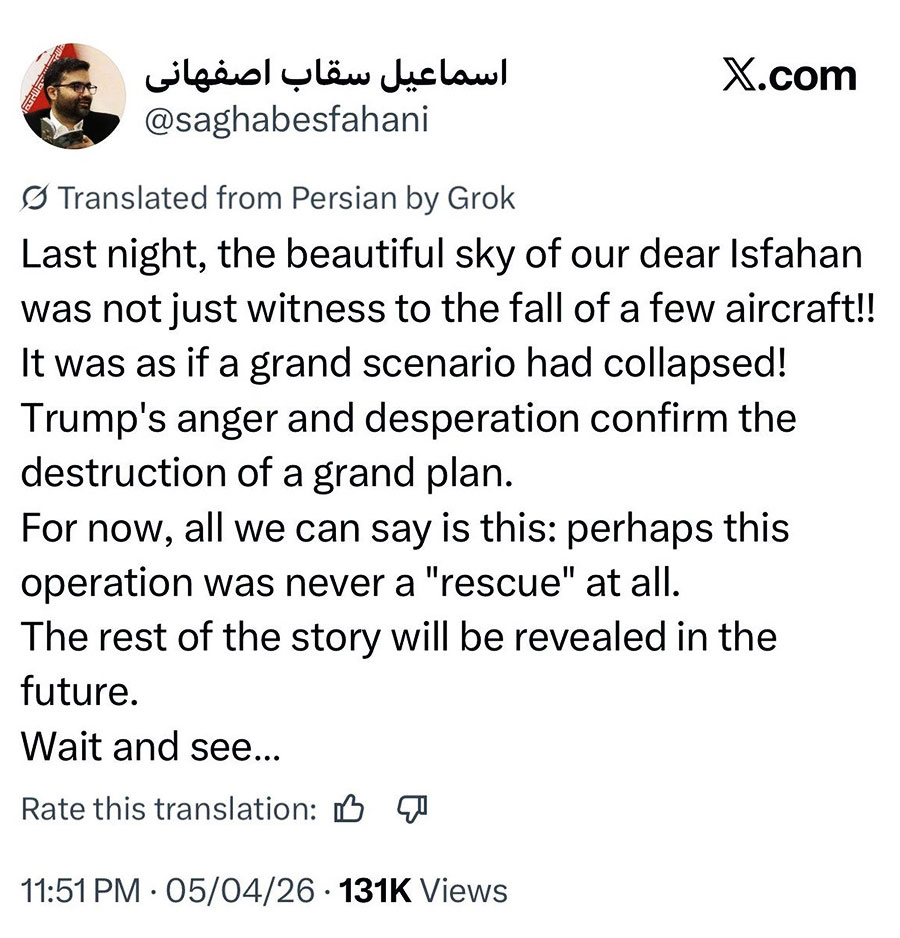
President Donald Trump, instead of projecting a conventional success narrative around the recovery of the downed F-15E Strike Eagle crew, reacted with visible anger and escalation.
He lashed out by a post on Truth Social on 5th April 2026 evening, stating:
The tone was not one of triumph, but of frustration suggesting that events had not gone according to plan.
Just few days before this operation, Pete Hegseth the Secretary of War (US Department of Defence) had moved to remove senior military leadership, including top Pentagon officials, likely over internal disagreements on the execution of what is considered to be an extremely high-risk operation deep inside Iranian territory.
Within strategic circles, such moves are rarely isolated:
In this context, the combination of an aborted ground insertion near Isfahan, loss of equipment including transport aircraft and helicopters, interception by Iranian air defence and BASIJ forces on ground foiled President Trump's plan of a successful extraction HEU (Highly enriched Uranium) of 400 Kgs up to 60% from Isfahan facility.
President Trump would have hoped for a successful extraction post which he would have declared a swift miliary victory over Iran on Easter festival.
A successful operation could have meant USA
gaining military and strategic leverage over Iran giving President
Trump the much required off ramp he is seeking.
The Iranians are however undeterred, refused to negotiate and give away the strategic leverage gained by controlling Strait of Hormuz which supplies world's 20% energy in Oil, Gas and other cargos.
It would however be foolish to believe any de-escalation is in offering as US would once again try such insertions and raids in Iran and probably next at Kharg Island, Qesham Island or Greater Tunb or lesser Tunb islands in Strait of Hormuz.
Such insertion operations are again fraught with
danger given Iranian air defence systems are still intact as we have
seen over last few days.
The apparent detection and disruption of a large-scale SOF insertion further underscores the effectiveness of Iranian surveillance and response capabilities. For the United States and its allies, the episode raises questions about operational planning, risk assessment, and the limits of covert action in contested environments.
The old assumptions by the Americans that Iran's
air defence systems, its missiles and drone capability systems have
been substantially degraded have a turned out to be gross
exaggerations...
While definitive conclusions remain elusive, the evidence points toward an operation that exceeded the bounds of conventional CSAR and ventured into the realm of,
|