|

June 26, 2026
from
RT Website
Similar version in spanish
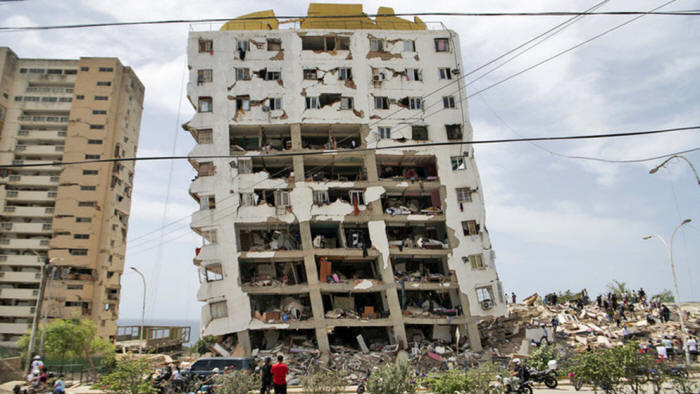
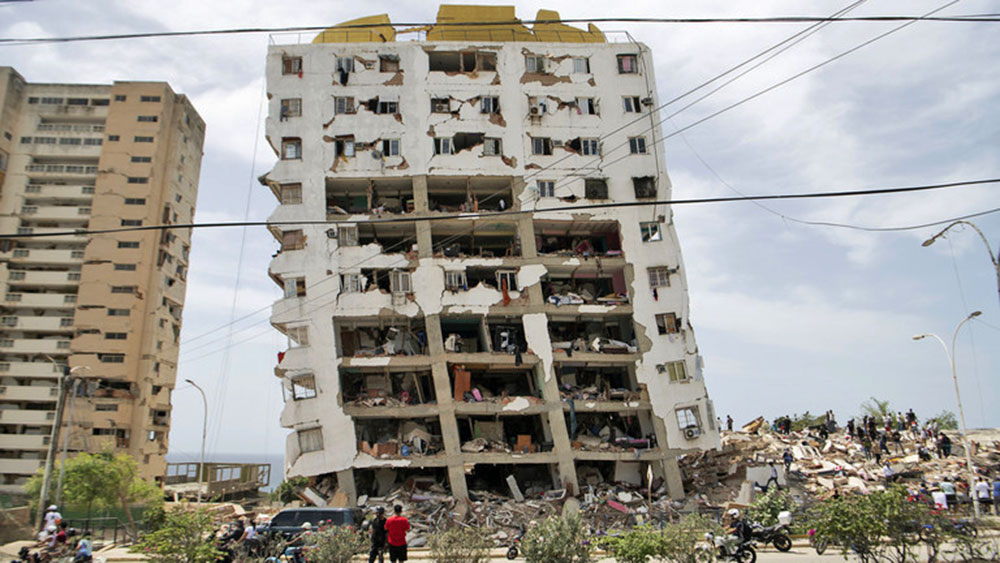
A view in La Guaira,
Venezuela
on Thursday June 25,
2026.
© Getty Images /
Carlos Becerra
Los Angeles
Times
The
chain of earthquakes
that shook
the planet this week
was
violent and tragic,
but can be
explained...
A string of powerful earthquakes struck different parts of the world
on Wednesday, prompting speculation over whether the events could be
connected.
While seismologists say they were not,
the unusual cluster has raised questions about how earthquakes are
linked, why some occur in pairs, and what terms such as "seismic
doublet" and "earthquake swarm" actually mean.
What Happened?
The week's most devastating seismic event struck Venezuela,
where two powerful earthquakes measuring magnitude 7.2 and 7.5
hit just 39 seconds apart near the country's northern coast, killing
hundreds of people and causing widespread destruction.
Hours later, a magnitude 6.9 earthquake struck off northern
Japan, followed by a magnitude 5.6 tremor in northern
California.
Several smaller earthquakes were also recorded
near the Philippines and Papua New Guinea.
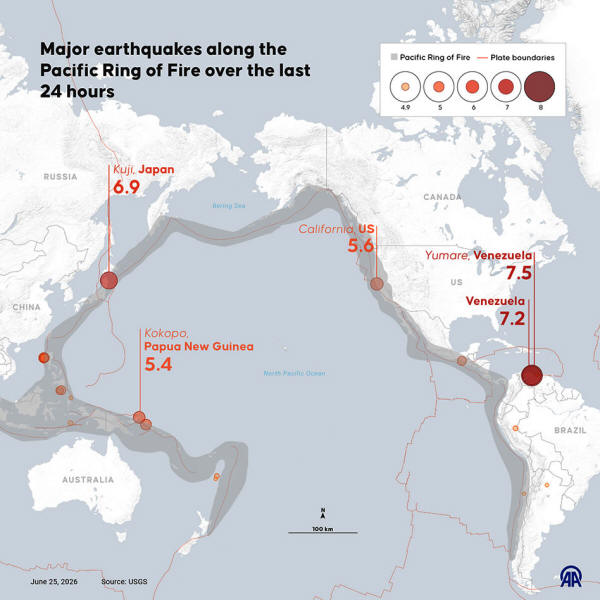
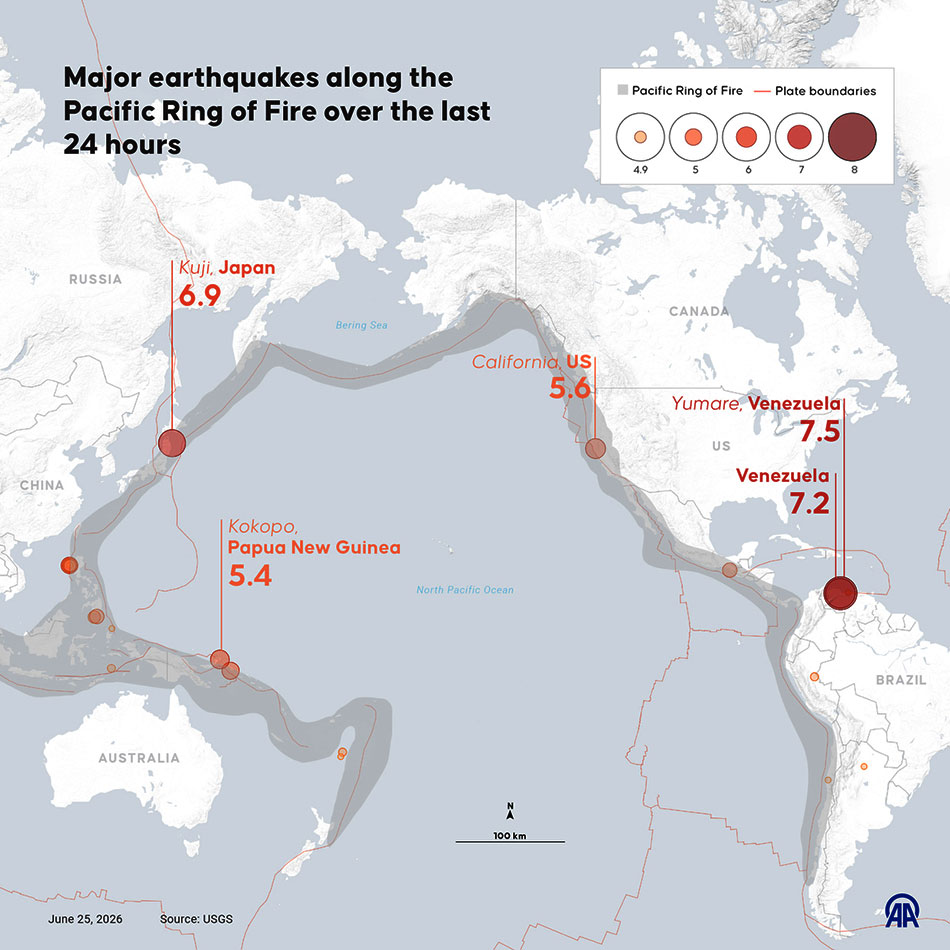
An infographic titled
'Major
earthquakes along the
Pacific Ring of
Fire over the last 24 hours'
created on June
25, 2026.
© Getty Images
/ Yasin Demirci/Anadolu
Most of the earthquakes shown on the map occurred along the
Pacific Ring of Fire, a
horseshoe-shaped belt around the Pacific Ocean that accounts for
about 90% of the world's earthquakes.
Venezuela, however, lies outside the Ring of
Fire, with its earthquakes occurring on the boundary between the
Caribbean and South American tectonic plates.
The Language of Earthquakes
The rare back-to-back shocks that hit Venezuela are considered a
"seismic doublet," one of the terms seismologists use to describe
how earthquakes occur and how they may relate to one another.
A seismic doublet refers to two earthquakes of similar
strength occurring close together in time and location.
An aftershock is a smaller quake that follows a larger one as
the crust adjusts after the initial rupture. Aftershocks can
continue for days, weeks or even longer.
An earthquake swarm is a series of quakes in one area without
one clearly dominant mainshock.
Swarms are different from a
mainshock-aftershock sequence because there may be no single
obvious "main" event.
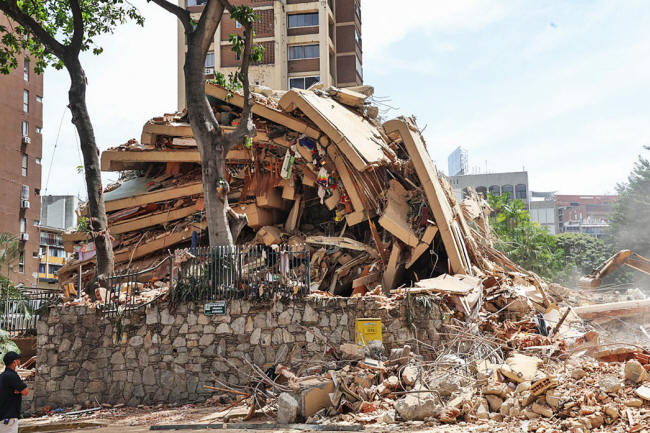
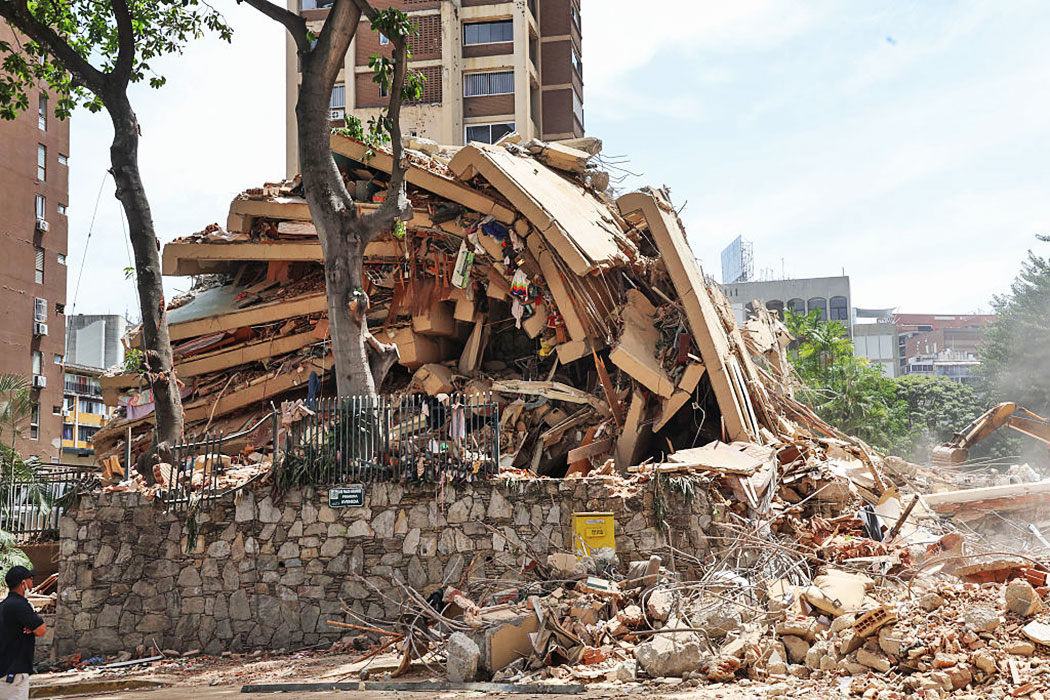
A view of a
collapsed
building in a Caracas neighborhood
on June 25,
2026 in Caracas, Venezuela.
© Getty Images
/ Edilzon Gamez
Another important concept is stress transfer.
The term refers to changes in stress caused
by one earthquake that can increase the likelihood of another
occurring on a nearby fault.
But this phenomenon usually applies over much
shorter distances, not across continents or oceans.
Were Wednesday's Tremors Linked?
The timing prompted speculation on social media that the earthquakes
on different sides of the world could be related. However, experts
say there is no evidence of a global seismic chain reaction.
Russian geophysicist Pyotr Shebalin, director of the
Institute of Earthquake Prediction Theory and Mathematical
Geophysics at the Russian Academy of Sciences, told
Ren TV that,
the Venezuelan and Japanese earthquakes were
"pure coincidence" and that there was "no pattern" connecting
the two events.
According to Shebalin, the Venezuela earthquake
was not unexpected because the country lies on the boundary between
the Caribbean and South American tectonic plates, a well-known
seismic zone.
Japan is also located on active plate boundaries,
but the two countries belong to different tectonic systems and
involve different fault mechanisms, making a direct connection
between the earthquakes unlikely.
US experts have reached the same conclusion.
Martin Hudson, an adjunct professor of
civil and environmental engineering at the University of California,
Los Angeles (UCLA), told
The Guardian that,
"if you look at the last 100 years of
earthquakes, we've never seen earthquakes this far apart be
related."
Why did they Happen on the Same
Day?
The United States Geological Survey (USGS) estimates that
several million earthquakes occur worldwide each year, although the
vast majority are too small to be felt.
On average, about 15 reach magnitude 7.0-7.9 -
classified as major earthquakes - while roughly one exceeds
magnitude 8.0, a category known as a great earthquake.
Such figures illustrate why clusters of powerful
earthquakes can occasionally occur "by chance", even if they
are not physically related.
"Earthquakes happen every day all over the
world. Most of them happen far from people",
...William Barnhart, assistant coordinator
for the USGS Earthquake Hazards Program, told
The Guardian.
He described this week's sequence as "a very
peculiar day," rather than evidence of a global seismic chain
reaction.
Can Scientists
"Predict" the next Major Earthquake?
No... Scientists can identify high-risk zones, monitor fault
lines, estimate long-term probabilities, and track aftershocks after
a major event, but they cannot predict the exact time, place,
and magnitude of the next major earthquake.
The best they can do is assess risk and issue warnings after a quake
has already happened, such as tsunami alerts or aftershock
forecasts.
The "inability" to predict earthquakes has real-world consequences.
The twin earthquakes in Venezuela struck on
Battle of Carabobo Day, one of the country's most important national
holidays, when official ceremonies, parades, and commemorative
events were taking place across the country.
Had scientists been able to forecast the exact
time and location of the quakes, many of those gatherings could have
been postponed or people evacuated.
|