|
by Vedran Bileta PhD Medieval Studies July 09, 2021 from TheCollector Website
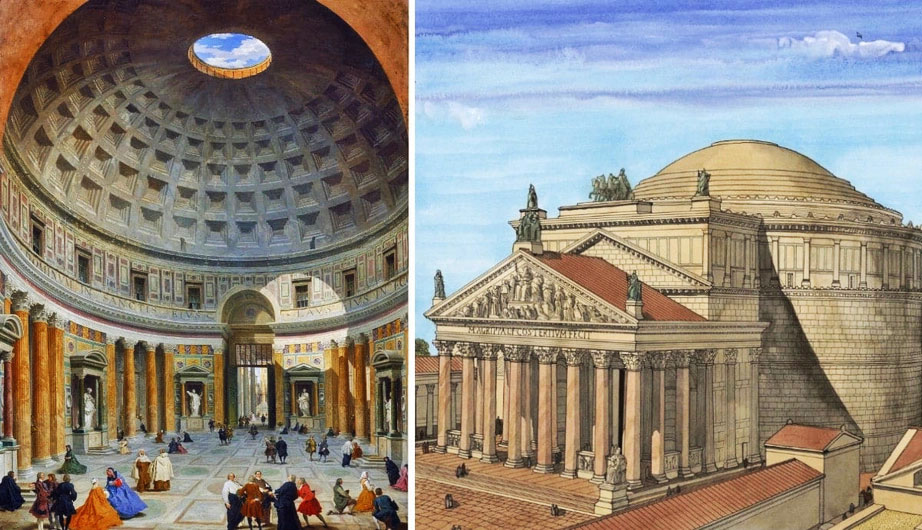
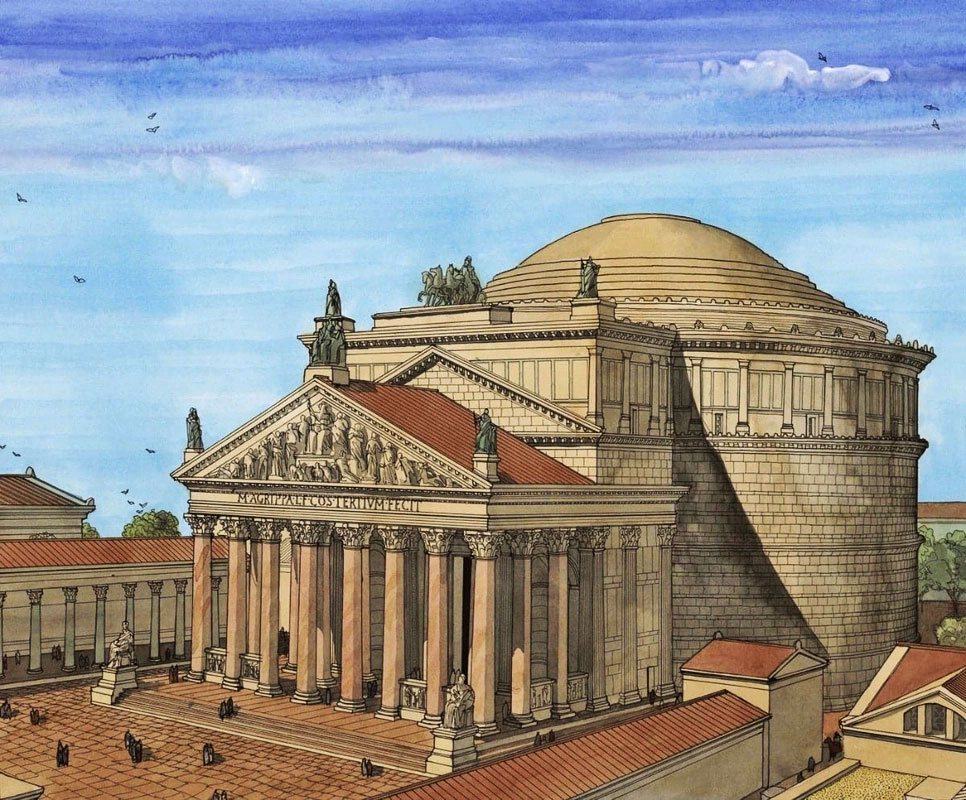
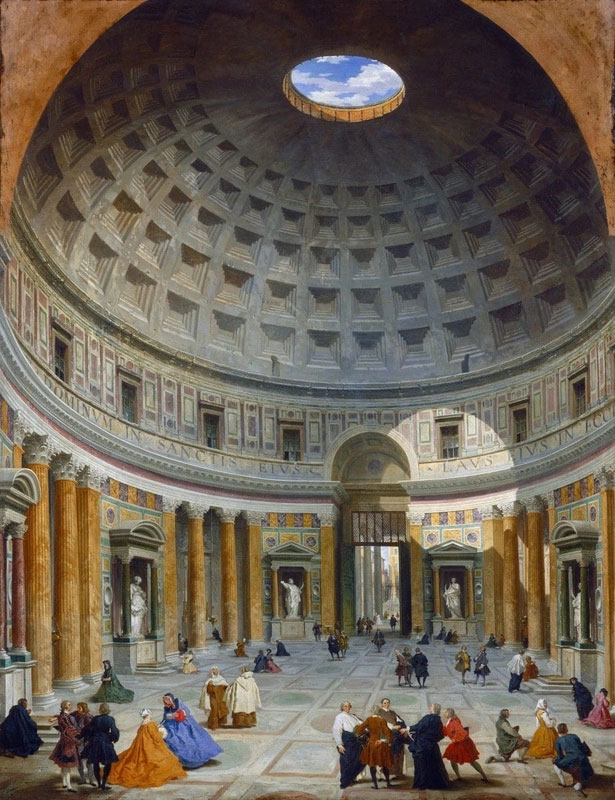
Interior of the Pantheon, Giovanni Paolo Panini, ca. 1734, National Gallery of Art, Washington, DC; with The Pantheon Under Hadrian, by J.C.Golvin, via jeanclaudegolvin.com
is a prominent landmark in Rome. Nearly two millennia old, this symbol of imperial power, and wonder of architecture still stands the test of time.
Built at the height of the Roman Empire, Agrippa's Pantheon was used to promote the emperor's power and legitimacy. Even today, the building stands as a lasting reminder of imperial glory. It is also one of the most influential historical edifices since its design has been the subject of imitations all over the world.
An inspiration to countless generations of artists, and one of the most favored tourist spots in the world, the Pantheon is imprinted in our collective memory.
Yet, the "sphinx of the Campus Martius," as the
monument is sometimes described, holds many secrets.
photo by Moritz Kindler, Via Unsplash
Marcus Vipsanius Agrippa was the best friend and son-in-law of the first Roman emperor, Augustus. Agrippa was a man of many talents, one of them being an architect.
The Pantheon was built to honor Augustus' military victory at the battle of Actium in 31 BCE, the defining moment in the establishment of the Roman Empire.
Traditionally, Agrippa's Pantheon was thought to be
small and conventional - a Greek-style temple, rectangular in plan.
But archeological studies suggest that the original building
resembled the current structure.
After a fire destroyed much of the original construction around 80 CE, emperor Domitian restored the Pantheon to an unknown extent. Domitian's building burned down again in 110 CE.
It was believed that the Pantheon got its iconic form during the reign of emperor Hadrian. Recent archaeological findings, however, question that theory.
The
bricks used in the construction date back to the 110s, to the reign
of Hadrian's predecessor
Trajan.
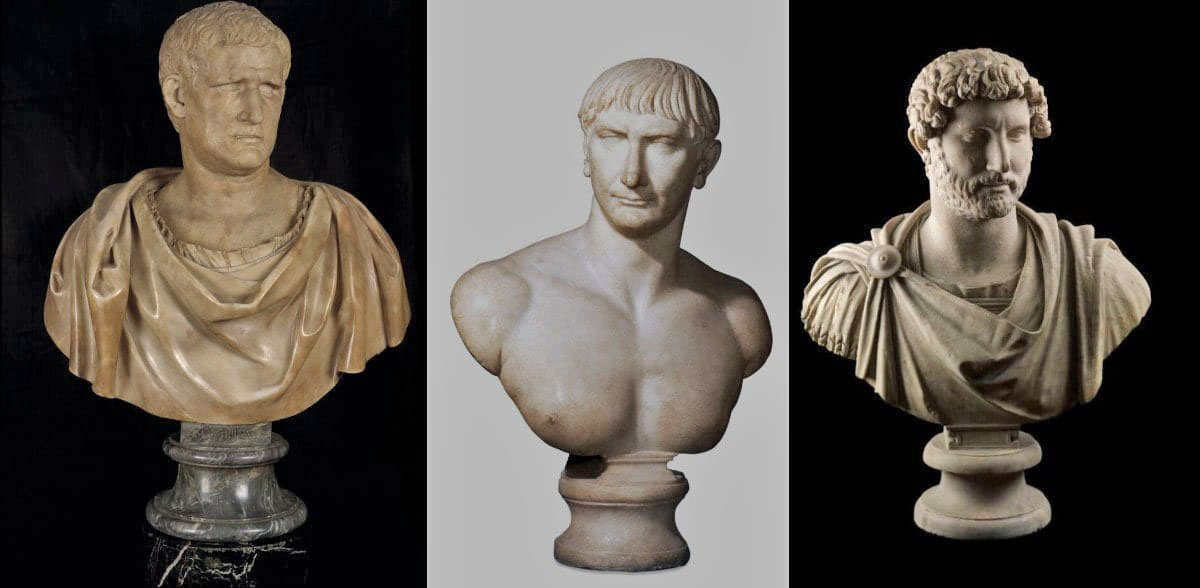
second part of the 1st century CE, The Uffizi, Florence; with Busts of the emperors Trajan and Hadrian, ca. 108-117 and 125-130 CE, The British Museum, London
Designed and rebuilt around 114 CE, with some preparatory work perhaps starting immediately after the fire of 110, it was finalized and dedicated by emperor Hadrian in 126 CE.
Neither emperor, however, denied the importance of Agrippa's original.
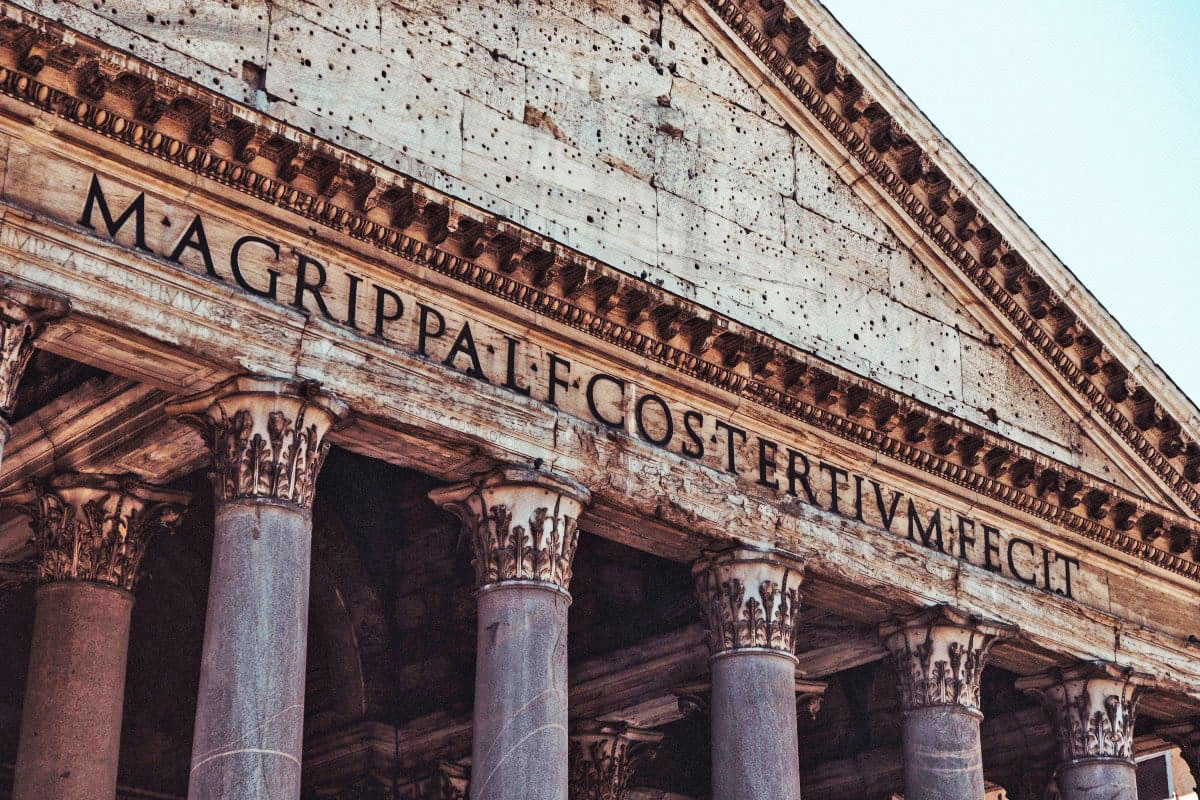
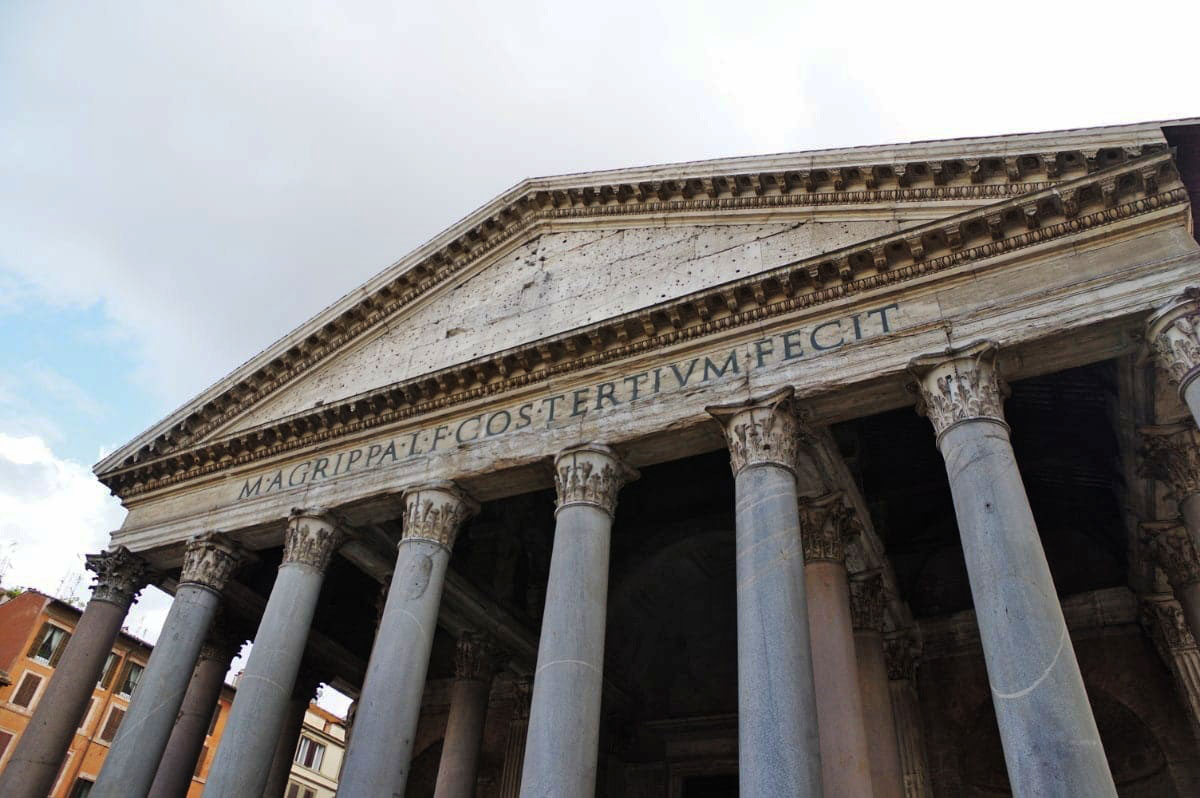
The inscription on the front of the building proudly names its original designer:
Close-up view of Pantheon's portico, photo by Michael Johnson, Via ArchDaily.com
Several scholars have
recently suggested that instead of a traditional temple to the gods,
the building was a dynastic sanctuary, linked to emperor Augustus
and his family.
Agrippa's
building, thus, suggests an alliance between the gods and the rulers
of Rome, at the moment when a new imperial cult was taking shape.
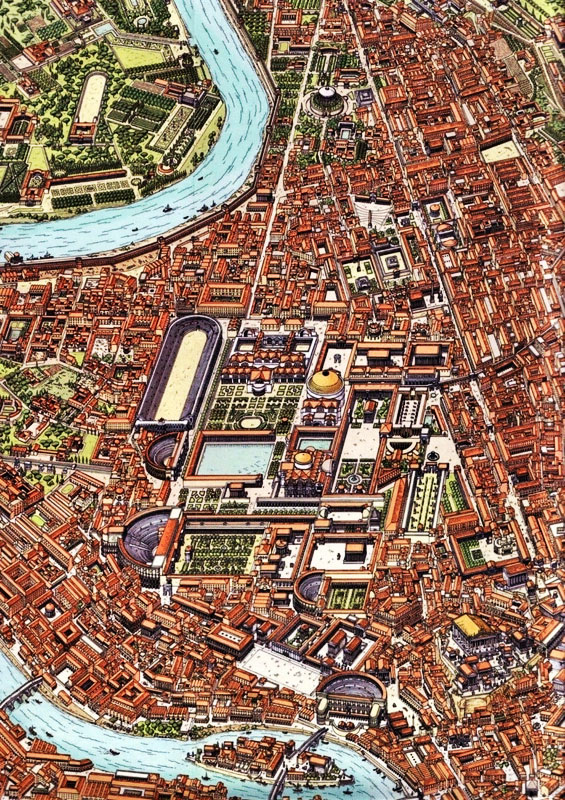
Rome showing the Pantheon (in the center), via teggelaar.com
Emperor Hadrian, who finalized the reconstruction of the Pantheon, even held a court in the building. By his time, the direct line of sight between the Pantheon and Augustus' Mausoleum had been blocked, but the building retained its link to imperial legitimacy.
By keeping (or recreating) Agrippa's inscription, Hadrian subtly associated himself with the first emperor, suggesting that he was part of the natural succession of (deified) emperors.
It is perhaps
unsurprising that we find Hadrian's mausoleum (Castel Sant'Angelo)
in the vicinity of both monuments.
Whatever its original purpose, the Pantheon became primarily associated with the power of the emperors and their divine authority.
And as we shall see, the Pantheon was also an arena in which the emperor could remind Rome's populace of the extent of the empire, and his personal control of it.
by J.C.Golvin, via jeanclaudegolvin.com
Directly in front of the portico, there was an arch called the Arch of Pietas.
It was a memorial arch, possibly used for processions.
Once the arch was passed, a visitor would see a building clad in
white marble imported from around the empire.
The symbolism does not stop here.
The empire-in-miniature fully reveals itself inside the edifice.
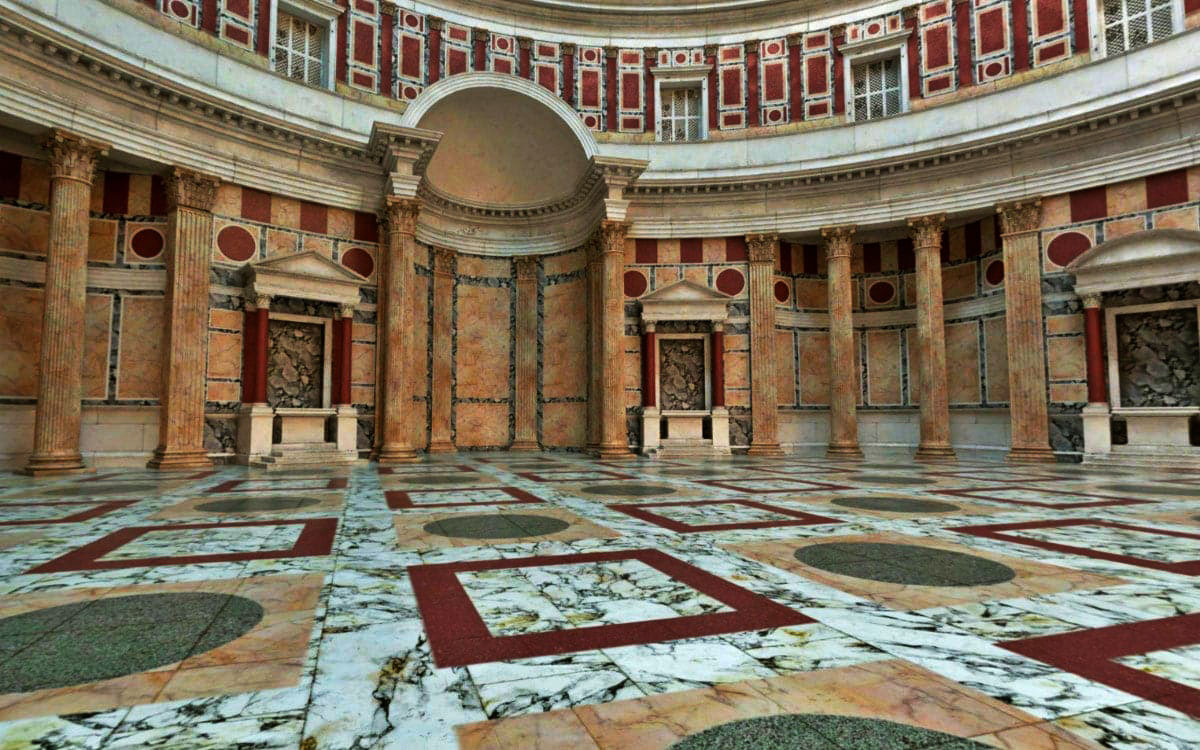
Much of the interior decoration has been restored, but traces remain of Numidian yellow, Phrygian purple, and Lucullan black marble (both coming from Asia Minor).
The roundels are made of red Egyptian
porphyry, one of the world's rarest stones, which was used
exclusively by the emperor and his family.
via Wikimedia Commons
Trajan and Hadrian choose to import
marble, porphyry, and other expensive building materials from around
the empire to Rome as a display of power to the people of Rome who
would see or visit the building on a regular basis.
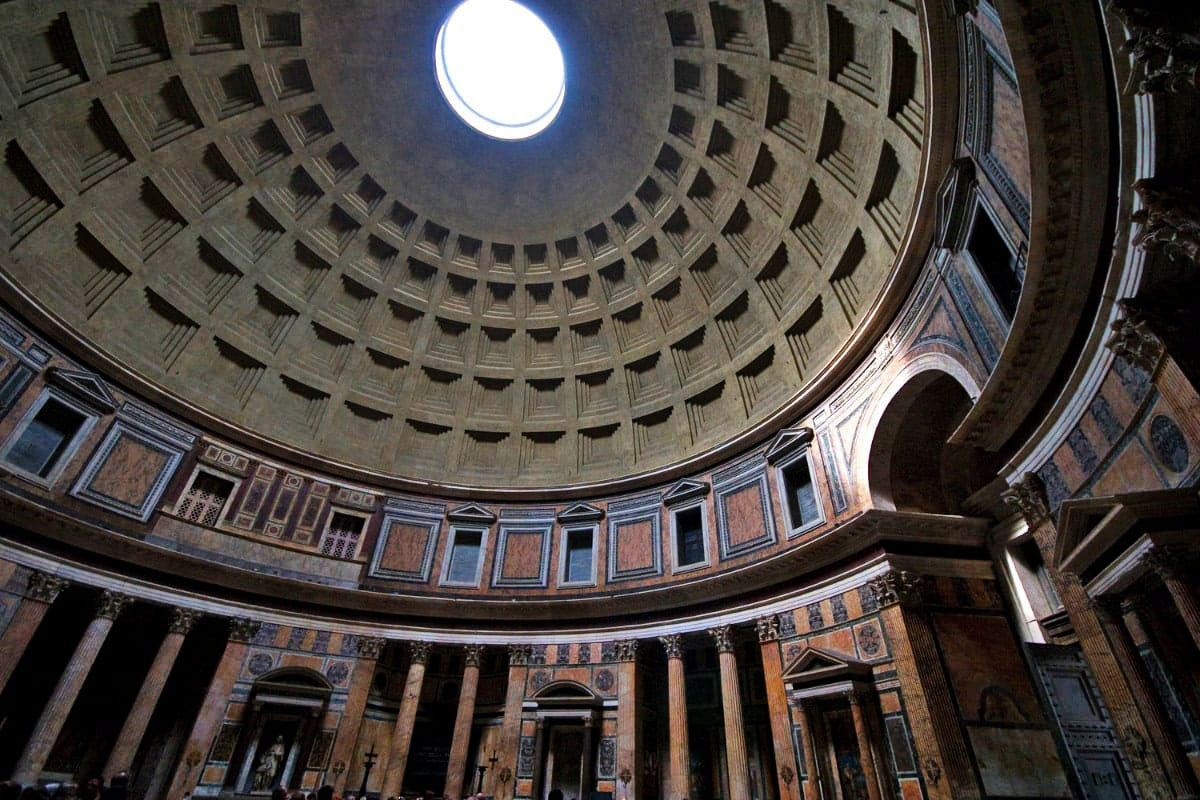
Via History.com - The largest unsupported dome in the world with the oculus, which allows the entry of the natural light
The walls are made of brick-faced concrete (opus testaceum), an innovation widely used in Rome's major buildings and infrastructure, such as aqueducts.
They have been lightened with relieving arches
and vaults fixed by wedges. Concrete allowed for spaces to be carved
out of the walls, like the alcoves, which contained statues of gods
and emperors.
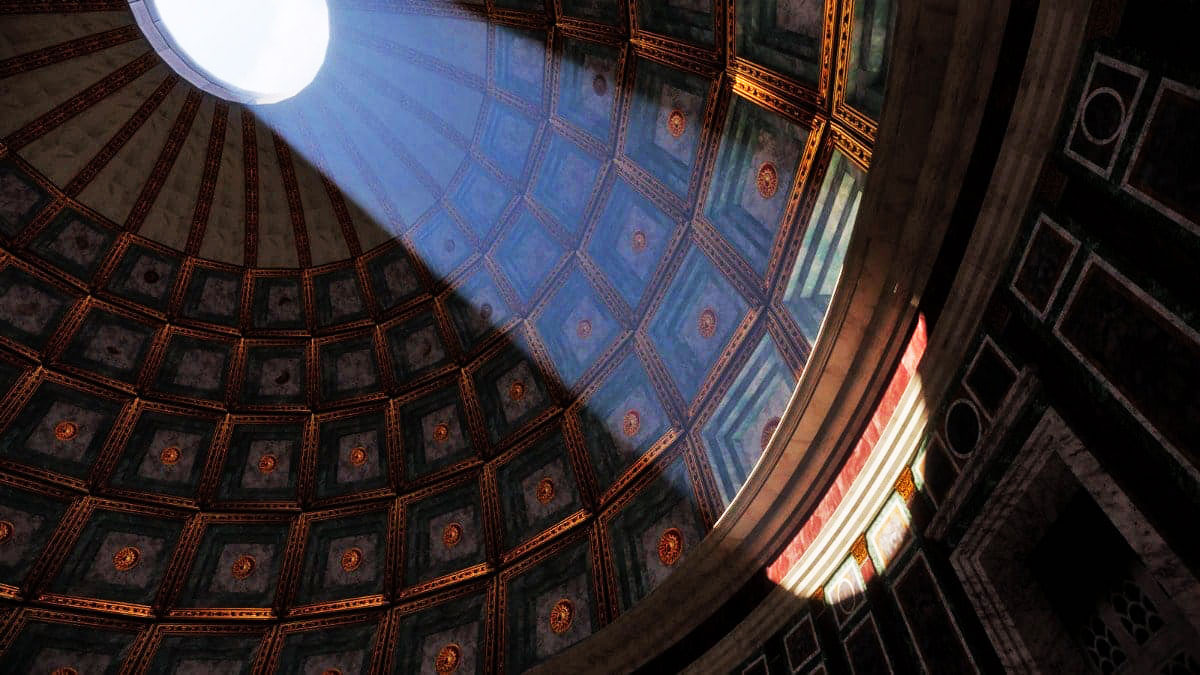
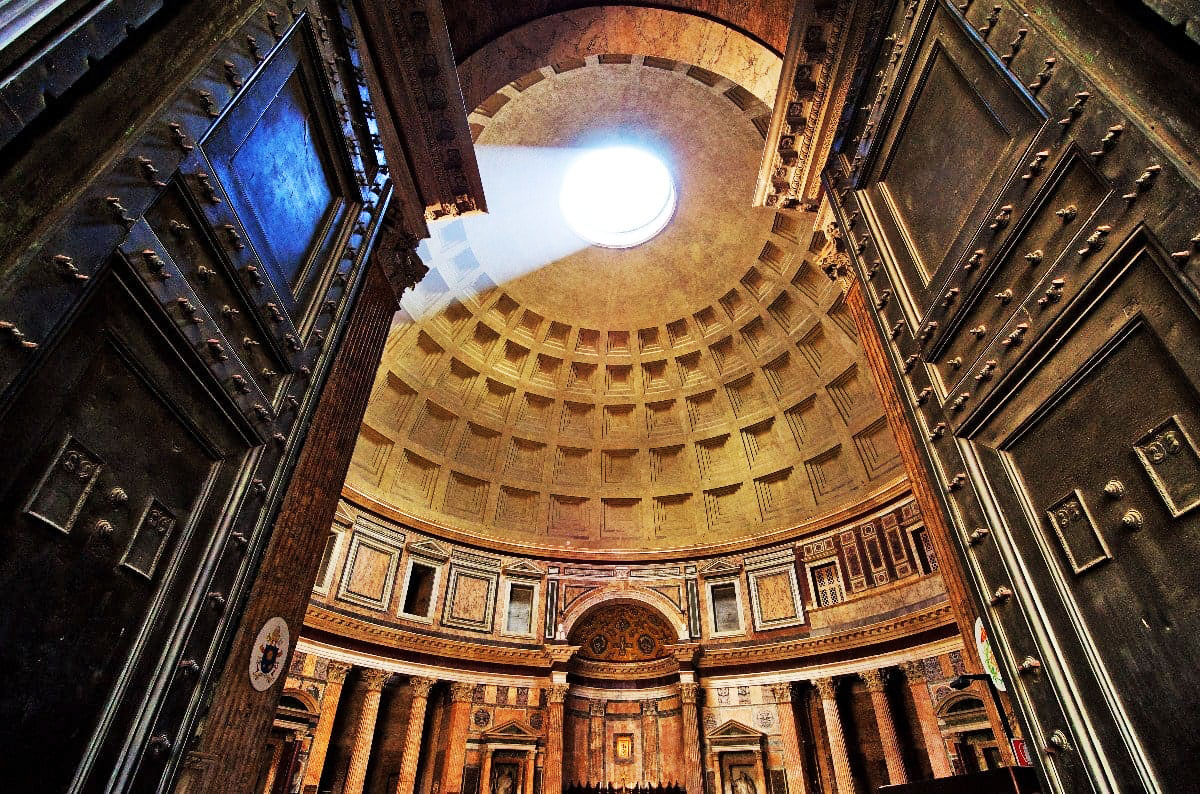
The largest dome in the Roman world covers the drum, with natural light spilling onto the walls and alcoves from the nine-meter-wide (30 foot) oculus at the dome's center.
The coffered ceiling (sunken panels) and oculus serve not only as decoration, but are also practical features, lessening the weight load of the dome. The specific concrete used for the dome was exceptionally light.
A combination of limestone and volcanic ash used in the mortar helped to form the crystals that prevented the spread of microscopic cracks, and eventually, the dome's collapse.
At 43.3 (142 feet)
meters in diameter, the Pantheon's dome is still the largest dome in
the world that does not use reinforced concrete.
the Pantheon's dome from the imperial period, via ReliveHistoryin3D.com
This means that,
Besides its practical use, the oculus had another purpose.
Perhaps, then, the sunbeam marked solar and lunar events, or simply time.
The idea fits nicely with Dio's depiction of the dome as the canopy of the heavens and, by extension, of the rotunda itself as a microcosm of the Roman world, with the emperor presiding over it, ensuring the right order of the world.
Giovanni Paolo Panini, ca. 1734, National Gallery of Art, Washington, DC
It is very possible that from the early fourth to the early seventh century, the Pantheon, like most of the public buildings of Rome, fell into disrepair. The forecourt and all adjacent buildings were demolished or replaced.
The only reliable information is a report from the Liber Pontificalis, which tells us that the Byzantine emperor Phocas gifted the Pantheon to Pope Boniface IV in 609.
In 613, the ancient Roman building was converted into the church of the ever-virgin Holy Mary and all the martyrs.
Nonetheless, it did suffer some losses.
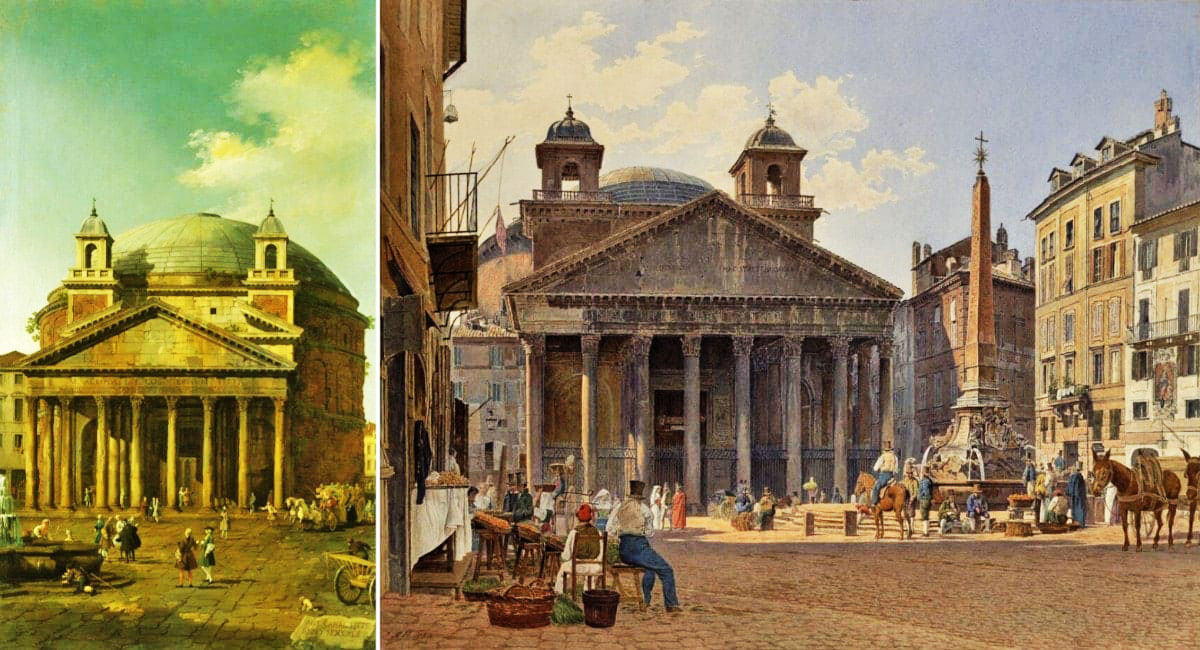
The most striking change happened in the early 17th century when Pope Urban VIII commissioned a pair of bell towers to be added above the portico.
These towers - mocked by the people as
"the ass's ears" - were finally demolished in 1883.
Via The Royal Collection Trust, with The Pantheon and the piazza Rotonda, Jakob Alt, 1836, Albertina, Wien
Two kings of Italy, Vittorio Emanuele II, and Umberto I, along with Umberto's wife Margherita of Savoy also have their final resting place inside the Pantheon.
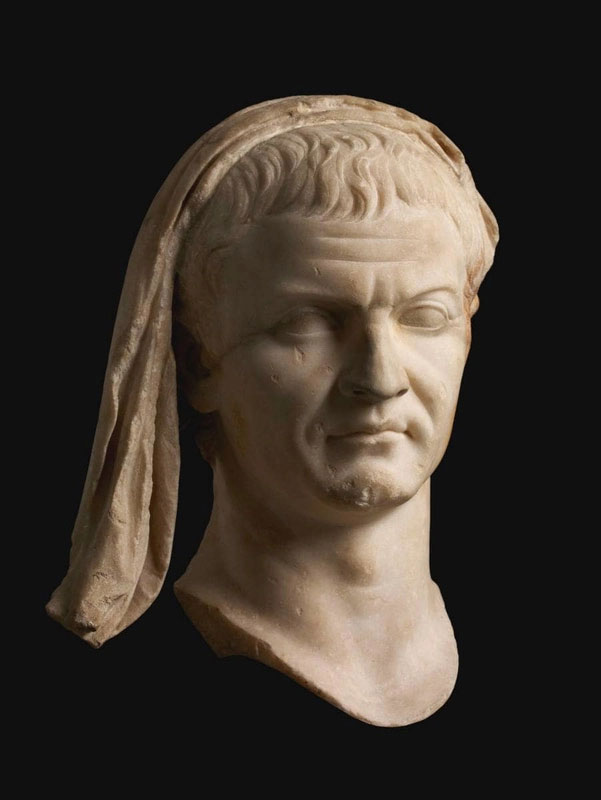
c. 1st century BCE, Via the British Museum
Built by Agrippa to commemorate the triumph of the first emperor, Augustus, the Pantheon redefined public spaces, playing an important role in promoting the imperial cult, solidifying the emperor's legitimacy, and linking the later dynasties to the first emperor.
After its reconstruction by Trajan
and Hadrian, the Pantheon became a showcase of imperial power. The
extensive use of exotic and expensive decorative stones reflected
the wealth and influence of its builder, the emperor himself.
Almost two millennia after its construction, its celebrated dome remains the largest in the world to be built from unreinforced concrete.
Despite its transformation into a church and changes that followed, the Pantheon's design remains largely the same as it was under Emperor Hadrian.
This unique design inspired countless artists and
architects all around the world, with mini-Pantheons emerging not
only in Europe but also across the Atlantic.
photo by Evan Qu, Via Carpediemrome.com
Next time when you visit Rome and find yourself in front of this truly majestic building, take a good look.
No wonder that for
centuries, many tried to emulate this feeling.
|