|

by Dr. Joseph Mercola
October 22, 2026
from
Mercola Website
PDF version
Story at-a-glance
-
A
laboratory study from Wroclaw Medical University tested
and compared five plant compounds - curcumin, berberine,
biochanin A, cucurbitacin E, and CAPE - for their
ability to affect fibrosarcoma cancer cells versus
healthy muscle cells
-
The
compounds disrupted energy production far more in the
cancer cells, where adenosine triphosphate (ATP) levels
dropped by roughly 83% to 92%, compared with 23% to 73%
in healthy cells
-
All
five pushed cancer cells into permanent growth arrest.
However, curcumin stood out, producing the strongest
effect, raising senescent cancer cells from about 16.5%
to more than 75%
-
In a
wax moth larvae safety screen, curcumin and berberine
were best tolerated, while biochanin A proved most
toxic, showing strong anticancer activity does not
guarantee safety
-
The
work used animal cell lines and a simple invertebrate
model, so the researchers are clear these compounds are
not a treatment for cancer and need testing in more
advanced models
|
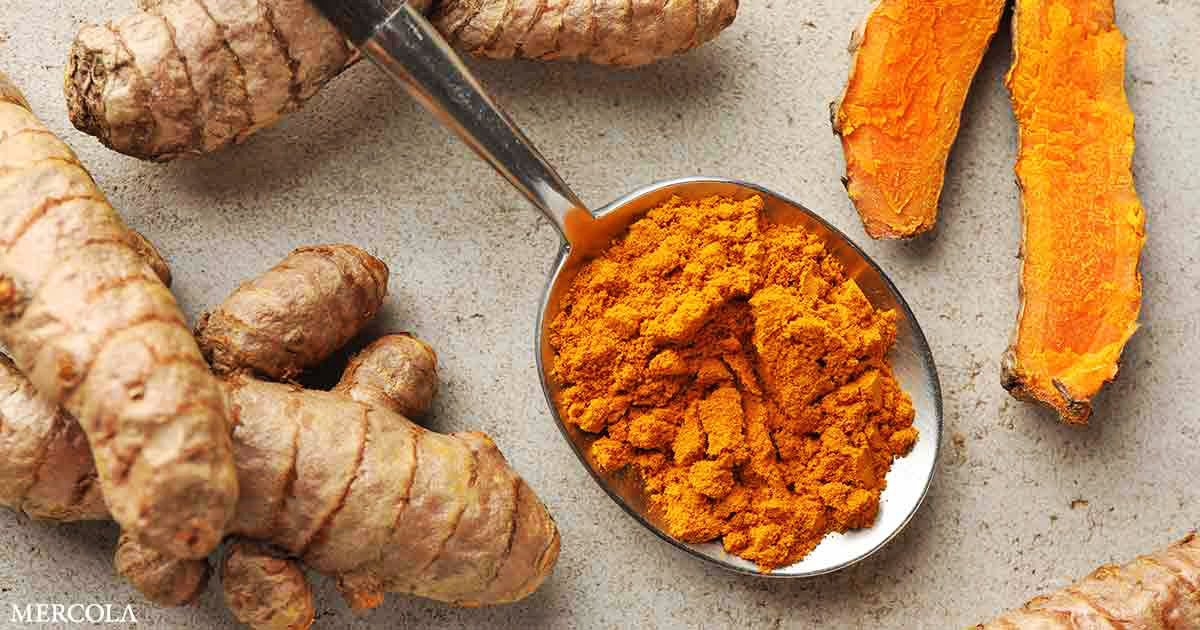
You've probably heard that turmeric, a yellow spice native to
Southeast Asia, has
anticancer potential...
In fact, the Memorial
Sloan Kettering (MSK) Cancer Center noted that turmeric has been
used in traditional medicine for more than 5,000 years. 1
That reputation has drawn a large scientific following for over two
decades, 2 and the enthusiasm around it as a "natural" treatment
method is often treated as a stand-in for "safe" and "effective."
However, new research suggests that, in some plant compounds, those
two qualities do not always travel together.
A new laboratory study 3 from researchers at Wroclaw Medical
University and the University of Wroclaw put five plant-derived
compounds side by side, including
curcumin (the active compound in
turmeric) and berberine, and measured how each one affected
cancer cells compared with healthy cells. 4
What emerged is a more nuanced picture than the usual "plant
compounds fight cancer" storyline that goes viral every now and
then.
Some of the compounds packed a strong punch against tumor
cells but proved harsh on a whole organism, while others combined
meaningful activity with a gentler safety profile.
Curcumin showed Anticancer
Activity in Lab Tests, with a gentler Safety Profile than its Peers
Researchers set out to answer this question:
When plant compounds
known for anti-inflammatory and anticancer activity are tested side
by side, do they behave the same way?
According to a laboratory
study summarized from Wroclaw Medical University and published in
the International Journal of Molecular Sciences, the answer is
no. 5
The team compared
five plant-derived compounds:
...and looked at how each one affected fibrosarcoma cells, a type of
cancer that arises in connective tissue, versus healthy muscle
cells.
The findings below summarize what the researchers observed
and why they stopped short of calling any of it a treatment.
•
The study pitted two rodent cell lines
against each other
The researchers used WEHI-164
cells, a fibrosarcoma (connective-tissue cancer) line from
mice, and L6 cells, a normal muscle-precursor (myoblast)
line from rats.
Across the experiments, they tracked cell
viability, mitochondrial function, energy production, a
cellular cleanup process, cellular aging, and the activity
of NF-κB-related genes, then finished with a whole-organism
toxicity test
The five plant compounds were each tested at
a range of concentrations over 24 and 48 hours.
•
Potency alone did not predict selectivity
IC50 values (the concentration of a compound needed to cut
cell viability in half) were calculated, wherein a lower
number means greater potency.
At the 24-hour mark, curcumin
and CAPE were preferentially toxic to the cancer line, while
biochanin A, berberine, and especially cucurbitacin E were
relatively more toxic to the normal muscle cells.
For example, curcumin's 24-hour IC50 was
29.305 micromolar in normal cells versus 14.049 in the
cancer cells, indicating it took less to affect the tumor
cells.
By 48 hours every compound had grown more potent, and
the cancer cells proved consistently more susceptible on the
delayed measures.
•
Energy metabolism was where tumor cells
suffered most
The team gauged mitochondrial
membrane potential, an indicator of how well the cell's
power plants are holding their electrical charge, using a
dye called JC-1.
All five compounds lowered that charge in
the normal muscle cells, with cucurbitacin E and berberine
causing the steepest drops.
More telling was adenosine triphosphate
(ATP), the cell's energy currency. After 48 hours, it fell
by roughly 83% to 92% in the cancer cells versus 23% to 73%
in the normal cells, with berberine producing about a 92%
reduction in the tumor line.
Notably, the loss of membrane
charge and the collapse of ATP did not always move in
lockstep, which led the authors to conclude that the cancer
cells were simply less able to restore their energy balance
under sustained stress.
•
Cellular aging was pushed hard in the cancer
cells
Using a marker called SA-β-galactosidase to
flag senescent (permanently non-dividing) cells, the
researchers found baseline positivity of about 16.5% in
untreated cancer cells.
Curcumin drove that to 75.56%, the
highest of the group, followed by berberine at 69.68%, CAPE
at 68.45%, cucurbitacin E at 66.11%, and biochanin A at
66.02%.
In the normal muscle cells, the increases
were more modest, reinforcing the pattern of
tumor-preferential stress.
•
Two compounds parted ways at the genetic
level
In the cancer cells, the team measured
messenger RNA for four NF-κB components and PFKFB3, an
enzyme that drives glycolysis (a cell's sugar-burning energy
route), after treatment with cucurbitacin E and biochanin A.
Cucurbitacin E kept these genes
suppressed over time, whereas biochanin A rebounded after 48
hours and triggered a roughly ninefold jump in PFKFB3.
Note
that the authors presented this as an observation rather
than proof of a mechanism, since they did not directly test
what the PFKFB3 surge accomplished.
•
The larval safety screen was decisive but
deliberately limited
In the Galleria mellonella
(wax moth larvae) model, berberine was best tolerated with 9
out of 10 larvae alive, and curcumin caused only mild
mortality.
CAPE and cucurbitacin E reduced survival more
sharply, and biochanin A dropped survival to 2 of 10 within
the first day.
Berberine and curcumin did not differ
significantly from the control solutions, while CAPE,
cucurbitacin E, and biochanin A did.
The authors stress this was a preliminary
acute-toxicity screen only, not evidence of systemic safety, and
they caution that the study compared two different rodent lines,
inferred NF-κB activity from mRNA rather than protein, and
cannot substitute for mammalian testing.
Reviewing Curcumin's
Scientific Track Record across different Cancers
To understand why curcumin stood out in the
previously featured study, it helps to see how it has behaved in the
wider body of research.
A 2021 review published in the journal
Biomedicines pulls together the molecular mechanisms attributed to curcumin across multiple cancer types along with the evidence from
human clinical trials. 6
•
Curcumin interacts with many
signaling pathways
The review describes how curcumin acts on
immune modulators including cytokines, the enzyme COX-2, and
reactive oxygen species (ROS), which are unstable
oxygen-containing molecules that participate in inflammation
and cell signaling.
It also reports curcumin's involvement
in downregulating growth factors, protein kinases, and
signaling pathways such as NF-κB, JNK, and STAT3.
•
Curcumin's inhibitory action on NF-κB
is a recurring finding
NF-κB is a transcription factor that
helps control the expression of proteins tied to both
inflammation and cancer progression.
According to the
review, curcumin has an inhibitory effect on the NF-κB-dependent
pathway, which in laboratory models, was associated with
suppression of tumor cell growth and induction of apoptosis,
the process of programmed cell death.
The review also notes that curcumin can
modulate several immune cell types and can suppress
activation of the NLRP3 inflammasome, part of the innate
immune system, leading to reduced secretion of the
inflammatory signal IL-1β.
•
The compound has been examined in a
wide range of cancers, mostly in cells and animals
The review walks through lung, breast,
prostate, brain, pancreatic, gastric, and blood cancers,
describing curcumin's multi-target effects in each.
In
breast cancer cell lines, for instance, curcumin was found
to suppress the nuclear translocation of NF-κB, and in lung
cancer cells, it acted on the Wnt/β-catenin pathway.
The review is careful to note that most
of these findings come from in vitro or animal work, and it
repeatedly frames curcumin as a compound under investigation
rather than an established therapy.
•
Early human trials show activity but
remain preliminary
In one phase 2 trial cited by the
researchers, 21 patients with advanced pancreatic cancer
received 8 grams of curcumin orally per day for 8 weeks.
Two
patients showed clinical evidence of biological activity,
with one maintaining stable disease for more than 18 months
and another experiencing a brief but significant tumor
regression.
A phase 1 trial combining curcumin with
the chemotherapy drug docetaxel in advanced breast cancer
reported that 6 grams per day alongside standard docetaxel
was feasible and generally well-tolerated; as an early-stage
trial, it was designed to assess safety and dosing rather
than to establish effectiveness.
The National Cancer Institute (NCI)
strikes a similar note of cautious interest. In its review
of the evidence, the NCI reports that results from
early-phase trials of curcumin in the chemoprevention of
colon, oral, and hepatic cancers "appear promising."
However, they note that these early trial results "have to
be confirmed in well-powered trials evaluating safety and
effectiveness as indicated by modulation of clinical
outcomes." 7
The same review is careful to state that
the evidence is "currently inadequate to recommend curcumin-containing
products for the treatment of cancer."
•
The safety profile is generally
favorable, with specific cautions
Curcumin has been characterized as
"generally safe" by the U.S. Food and Drug Administration
(FDA) - a designation that reflects its status as a food
ingredient rather than an endorsement as a cancer therapy.
With that distinction in mind, dose-escalation studies cited
in the review found that consuming up to 12 grams daily
produced no damaging effects.
In a separate study of patients with
solid tumors, curcumin taken for eight weeks at 900
milligrams (mg) per day was likewise well-tolerated, with
mild gastrointestinal upset the only reported effect.
However, the review does flag several
caveats. Curcumin has strong iron-chelating activity that
produces iron depletion in young mice, it has anticoagulant
properties that may increase bleeding time, and it can
inhibit certain cytochrome P450 enzymes, meaning it may
interact with some treatments.
The Mayo Clinic also advises
caution when it comes to taking curcumin, as it may affect
the efficacy of "certain medications, including some
chemotherapy drugs." 8
•
Poor bioavailability is the central
obstacle
The review also points out the downsides
of curcumin, such as poor water solubility, low absorption,
and rapid metabolism, so even at 12 grams per day, its
bioavailability remains exceedingly poor.
In one study, free curcumin could be
detected in the plasma of only 1 of 12 volunteers after a
10-to-12-gram dose.
Researchers have developed formulations - micelles, nanoparticles, and lipid-based carriers
- to
raise absorption, and the review reports these approaches
can help increase plasma levels.
Overall, the researchers offered a balanced
conclusion.
Curcumin targets multiple pathways involved in
tumor development, but further laboratory studies and human trials
are needed to define its mechanism in each cancer type and to
confirm its safety for human use.
*These findings on curcumin in cancer come
from a mix of study types. The human results described above are
from research conducted in clinical settings, and results may not
apply to all individuals. The cell-line and animal findings - including the fibrosarcoma study at the center of this article
- are
from laboratory or animal research and may not directly apply to
human health.*
Practical Ways to
Support Cellular Energy and Your Overall Health
The laboratory findings on curcumin and its
plant-compound peers are early and not something to act on as a
therapy.
What you can act on is the broader principle running
underneath the research:
Your cells depend on well-functioning
energy metabolism, and "natural" is never a substitute for careful,
informed choices.
The steps below focus on supporting that
foundation and approaching botanical supplements with clear eyes:
1.
Feed your cells their preferred fuel
Glucose, not fat, is the ideal fuel your
cells run on most efficiently, and chronically starving your
body of carbohydrates can drive reductive stress and lower
energy production at the cellular level.
Aim for roughly 250
grams of targeted carbohydrates a day if you are a typical
adult, and more if you are very active.
Whole fruits and
well-cooked white rice are a sensible starting point for
most people.
2.
Cut linoleic acid (LA) and drop the
seed oils
Industrial seed oils (also called
vegetable oils) are the largest dietary source of LA, an
omega-6 fat that accumulates in your tissues over time and
may compromise mitochondrial function.
Work toward keeping
LA intake under about 5 grams a day by cooking with stable
saturated fats such as tallow, ghee, and grass fed butter.
It's also important to steer clear of the
packaged and restaurant foods where seed oils hide. This one
change targets one of the core burdens on cellular energy
production.
3.
Treat turmeric as a spice, not a
high-dose drug
According to MSK's integrative medicine
specialist Jason Hou, using turmeric in your cooking is
widely considered safe and is a fine way to enjoy it.
But on
the other hand, concentrated curcumin capsules are a
different matter. Hou stresses that they can interfere with
certain medications. 9
Product quality also varies widely, and
high intakes have been linked to liver problems in some
people.10
If you are in active cancer treatment or take prescription
drugs, talk with your health care provider before adding any
curcumin or turmeric supplement.
4.
Optimize your vitamin D, ideally
through sensible sun exposure
Vitamin D acts as a powerful regulator of
gene activity and supports the cellular energy pathways your
body relies on.
Sensible sun exposure around solar noon is
the preferred way to build your levels, with an optimal
range of roughly 60 to 80 nanograms per milliliter (ng/mL).
Because getting there safely depends on your starting point,
talk to your health care provider about whether 25(OH)D
testing is appropriate for you.
5.
Rebuild gut function so your body
can use whole foods
Many people carry a compromised gut
microbiome, and jumping straight to high-fiber foods can
backfire by raising endotoxin levels.
For most people,
well-cooked white rice and whole fruits are a sensible first
step.
If your gut is more significantly
compromised, ease in gradually - starting with gentler
options like fruit juice with pulp before progressing to
whole fruits and then starches such as white rice as your
digestion improves.
Pair this with everyday movement, such
as aiming for about an hour of walking a day, to further
support metabolic health.
Frequently Asked
Questions about Curcumin's Oncological Capabilities
Q: What did the Wroclaw study find about
curcumin?
A: Researchers compared five plant compounds and found that
curcumin combined strong activity against fibrosarcoma cells
with the induction of cellular senescence while maintaining a
relatively favorable safety profile.
Among the compounds tested,
the team described curcumin as having the most balanced profile.
Note that this was laboratory work using animal cell lines and
an insect model, not a study in people.
Q: Can curcumin treat cancer?
A: No. The researchers were explicit that the results do not
mean curcumin, berberine, or any of the other tested compounds
can be used to treat sarcomas.
The study relied on animal cell
lines and a simple invertebrate model, and the next steps are
testing in more advanced living systems and clarifying
mechanisms, dosing, and delivery.
Q: Why did the study test the compounds on insect larvae?
A: To gauge safety beyond isolated cells, the team used greater
wax moth (Galleria mellonella) larvae as an initial toxicity
screen.
This step revealed that strong activity against cancer
cells alone is not enough, since berberine and curcumin were
best tolerated while cucurbitacin E and especially biochanin A
caused higher mortality.
The researchers stressed this is a
preliminary screen, not evidence of systemic safety.
Q: Is it safe to take curcumin or turmeric supplements?
A: Turmeric used as a culinary spice is widely considered safe,
and dose-escalation studies found up to 12 grams of curcumin
daily produced no damaging effects; in separate research, a
900-mg dose may cause mild gastrointestinal upset in some
people.
However, concentrated products carry cautions.
Cases of severe liver toxicity have been reported after
consuming products labeled as curcumin, and it can interfere
with certain medications, including some chemotherapy drugs.
Talk with your health care provider before starting a
supplement, especially during active treatment.
Q: Why is curcumin considered hard for the body to absorb?
A: Curcumin has poor water solubility, low absorption, and rapid
metabolism, so even at high oral doses, its bioavailability
remains very low.
In studies, blood levels of the compound are
largely made up of a conjugated form that appears less
biologically active, and the levels needed for a biological
effect are generally thought to be much higher than what is
observed.
Specialized formulations can raise plasma levels but
still tend to fall short of therapeutically sufficient
concentrations.
Sources and
References
1, 9, 10 Memorial
Sloan Kettering Cancer Center, April 13, 2026
2, 7 National
Cancer Institute, Curcumin and Cancer
3, 5 Int.
J. Mol. Sci. 2026, 27(11), 5025
4 News-Medical.net,
July 22, 2026
6 Biomedicines.
2021 Aug 26;9(9):1086
8 Mayo
Clinic, August 28, 2026
|