|

by Tyler Durden
March 27, 2026
from
ZeroHedge Website
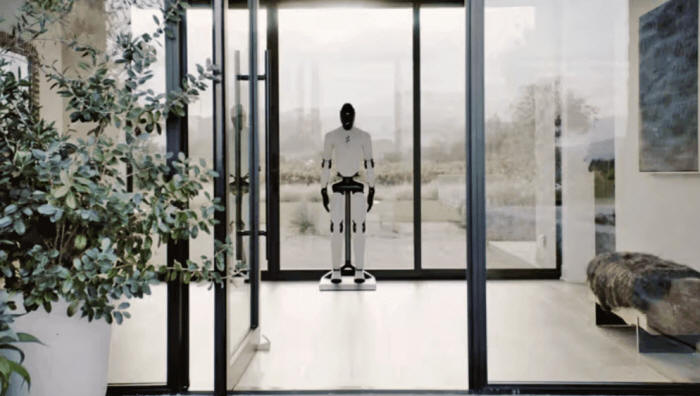
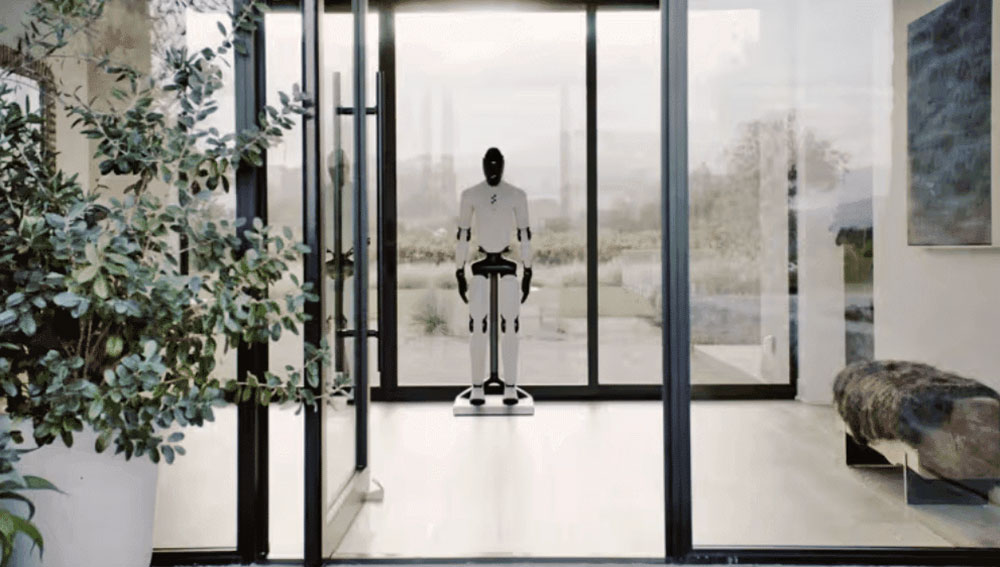
The Figure 03 recharges autonomously
by backing into a floor-mounted
charging stand
that connects to ports on its torso.
It can also
charge continuously via inductive pads
built into its heels for
industrial use.
Image credit: Figure
AI
Figure 003 robot was
created by 'Figure AI,' a company whose website states,
"Move Fast & Be Technically Fearless: Hesitation is the
enemy of momentum. We are tackling today's most complex
technological challenges by testing, experimenting, and
taking calculated risks to embrace the unknown without
fear of failure."
This mimics Zuckerberg's philosophy,
"Move fast and break things."
Source
Did Melania
Trump's
White House walk
with Humanoid Robot
signal Admin's
push into Physical AI?
The White House on Wednesday hosted an education summit featuring
first lady Melania Trump walking side by side with an American-made
humanoid robot.
The robot's placement at a White House event suggests the technology
wing of the
Trump administration is pivoting toward physical AI,
with the next chapter increasingly centered on American-made
humanoid robotics.
A Politico
report in December revealed that the administration was
preparing to go "all in" on accelerating humanoid robotics, with
sources saying White House officials were considering an executive
order sometime this year.
Melania's appearance alongside the Figure 03 robot may be the
clearest signal yet that the administration is preparing to embrace
robotics as the next natural progression of physical AI.
Also on Wednesday, Jefferies analysts published an insightful note
titled, "From Asimov to the Assembly Line - Humanoid Robots Begin to
Clock In" (Asimov, a famous science fiction writer, wrote
I, Robot
decades ago.)
"Given recent advancements in materials science, battery technology
and, most importantly, AI/processing, the dream of larger-scale
deployments is edging closer to reality," the analysts wrote.
With humanoid robots now entering factory floors, and, as we have
also pointed out,
soon the battlefield, deployment of
these autonomous machines in real-world commercial applications is
set to ramp up this year and next.
How to profit
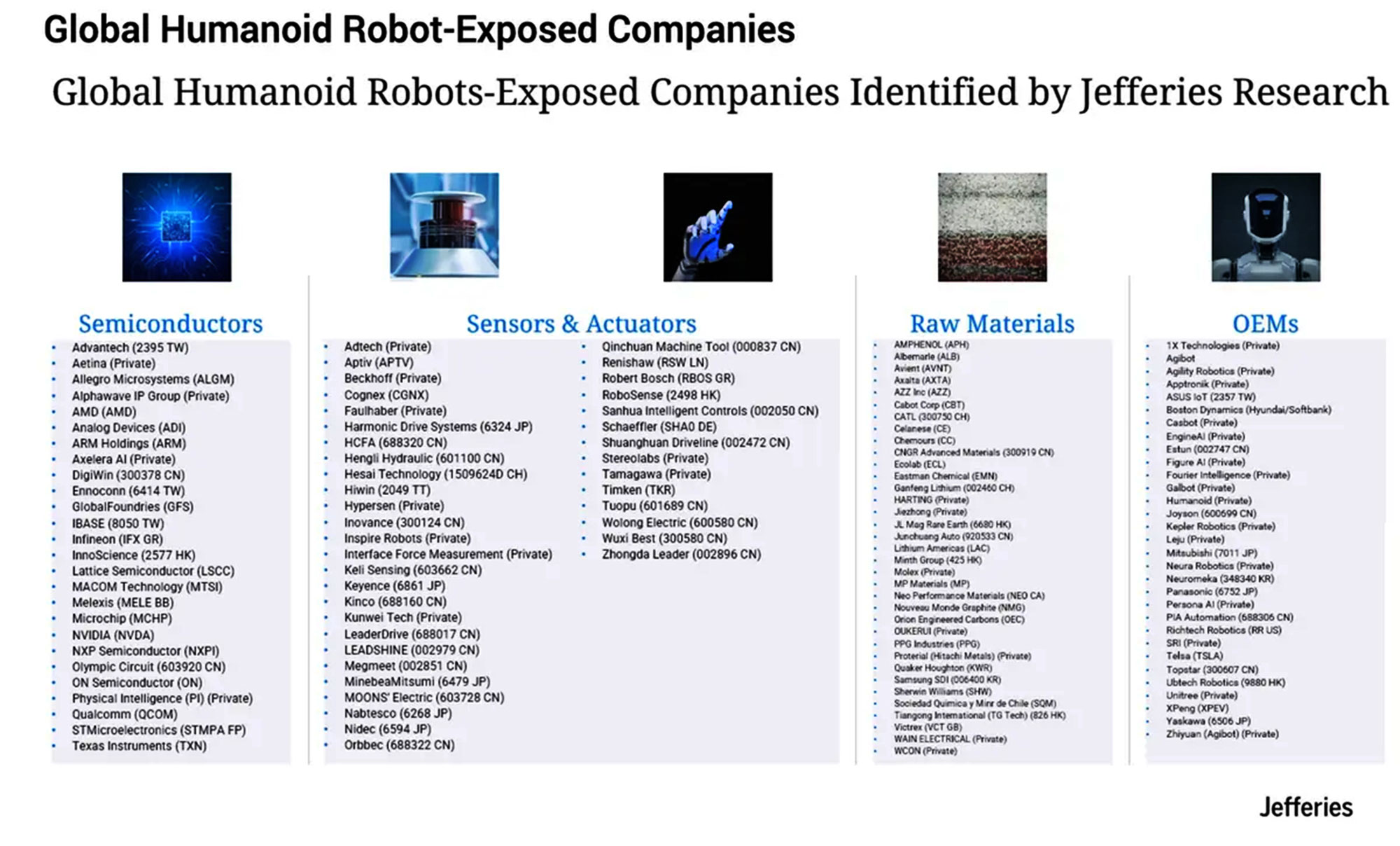
The analysts provided clients with a company breakdown of the most
critical companies supplying components to humanoid robots,
outlining where clients may be positioned to get the most exposure
as the industry gears up for increased deployments:
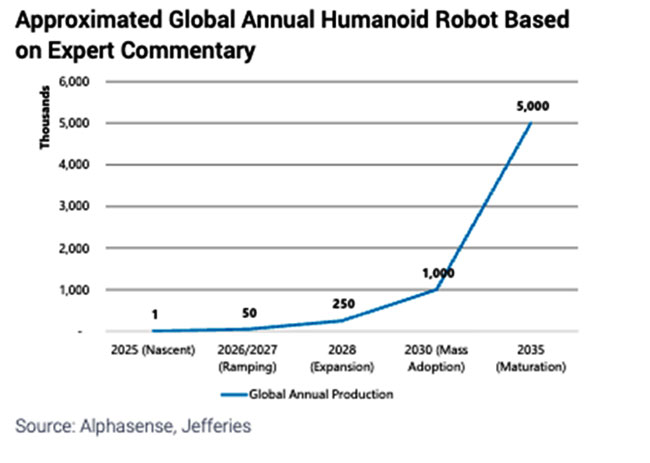
Deployment Begins
The deployment timeline for these robots on factory floors is set to
ramp this year and next, then accelerate sharply into the end of the
decade before taking a quantum leap in the early 2030s.
Why
The analysts pointed to three structural forces set to accelerate
mass adoption:
-
Aging populations, particularly in China
and other developed markets, are increasing demand for labor
supplementation and assistance.
-
Declining interest in manufacturing jobs
among younger generations is creating labor mismatches
across global supply chains.
-
Breakthroughs in semiconductors and AI
are sharply improving robot intelligence and functionality
while reducing costs.
The other major breakthrough is labor cost:
With
workers demanding $20 to $25 per hour and much higher rates for
skilled jobs, companies could operate these robots on a fully loaded
basis for between $2 and $3 per hour after accounting for operating
costs.
Mass adoption of these robots, with price points around $25,000 by
2030, would make them very appealing for companies looking to
automate low-skilled tasks and drive down labor costs.
The analysts noted that robots are already beginning to invade
factory floors.
As they wrote,
"In late '24, California-based Figure AI
achieved a milestone by delivering its Figure 02 humanoid
robot to a paying client.
Around the same time in China, UBTech
Robotics began the world's first large-scale deployment of
full-sized humanoid robots."
Melania walking with a humanoid robot this week may mark an early
signal that the Trump administration is preparing to accelerate the
American-made humanoid robotics, assuming policy support has already
been drafted, which could spark an investment cycle into companies
in the same field, both public and private.
|